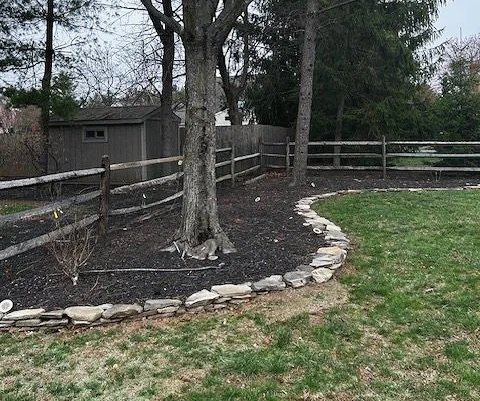
Installed
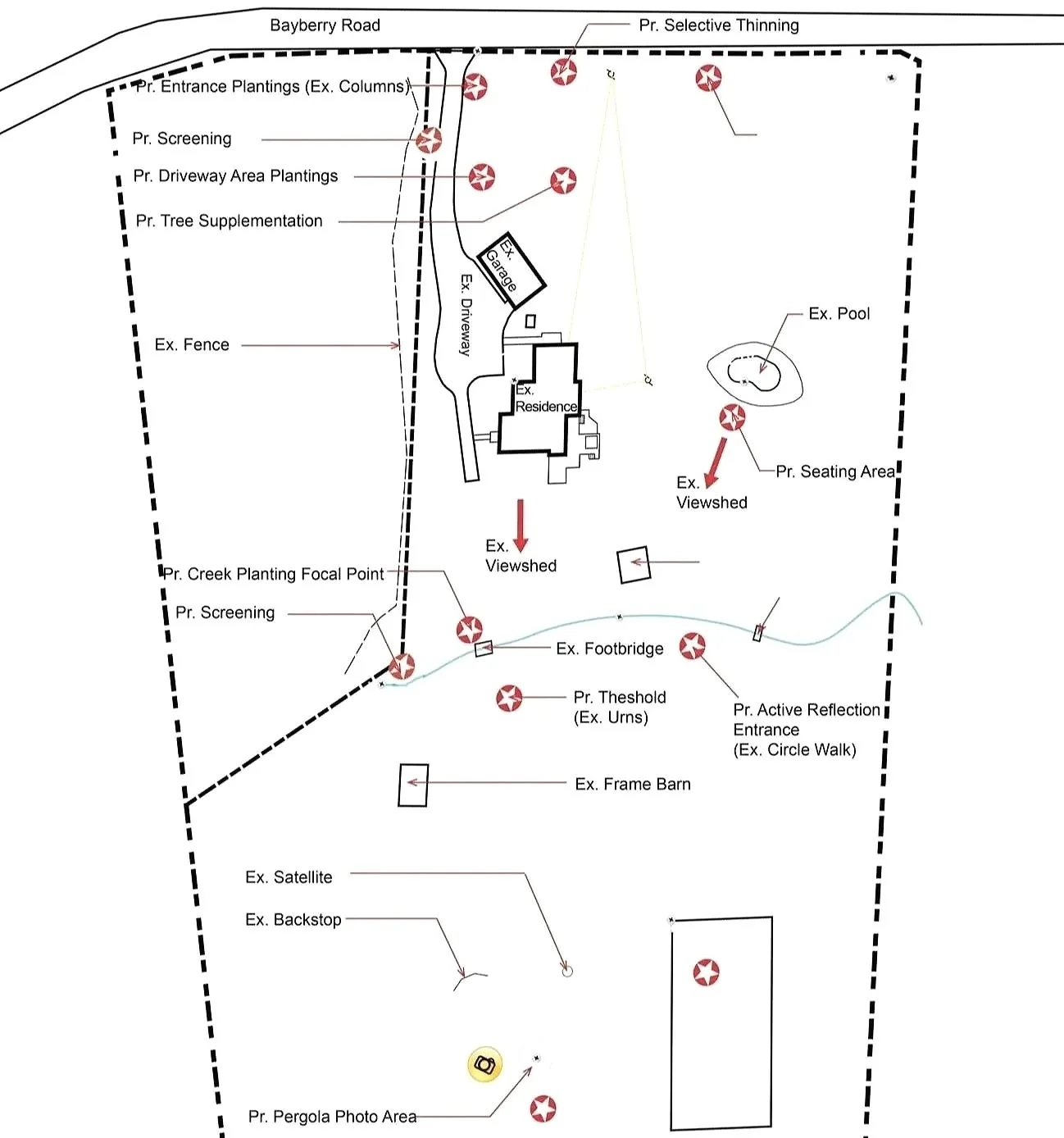
Comprehensive Plan
Princeton, NJ
Existing Conditions
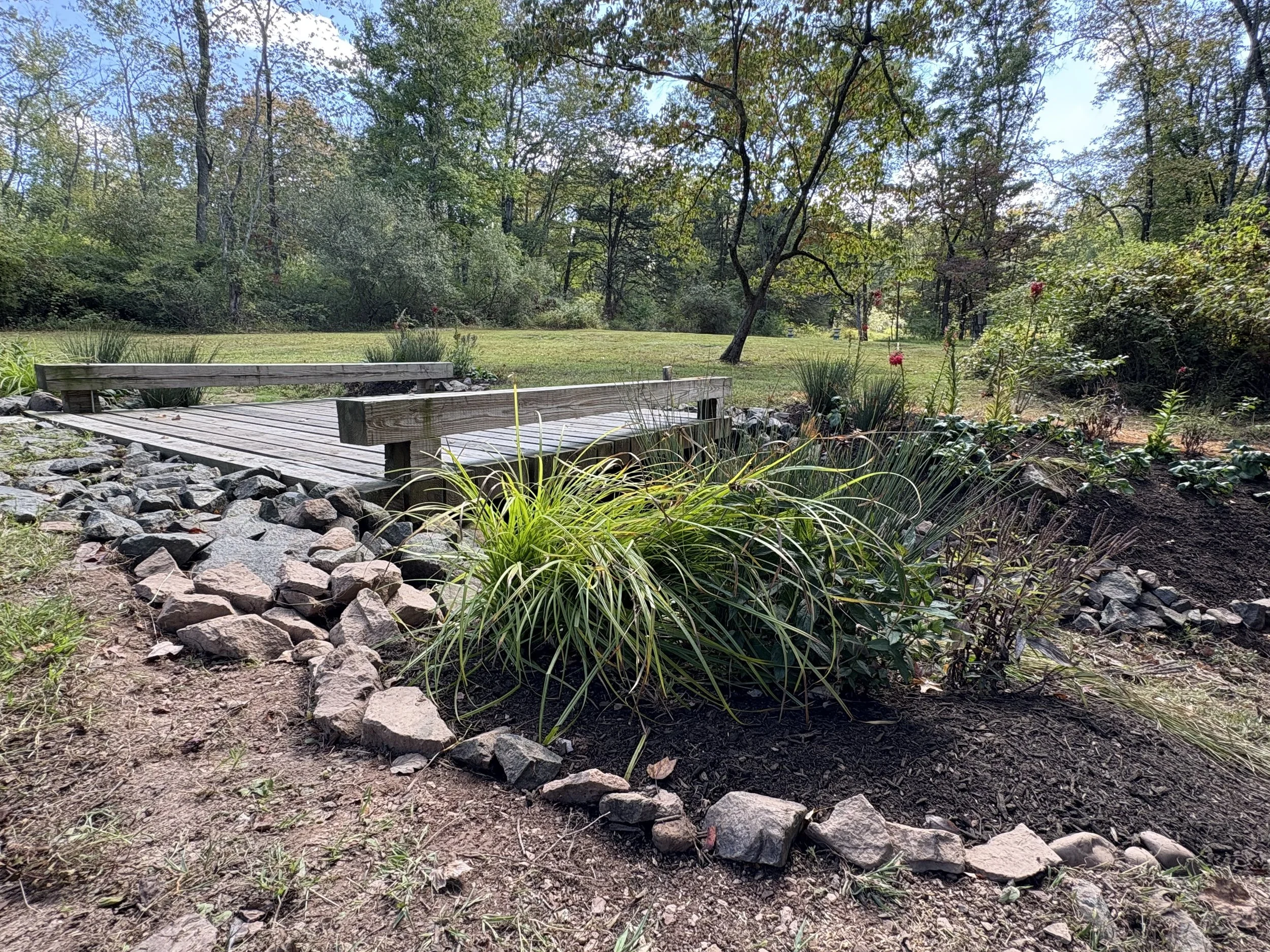
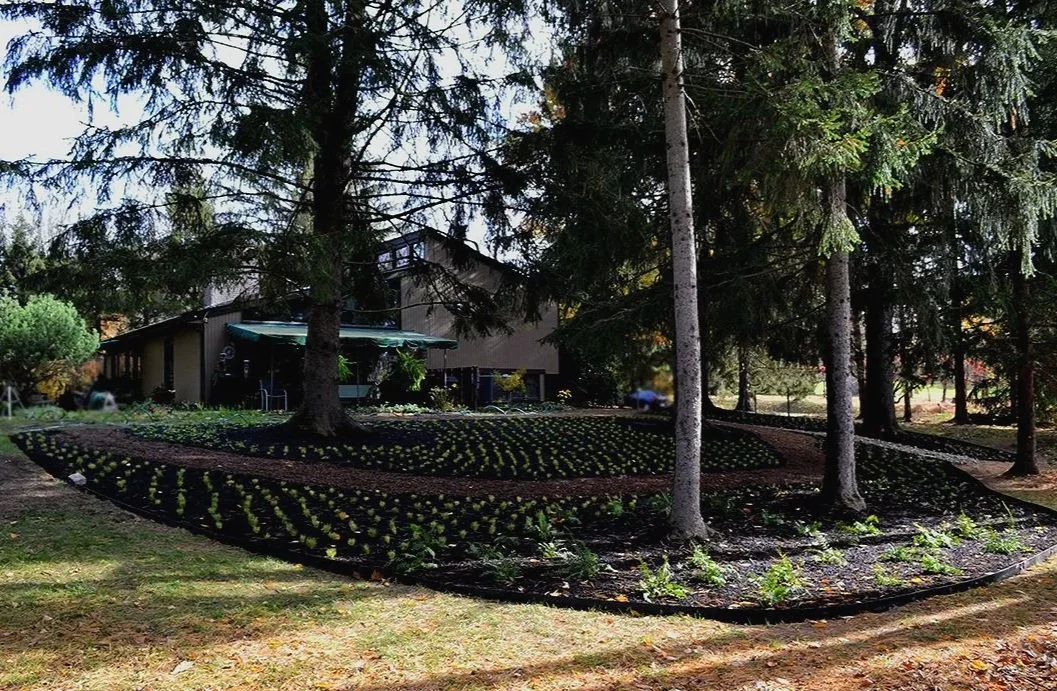
Open lawn, a woodland edge, and a creek corridor shape the site, but the landscape lacked a clear framework. Mown turf ran right up to the natural areas with no transition, and planting showed up as a few isolated pockets. Differences in moisture and light, along with deer pressure, led to inconsistent results across the property.
-
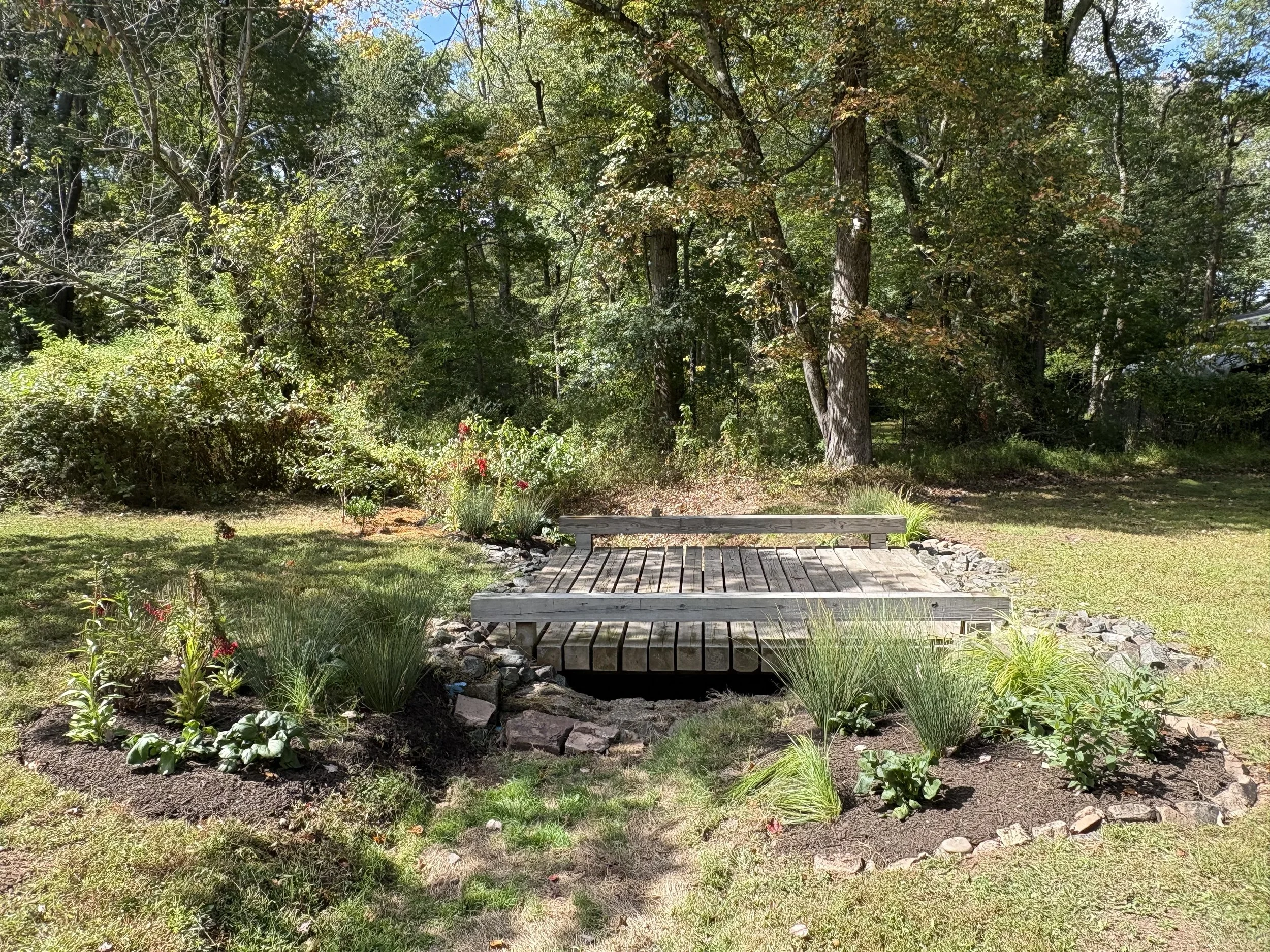
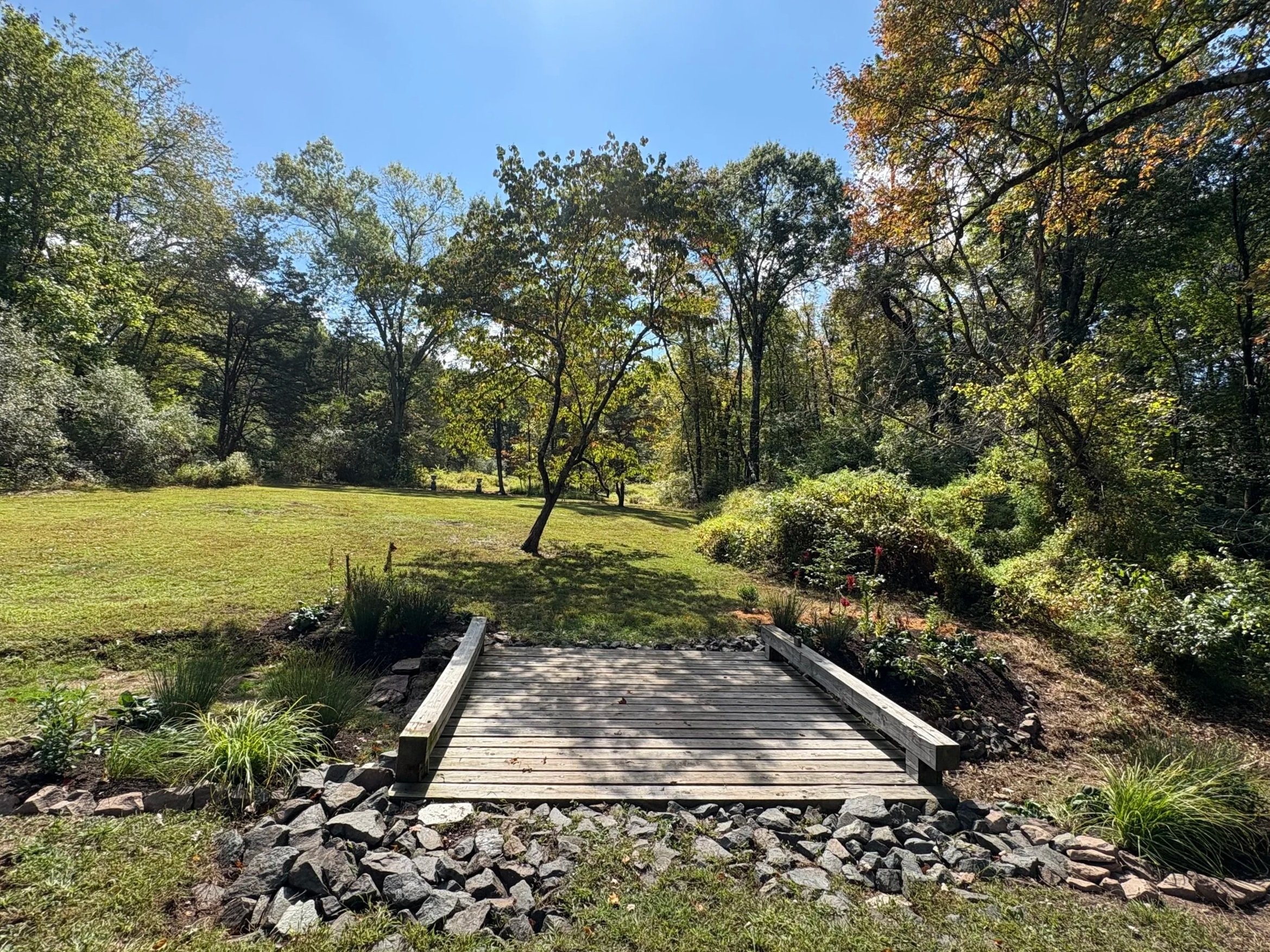
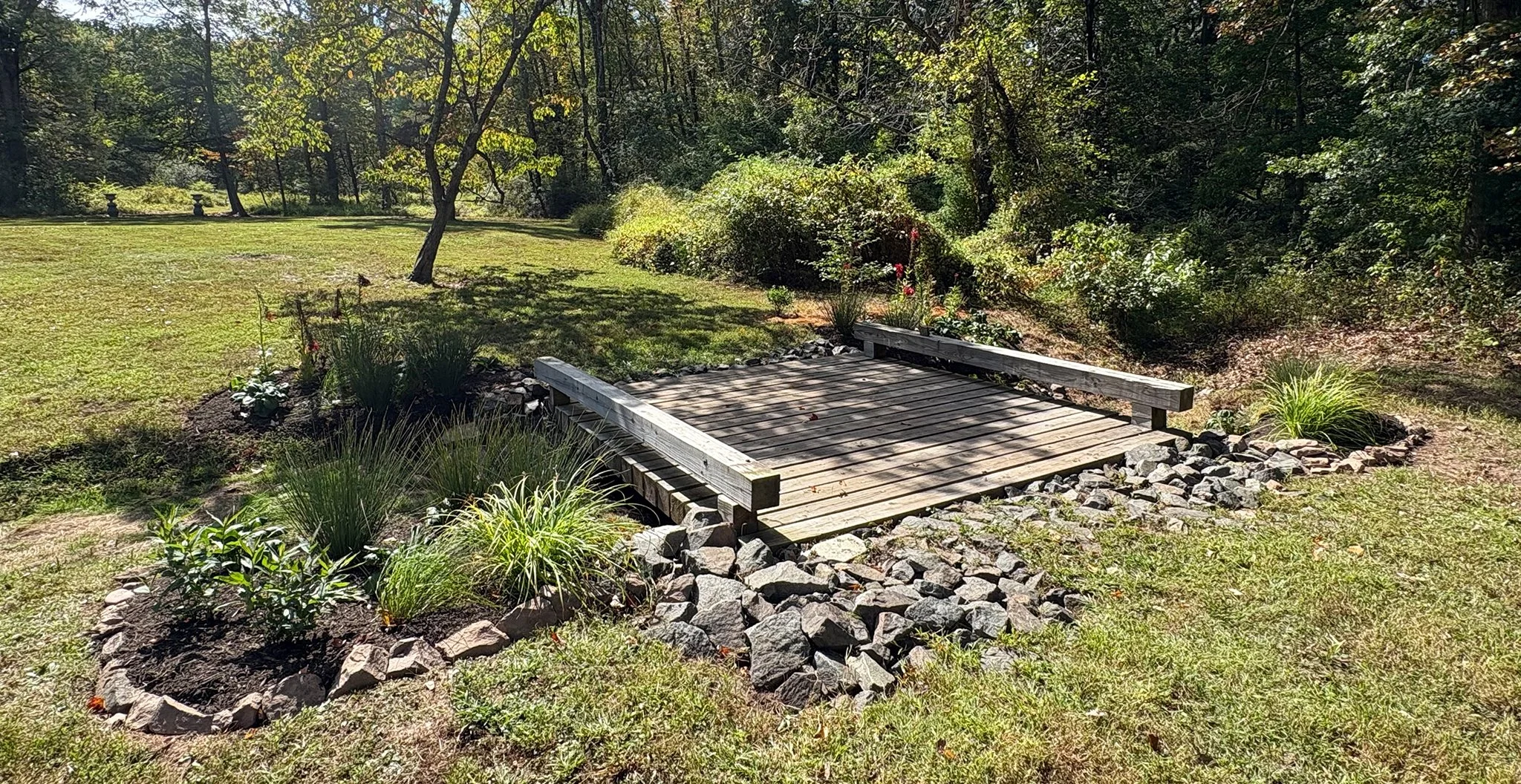
Create a clear framework so the garden, meadow, and woodland read as one connected landscape. The creek becomes the organizing spine, with definition coming from stronger edges, planted masses, and aligned views, not more hardscape.
-
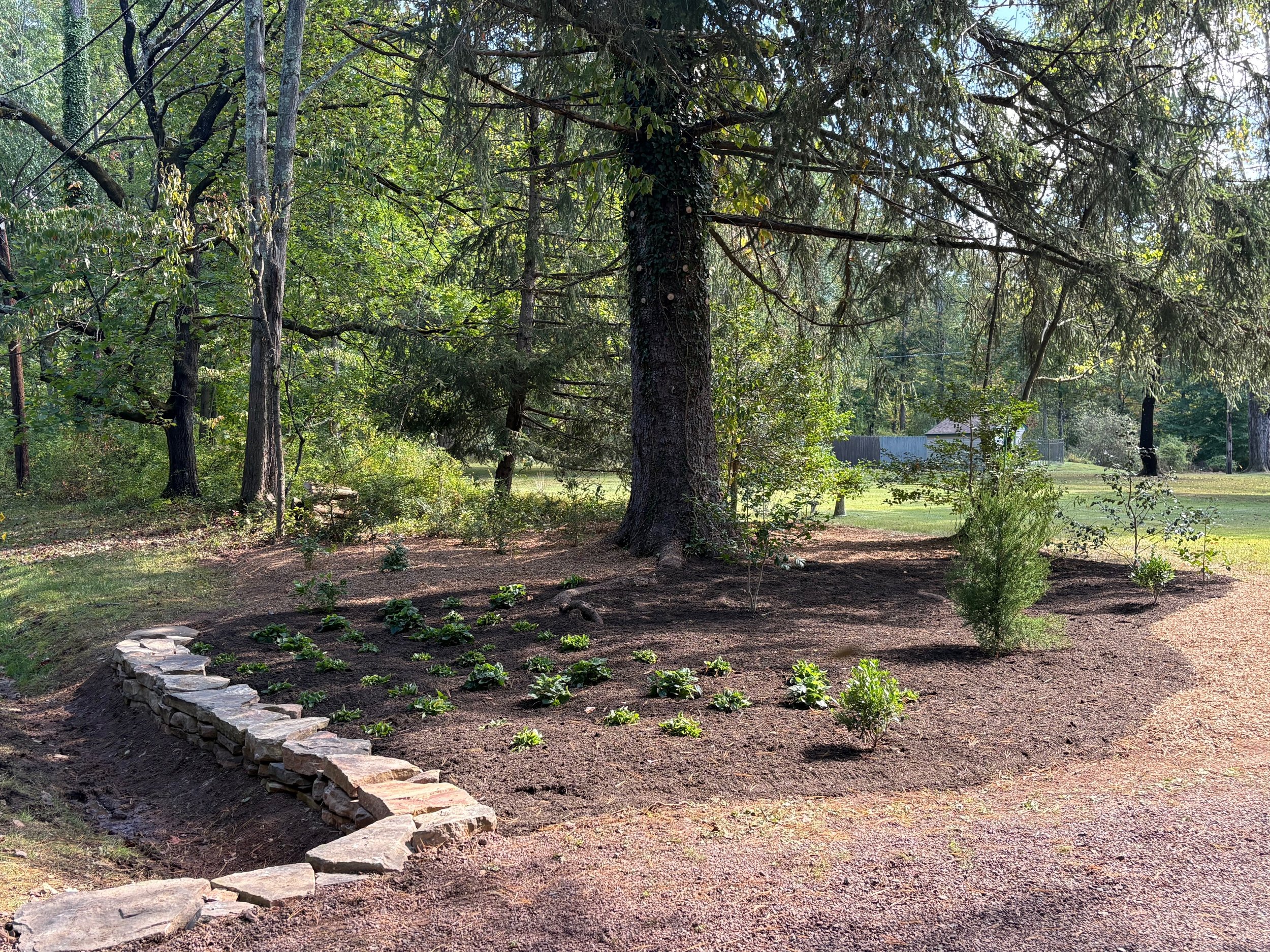
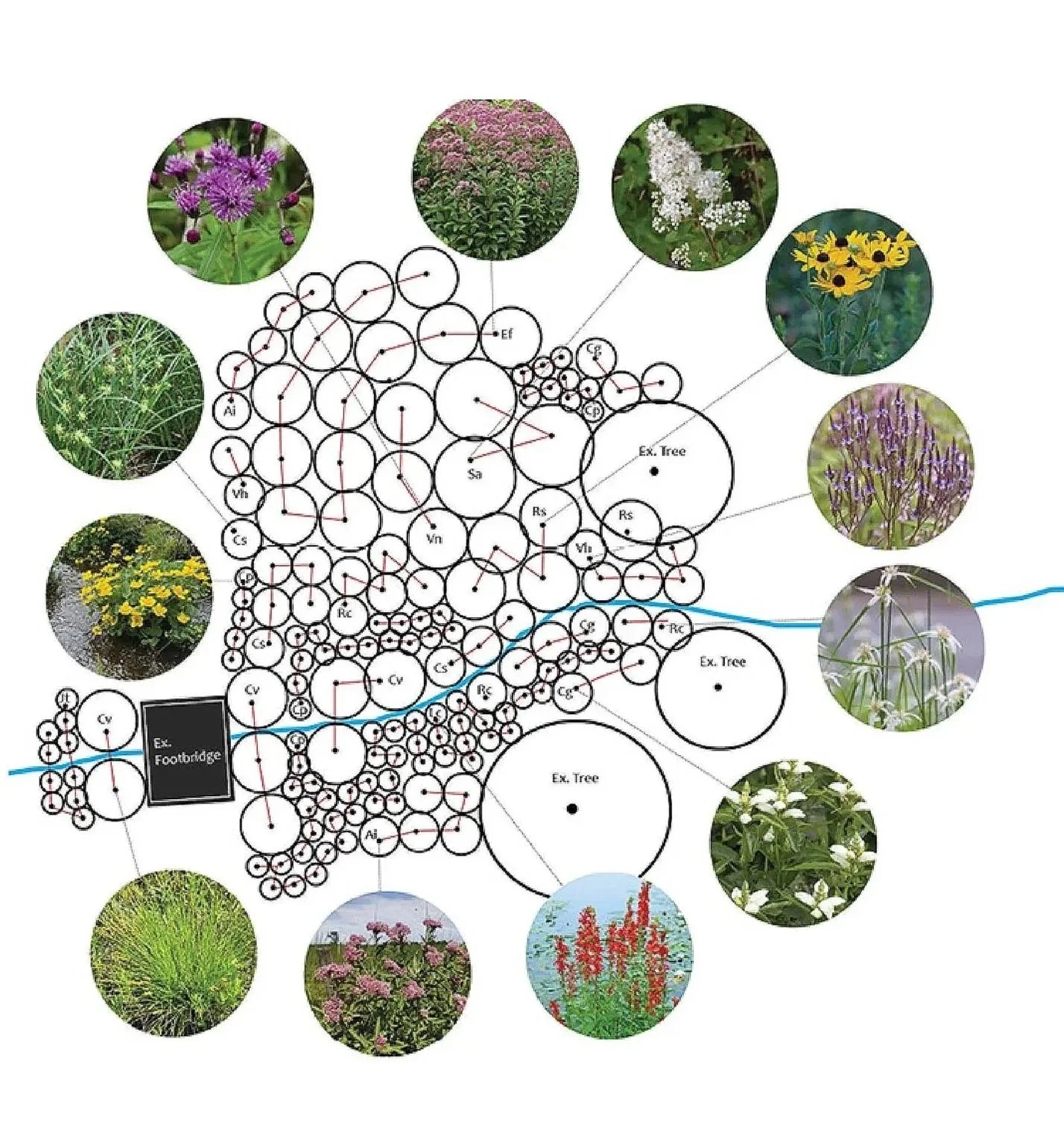
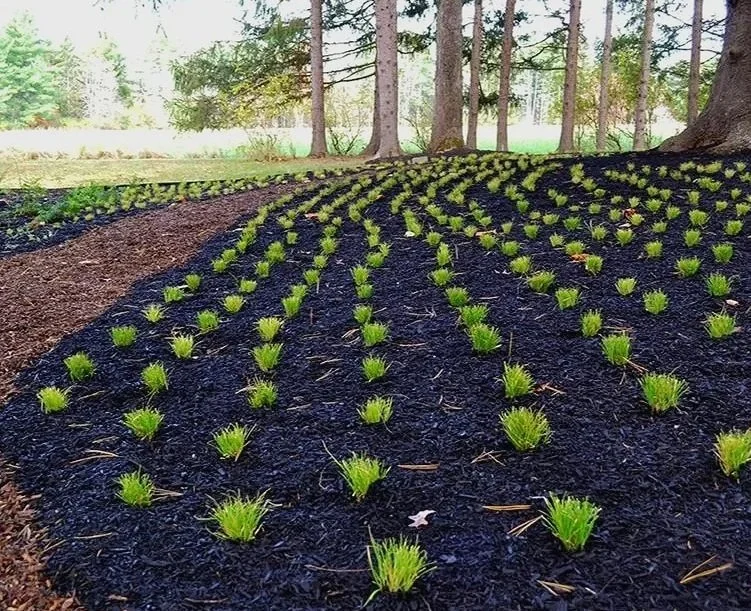
Planting is tied directly to moisture and sun. Along the creek, moisture-tolerant plants stabilize the edge, with cardinal flower (Lobelia cardinalis) used in clear drifts to mark the waterline. In the drier upland areas, layered native shrubs, grasses, and perennials are planted in repeatable masses to reduce lawn and improve long-term performance.
-
The property now reads as connected and legible. Transitions are gradual, the creek defines the landscape rather than dividing it, and the framework allows future phases to extend without disrupting cohesion.
selected images
process
-
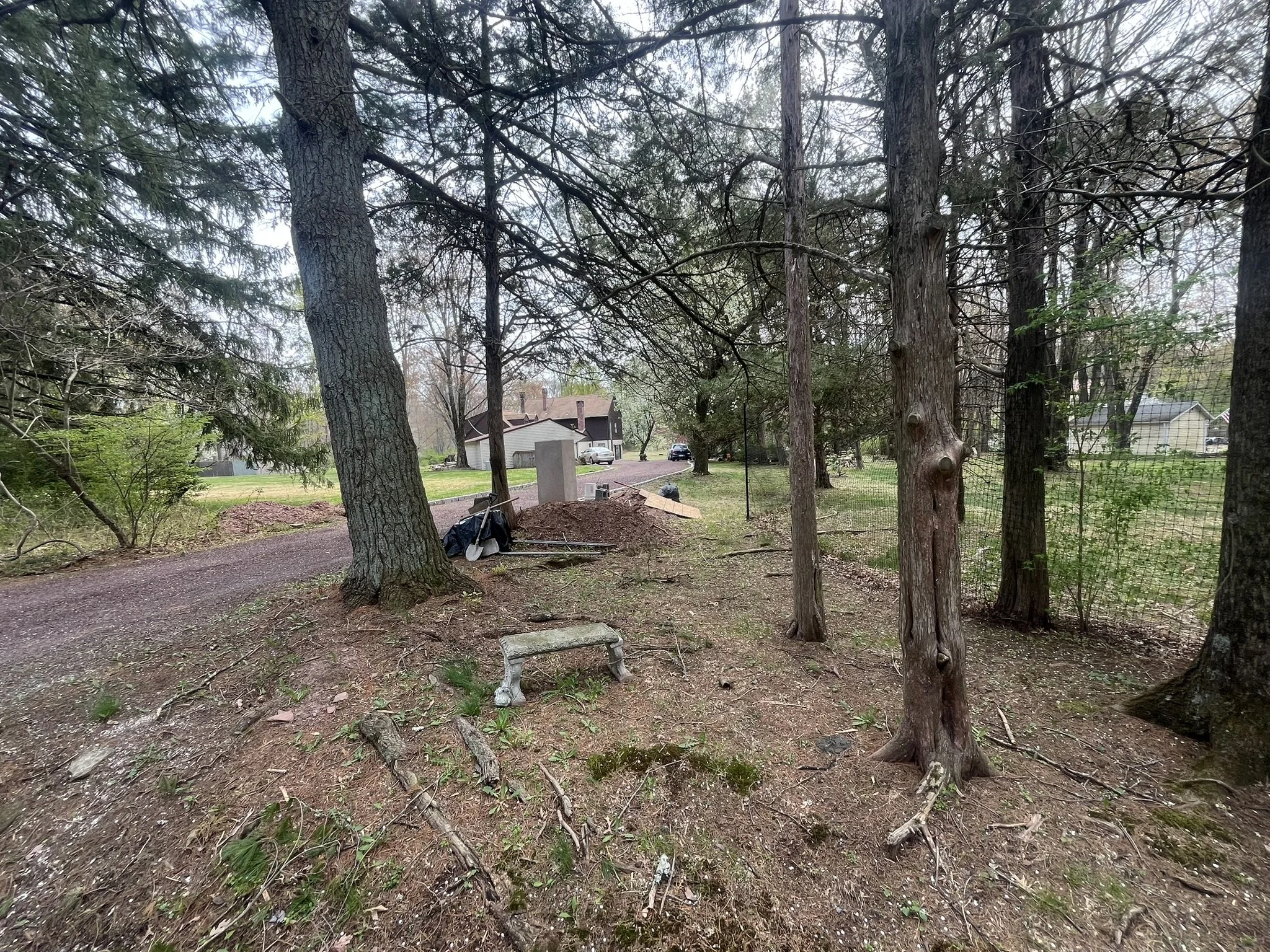
![A small outdoor area with several trees, a concrete bench, and gardening tools on a dirt ground. In the background, there are houses and parked cars.]()
Existing conditions
-
![Aerial view of a wooded park with a detailed landscape design plan overlaid, showing pathways, planting areas, structures, and recreational areas.]()
Aerial overlay
-
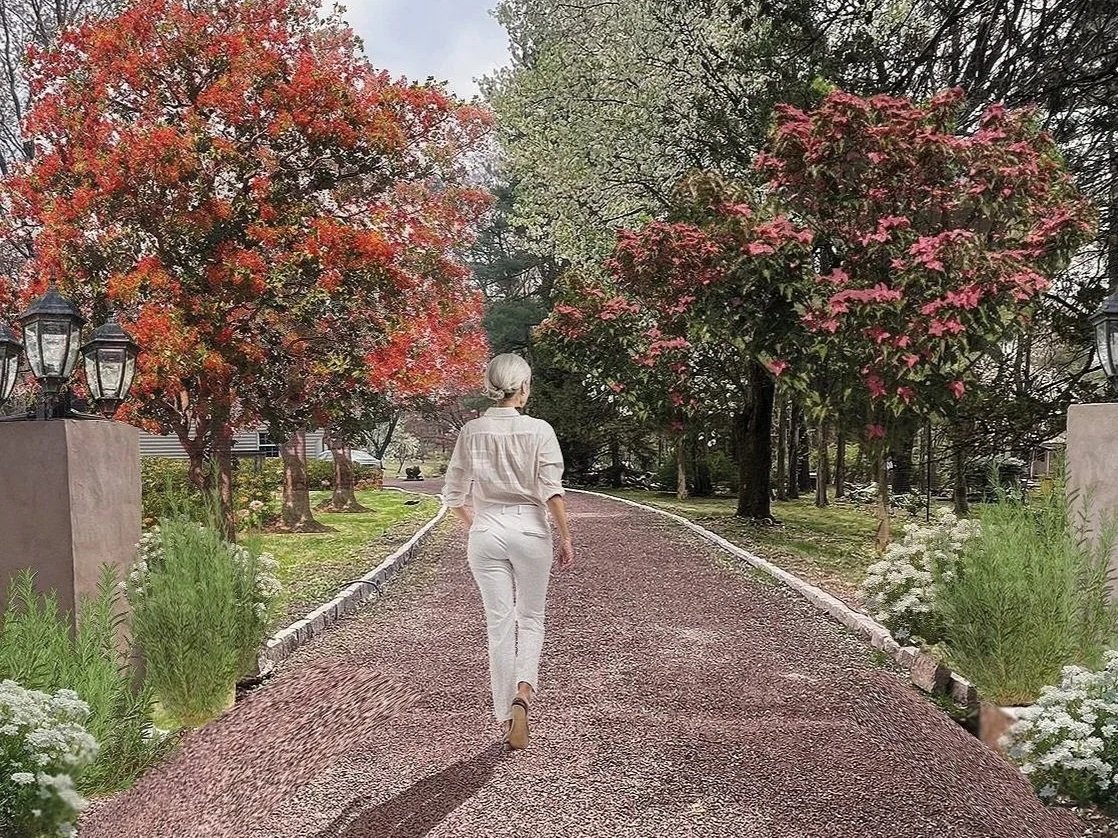
![A woman with white hair walking on a paved garden path surrounded by colorful trees and flowers in spring or summer.]()
Digital rendering
-
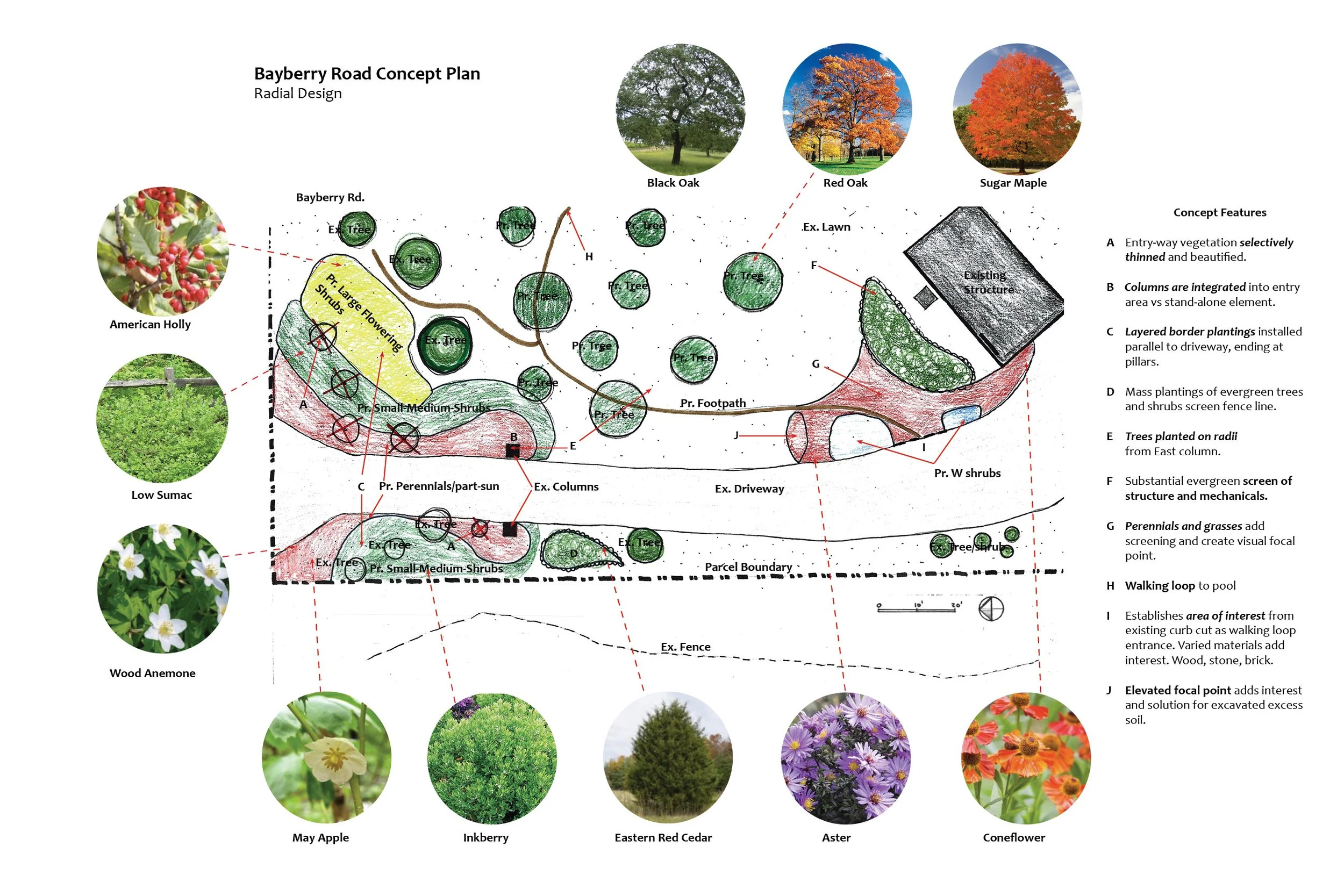
![A landscape design plan for Bayberry Road showing trees, shrubs, walkways, and planting features, with images of some plant types and color-coded icons indicating different planting and structural elements.]()
Concept diagram
-
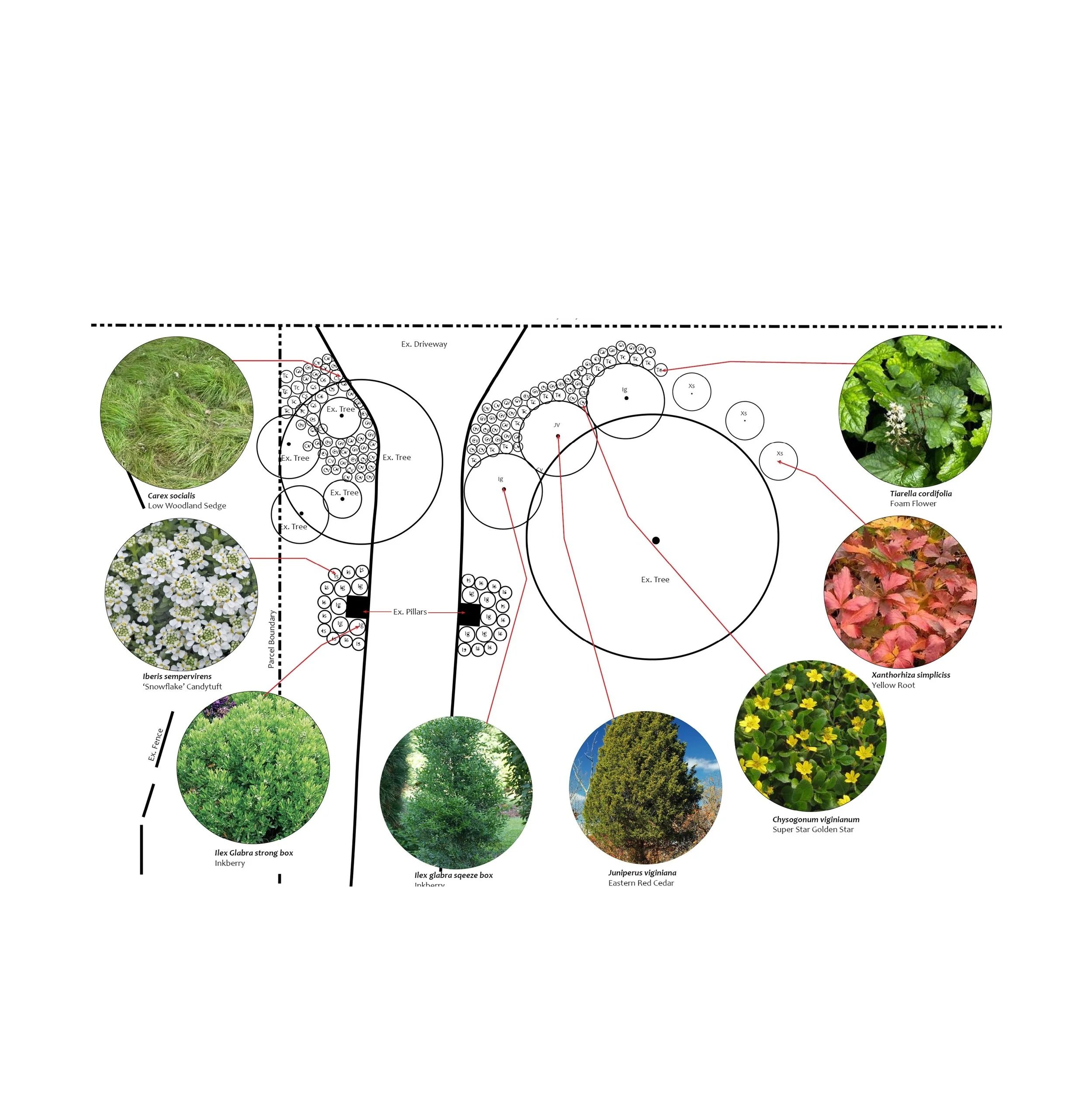
![Landscape design plan with trees and plants, including Carex socialis, Iberis sempervirens, Ilex glabra, Junipers, and flowering plants, with circular images of each plant species.]()
Technical planting plan
-
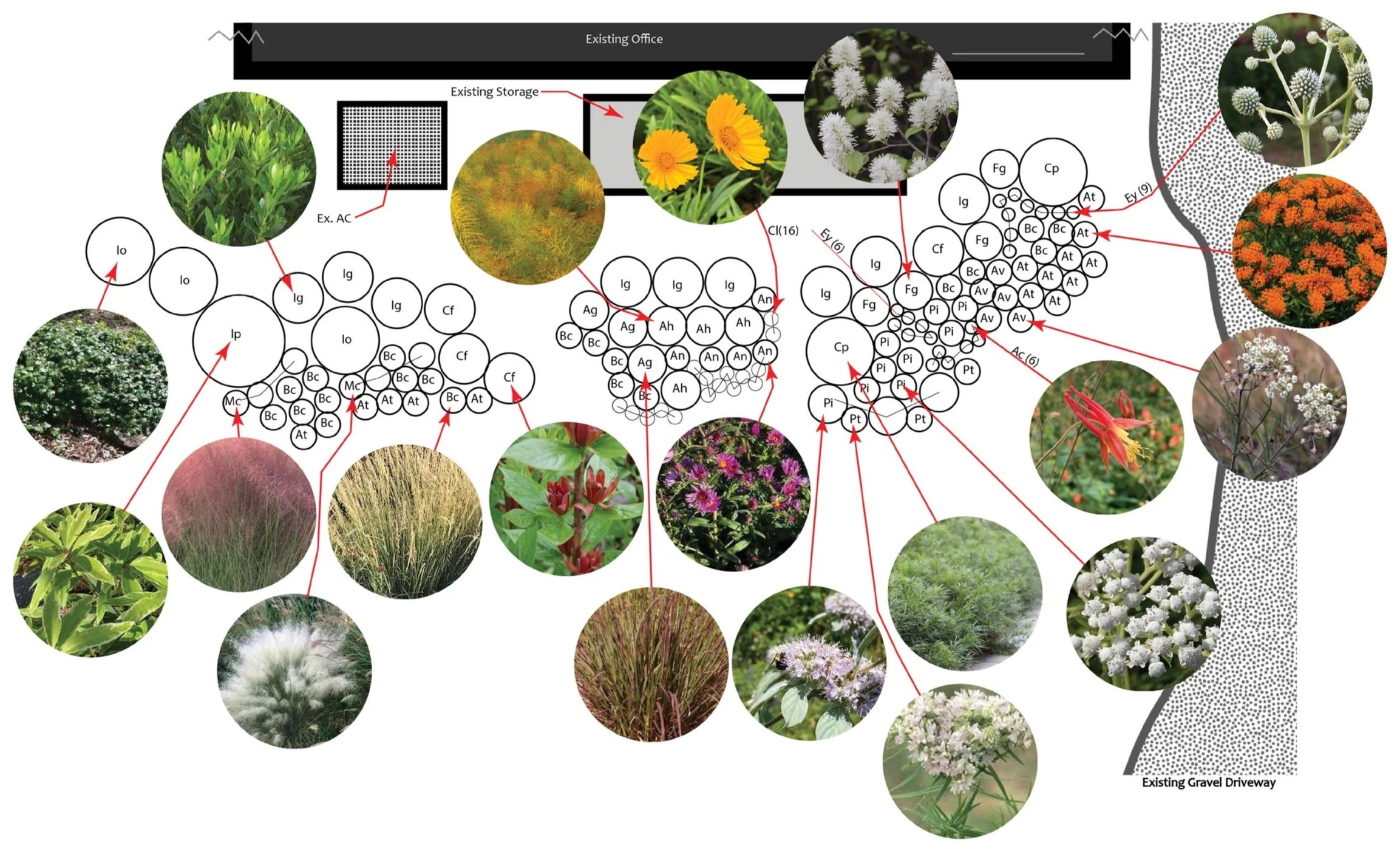
![Diagram showcasing different plant species connected with botanical classification labels, with circular images of various plants and flowers, including grasses, flowering shrubs, and ornamental flowers, arranged around a genetic or classification chart, with arrows pointing to the corresponding plant images.]()
Technical planting plan
-
![Diagram of various flowers and plants connected to a system of circles and lines, with photos of flowers around the diagram.]()
Technical planting plan
-
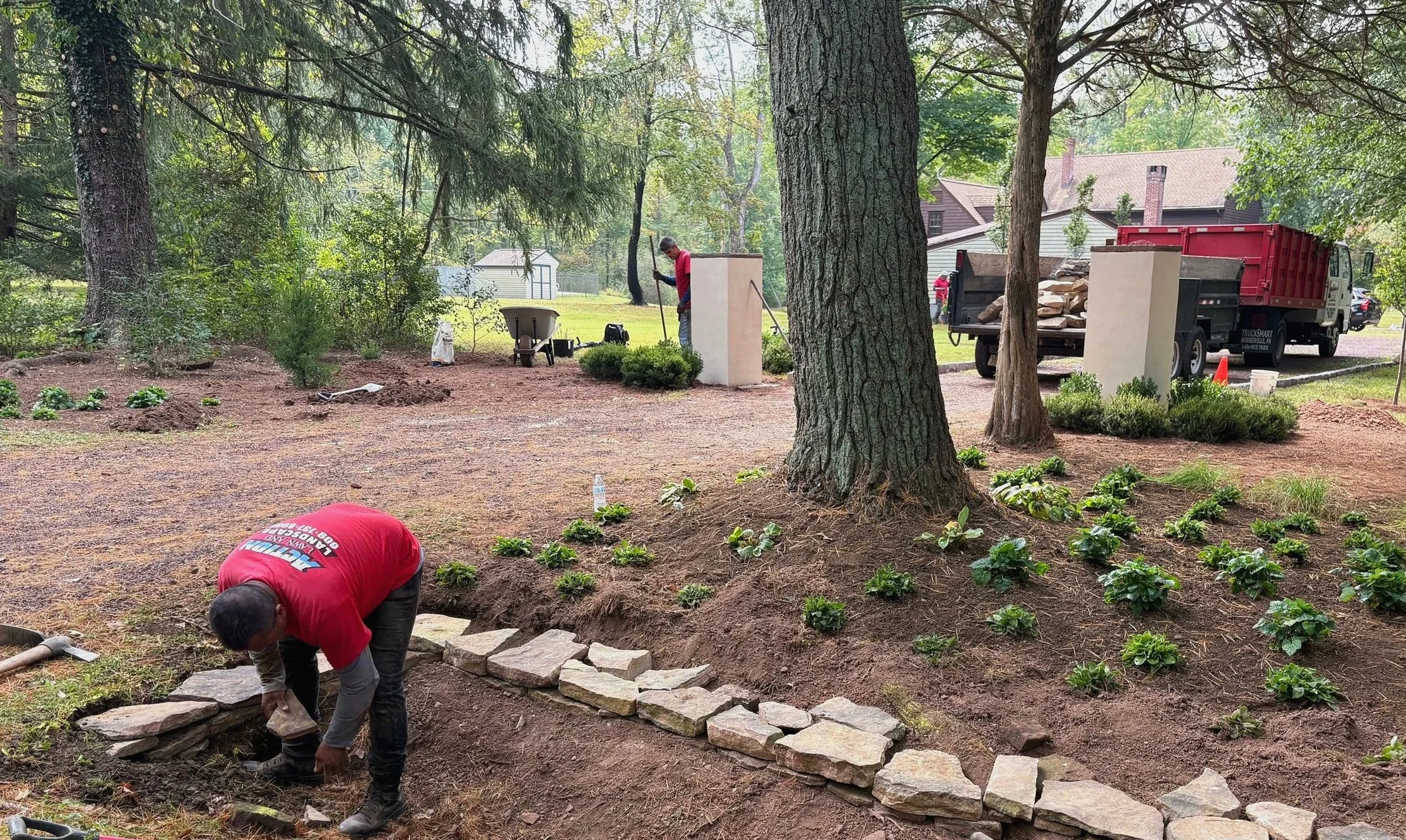
![Two landscapers working on a yard, one laying stone edging along a landscaped garden bed and the other planting or tending to plants further back.]()
Installation collaboration with Action Lawn and Landscape

Entrance Reimagined
Pennington, NJ
Setting
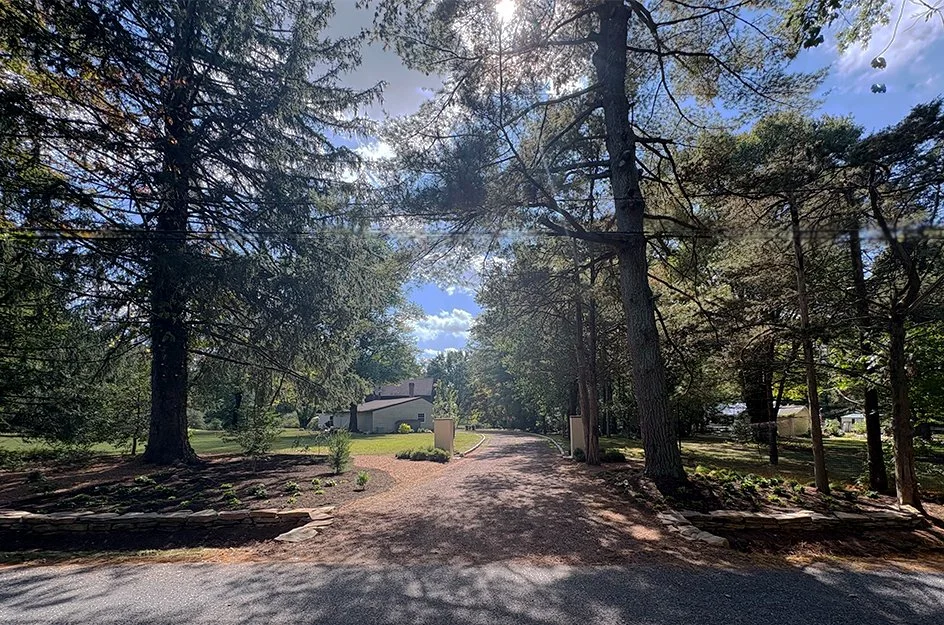
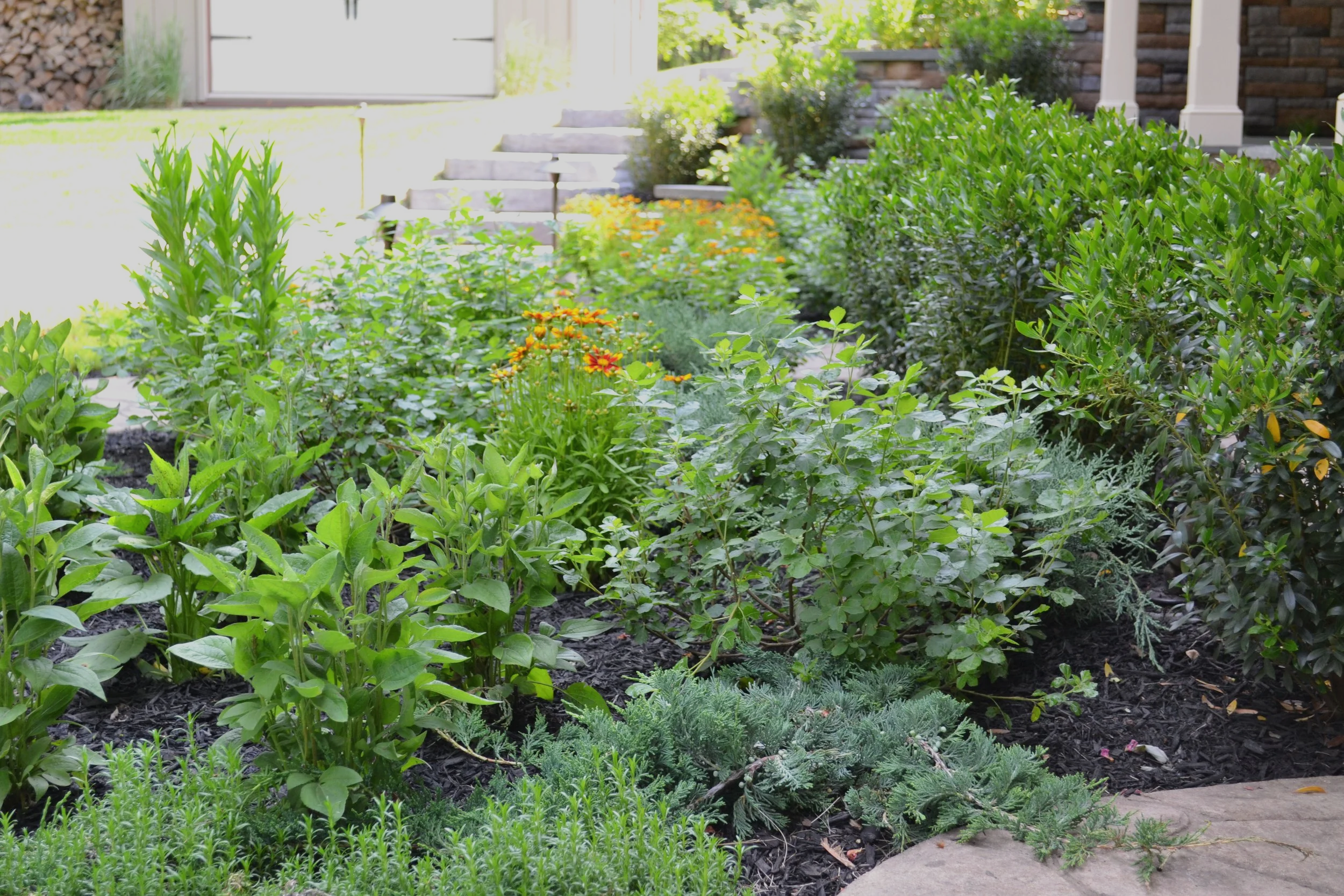
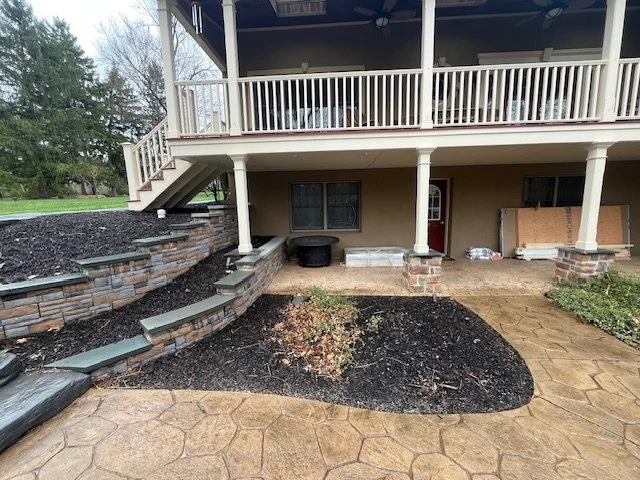
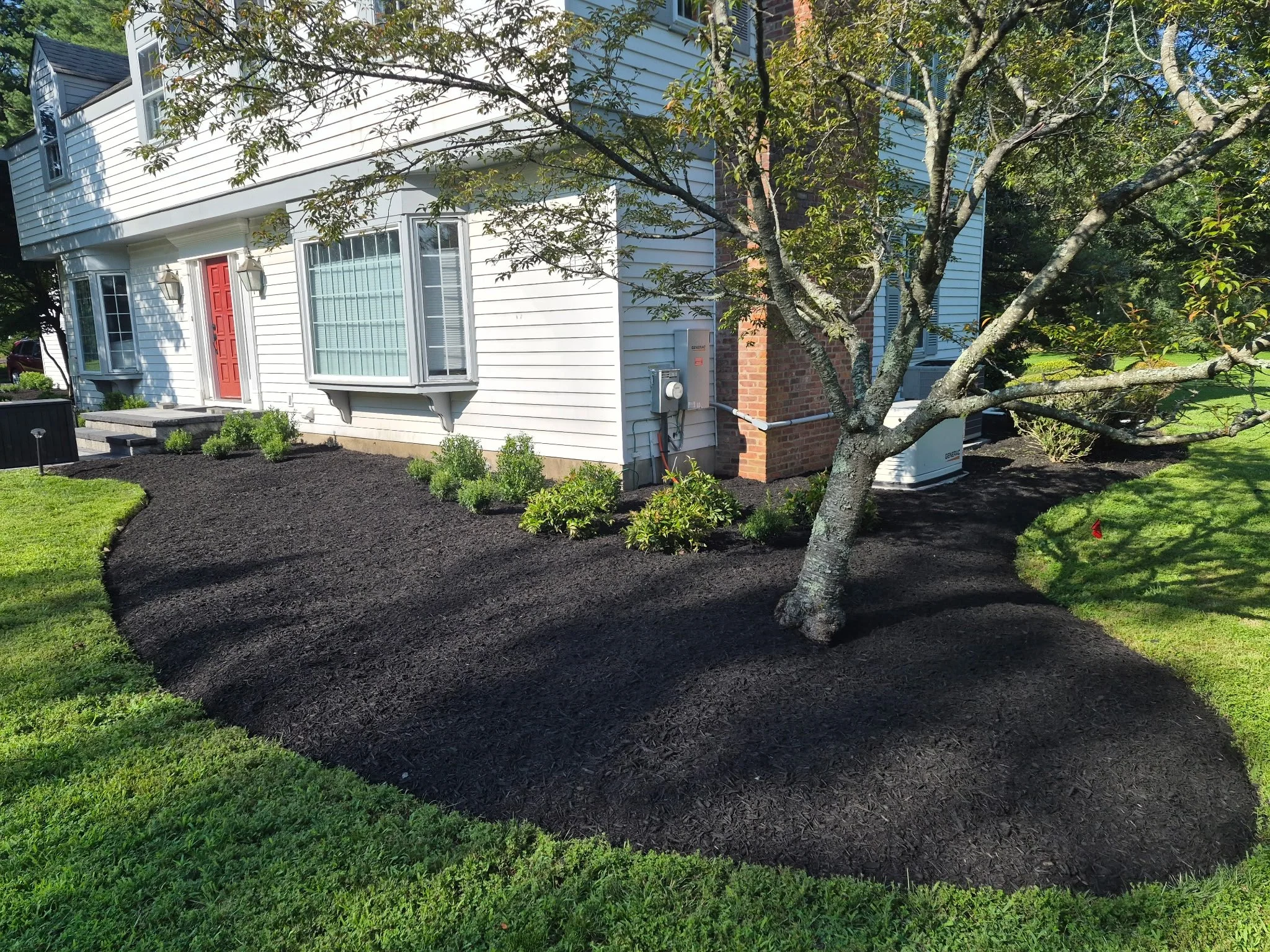
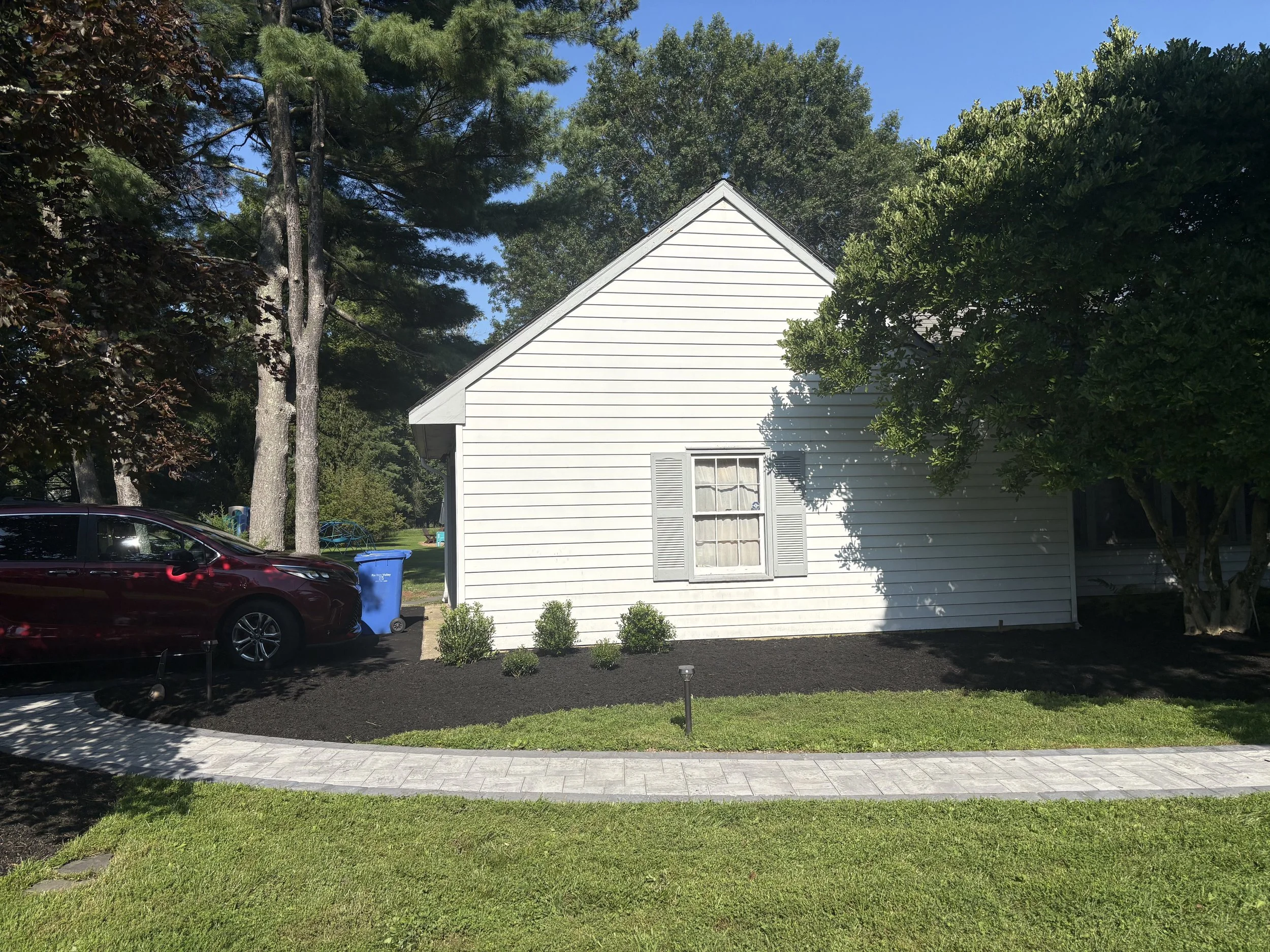
The side entrance was the main point of arrival, but once the beds were cleared and the concrete planters were moved, the entry was left exposed and visually thin. From the street and driveway, the door is easy to see, but the landscape did not guide the approach or give the entry a clear presence.
-
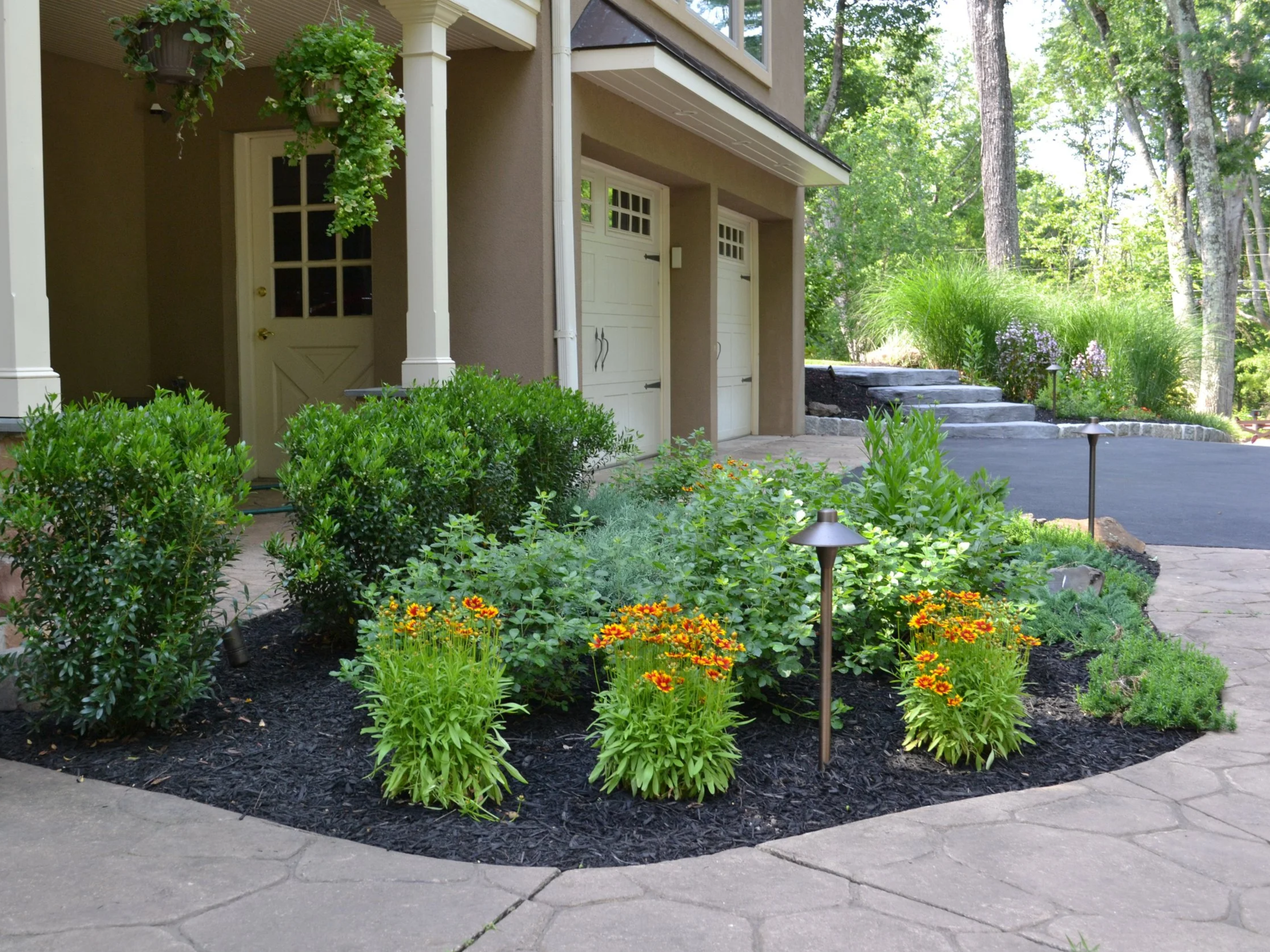
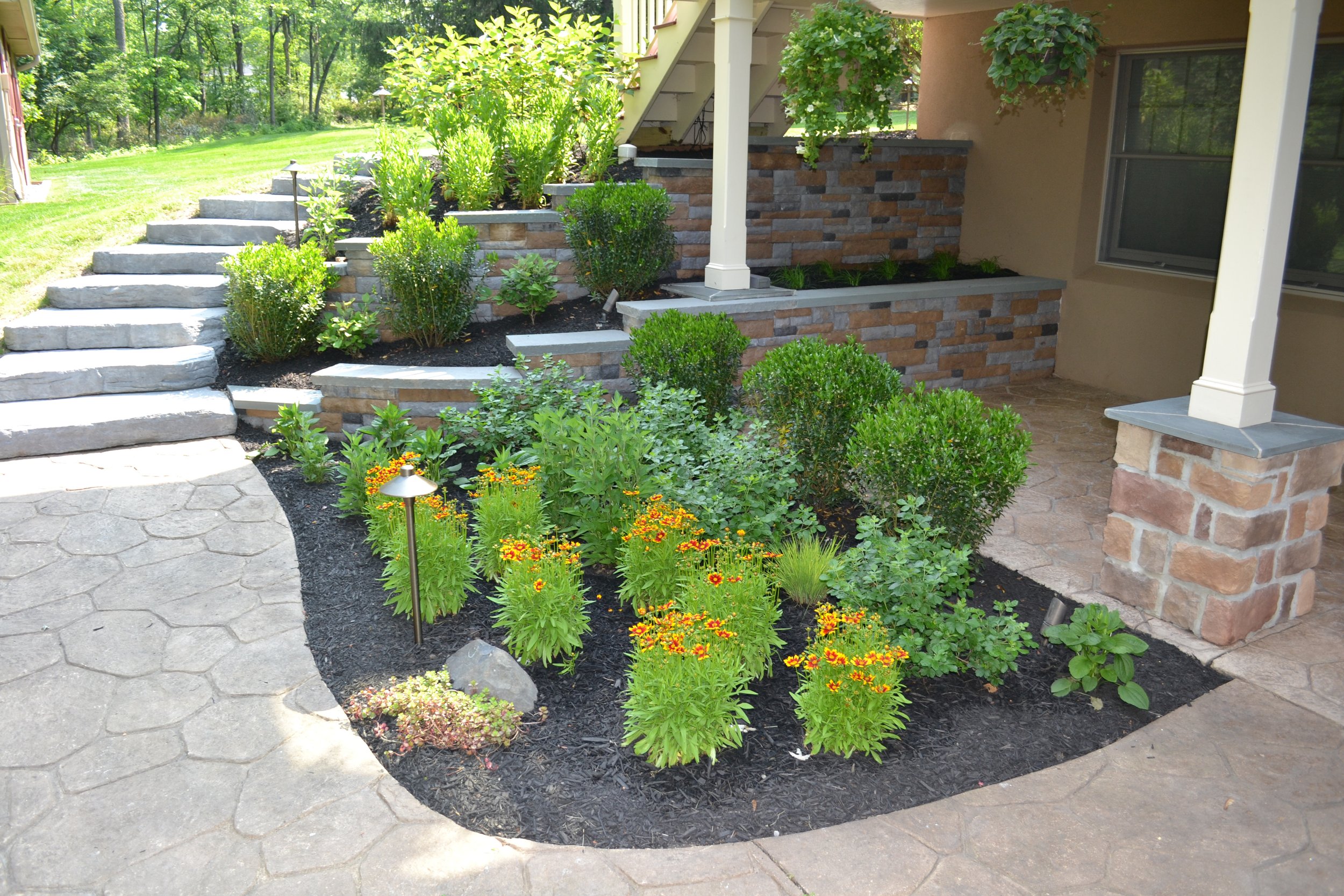
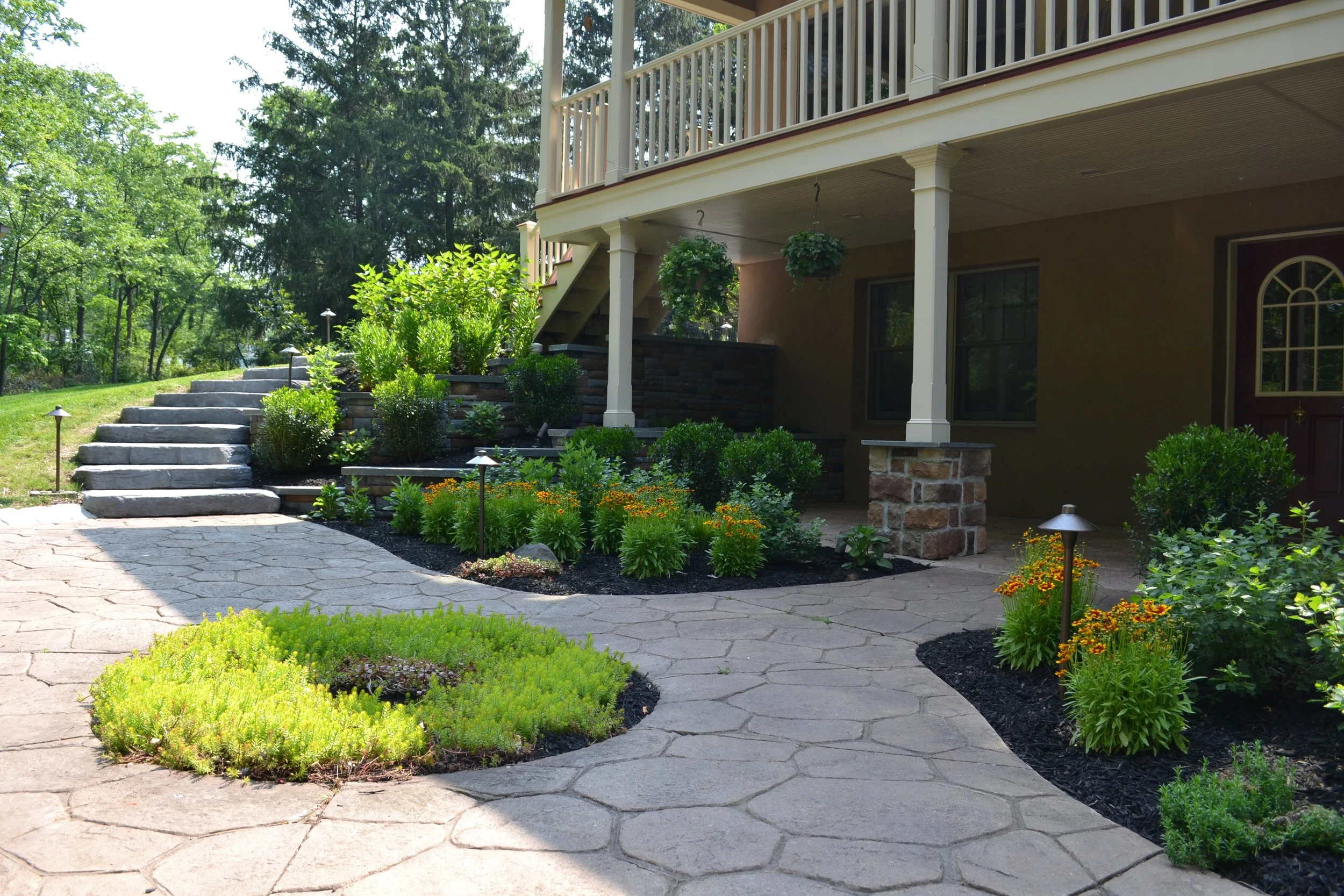
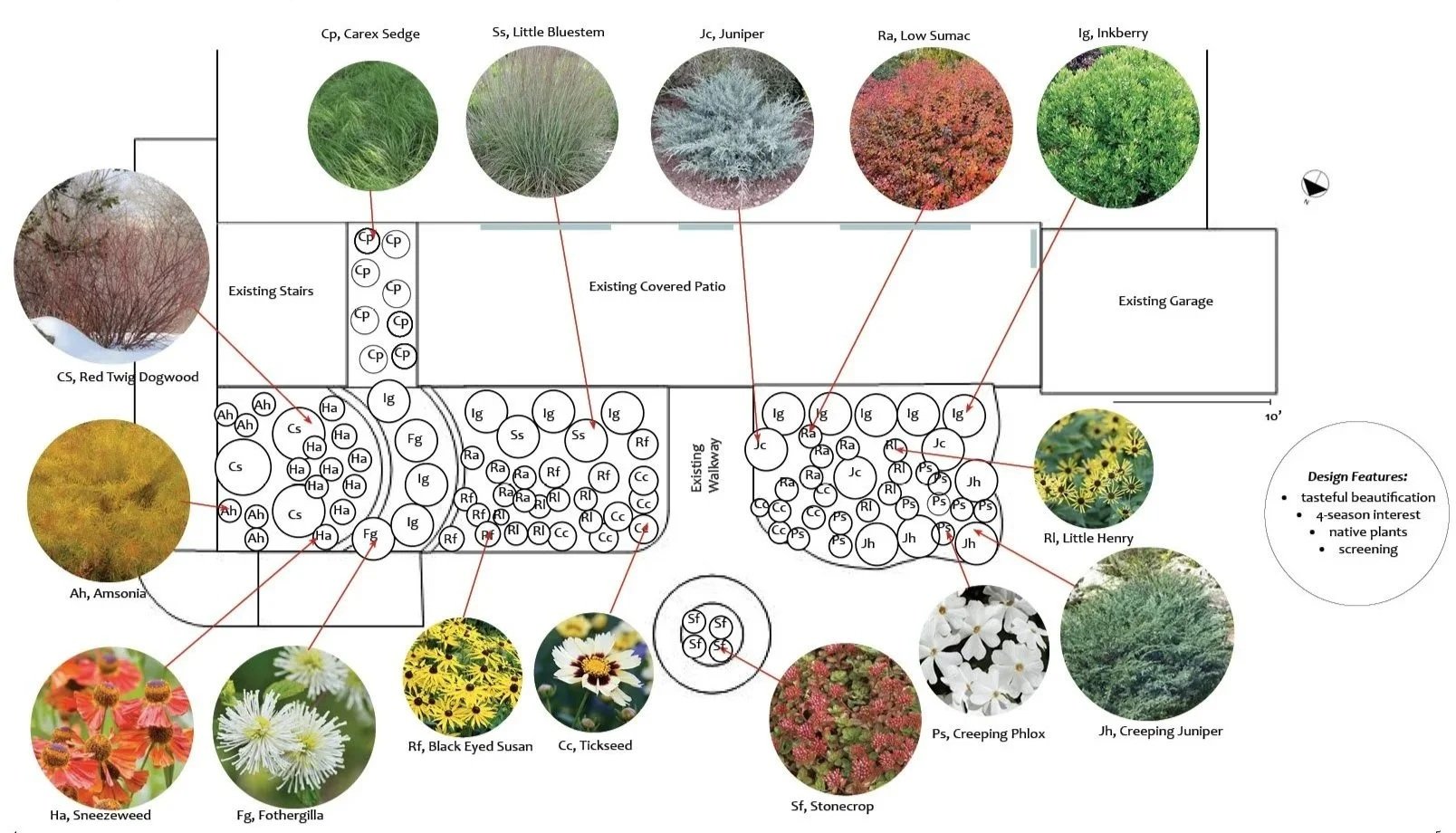
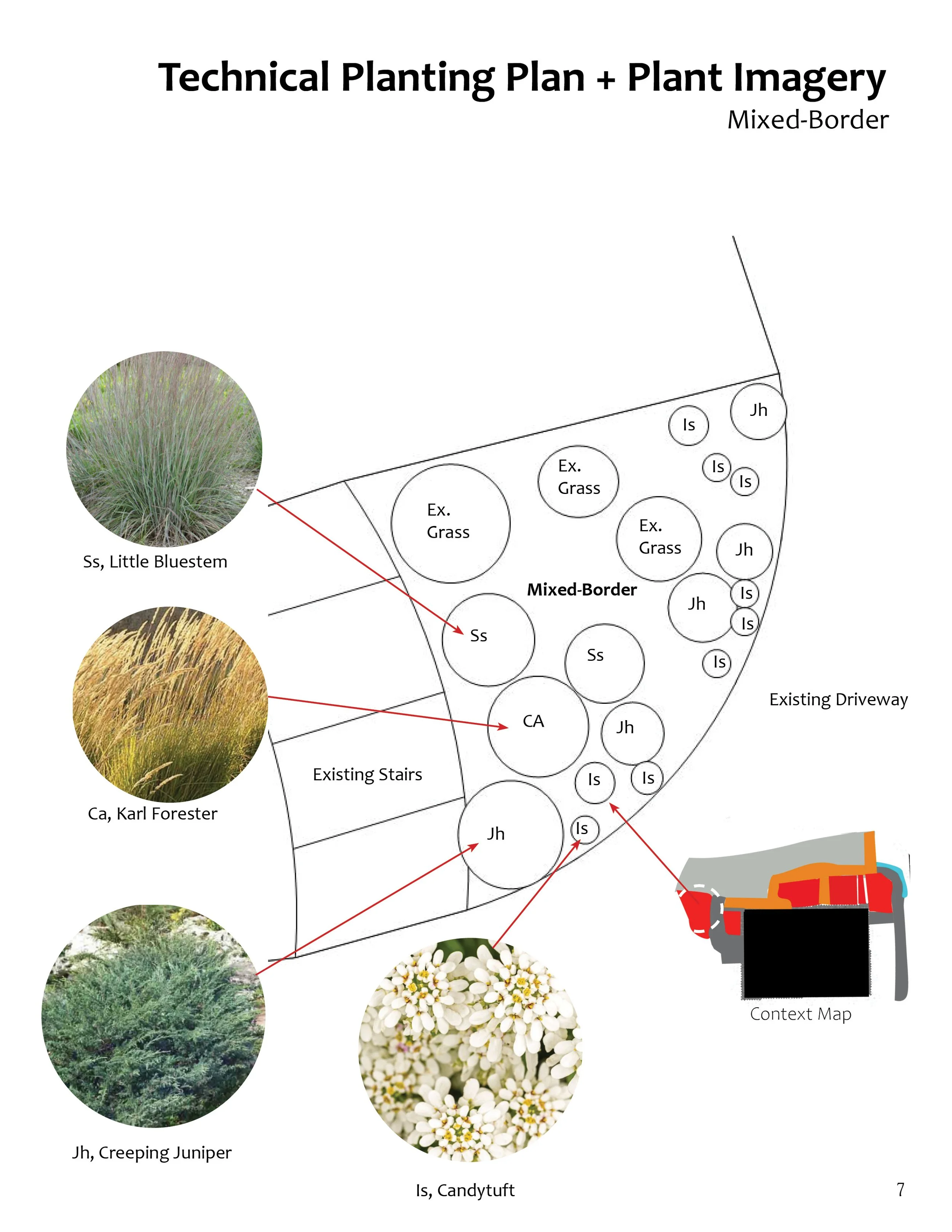
Reframe the side entry as the primary arrival with clearer bed lines and layered planting. Taller massing establishes enclosure near the patio, while lower drifts define the walk and reinforce the approach without competing with the architecture.
-
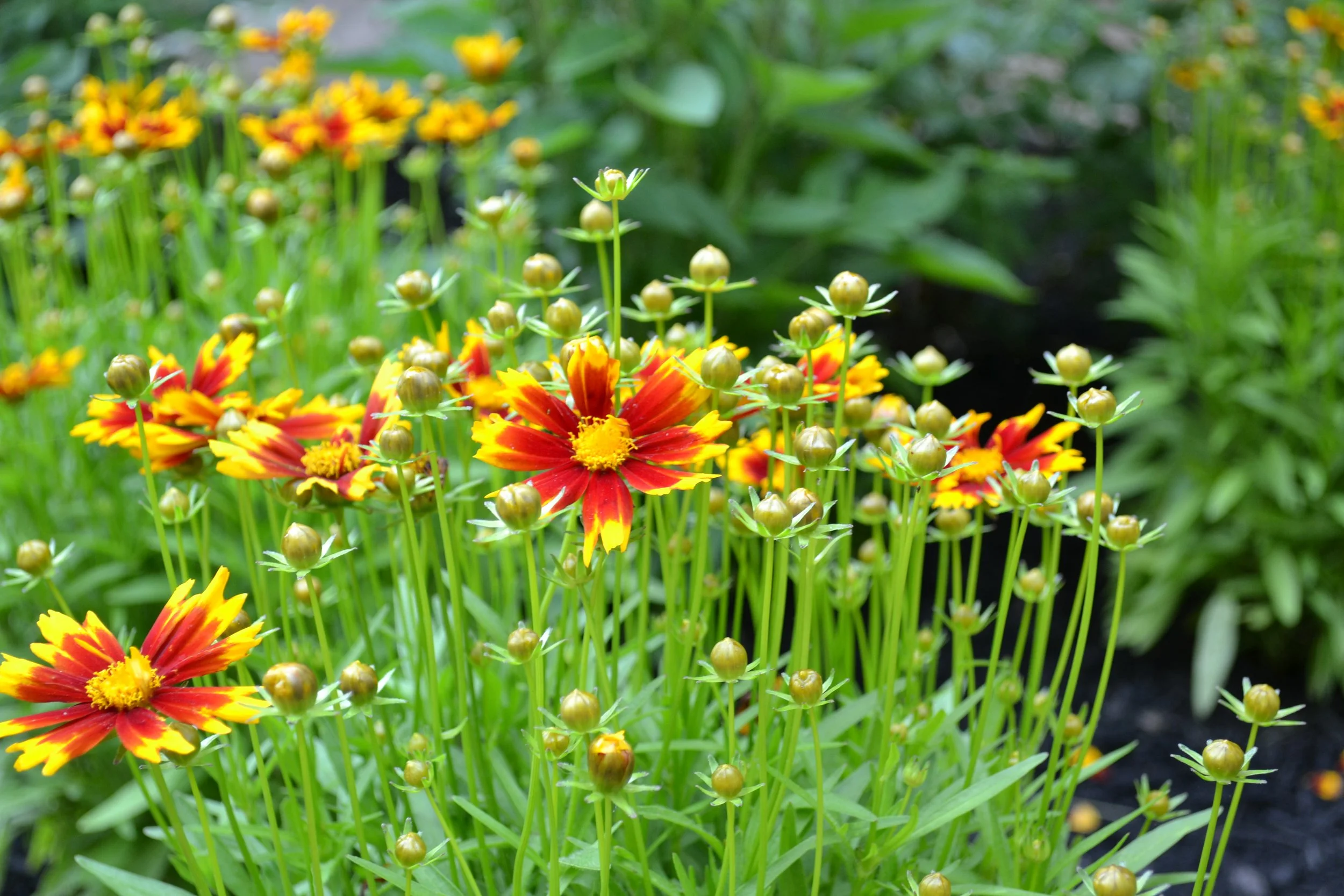
Evergreen structure and fine texture do the heavy lifting. Inkberry holly (Ilex glabra) anchors the screening, switchgrass (Panicum virgatum) adds vertical rhythm, and Pennsylvania sedge (Carex pensylvanica) knits the ground plane to reduce exposed mulch and stabilize the edge.
-
The entry now reads as intentional and primary. Movement to the door is clear, and the planting holds structure in winter while gaining cohesion as the ground layer fills in.
selected images




process
-
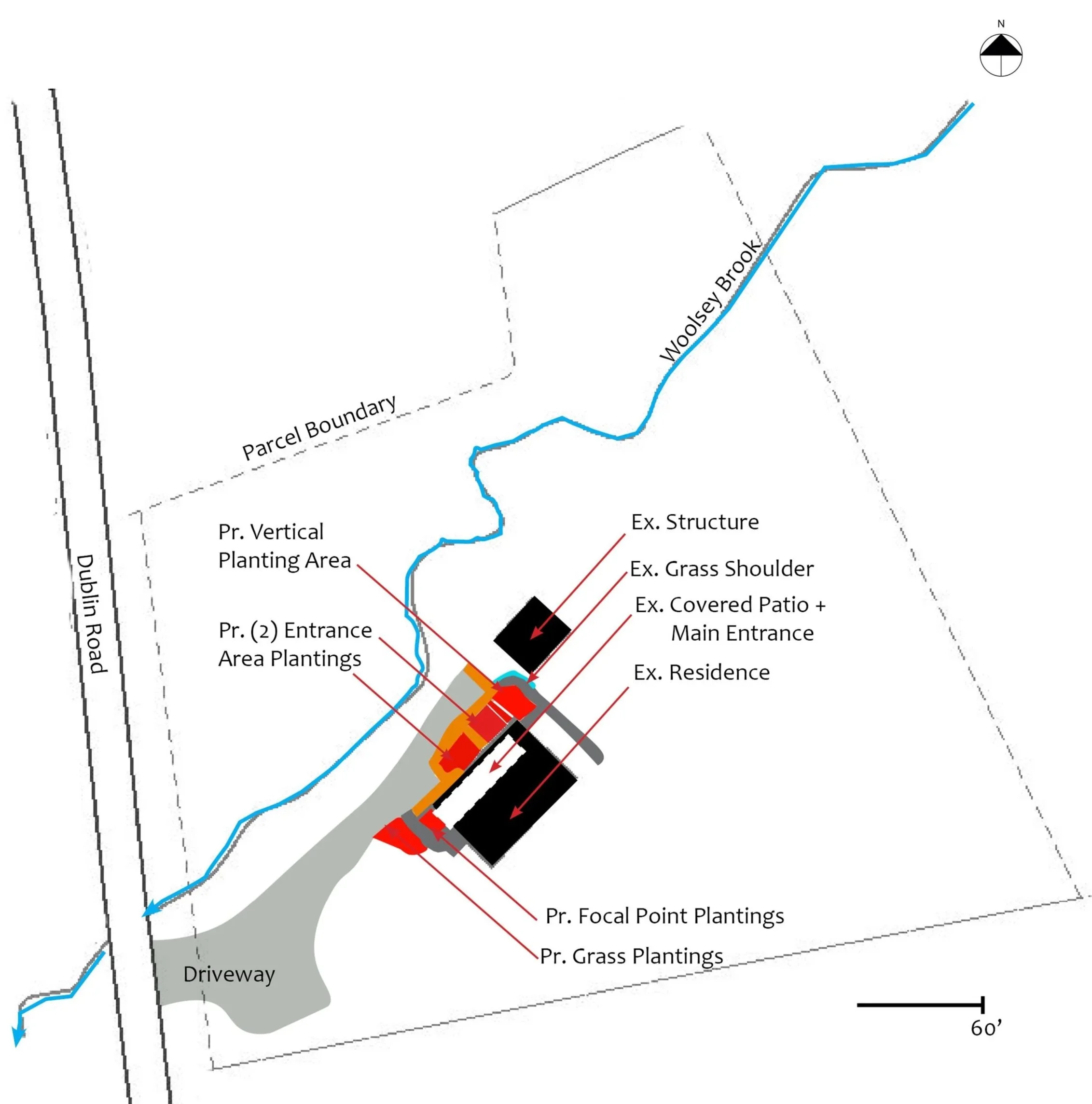
![Site map showing a residence with various plantings, a driveway, and a creek running through the property, with labels for walls, entry areas, and landscape features.]()
Focus areas
-
![Backyard patio area with stone staircase leading to upper deck, black mulch garden beds, a small brick pillar, and various construction materials.]()
Existing conditions
-
![Landscape design plan showing existing structures, walkways, and plantings with labeled plant types and a small section detailing design features such as tasteful beautification, four-season interest, native plants, and screening.]()
Technical planting plan
-
![A technical planting plan map showing various plant species, including Little Bluestem, Karl Forester, Creeping Juniper, and Candytuft, with their respective images and labels. The plan indicates a mixed-border area near an existing driveway.]()
Technical planting plan
Foundation Plantings
Pennington, NJ
Existing Conditions
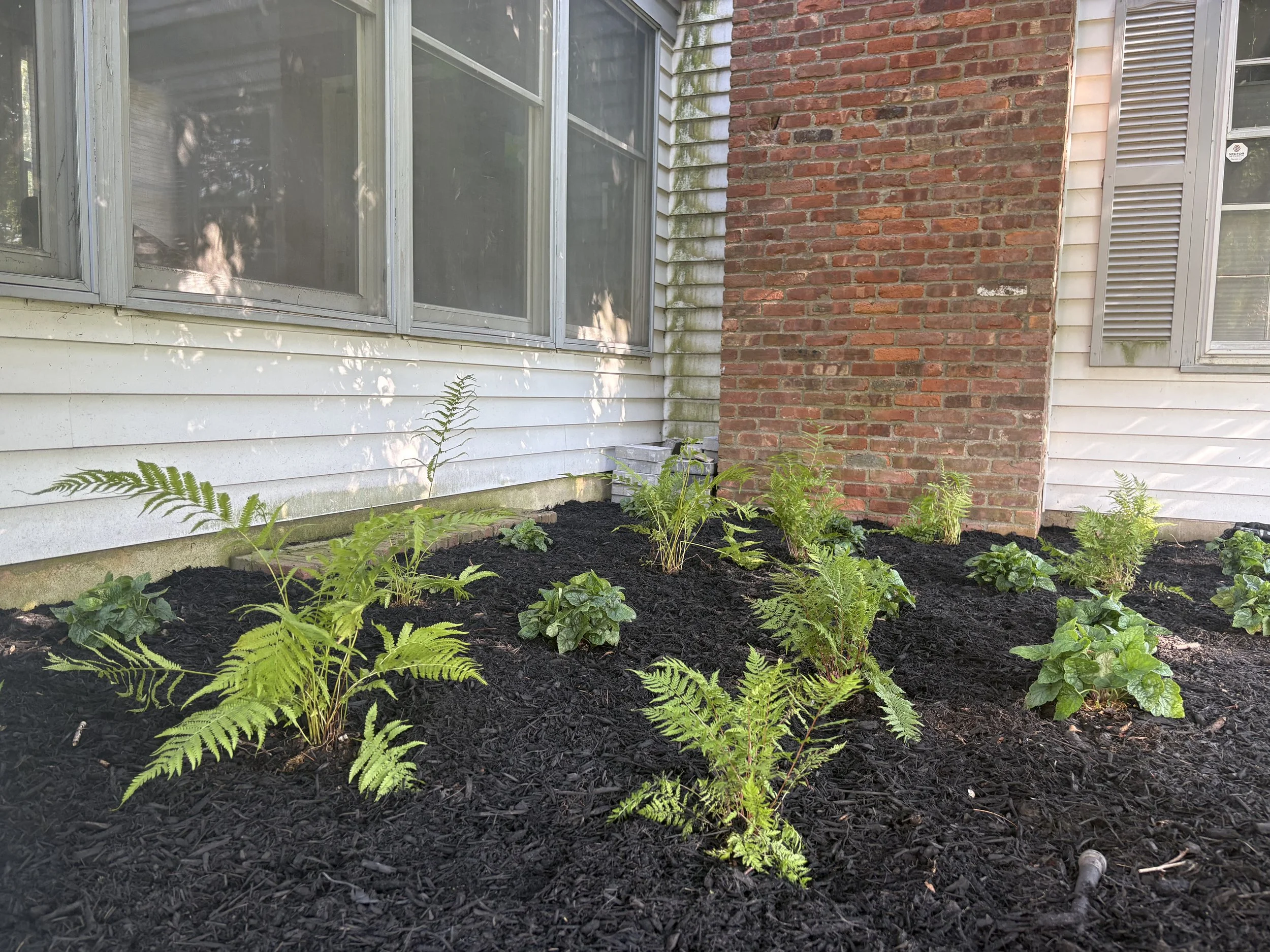
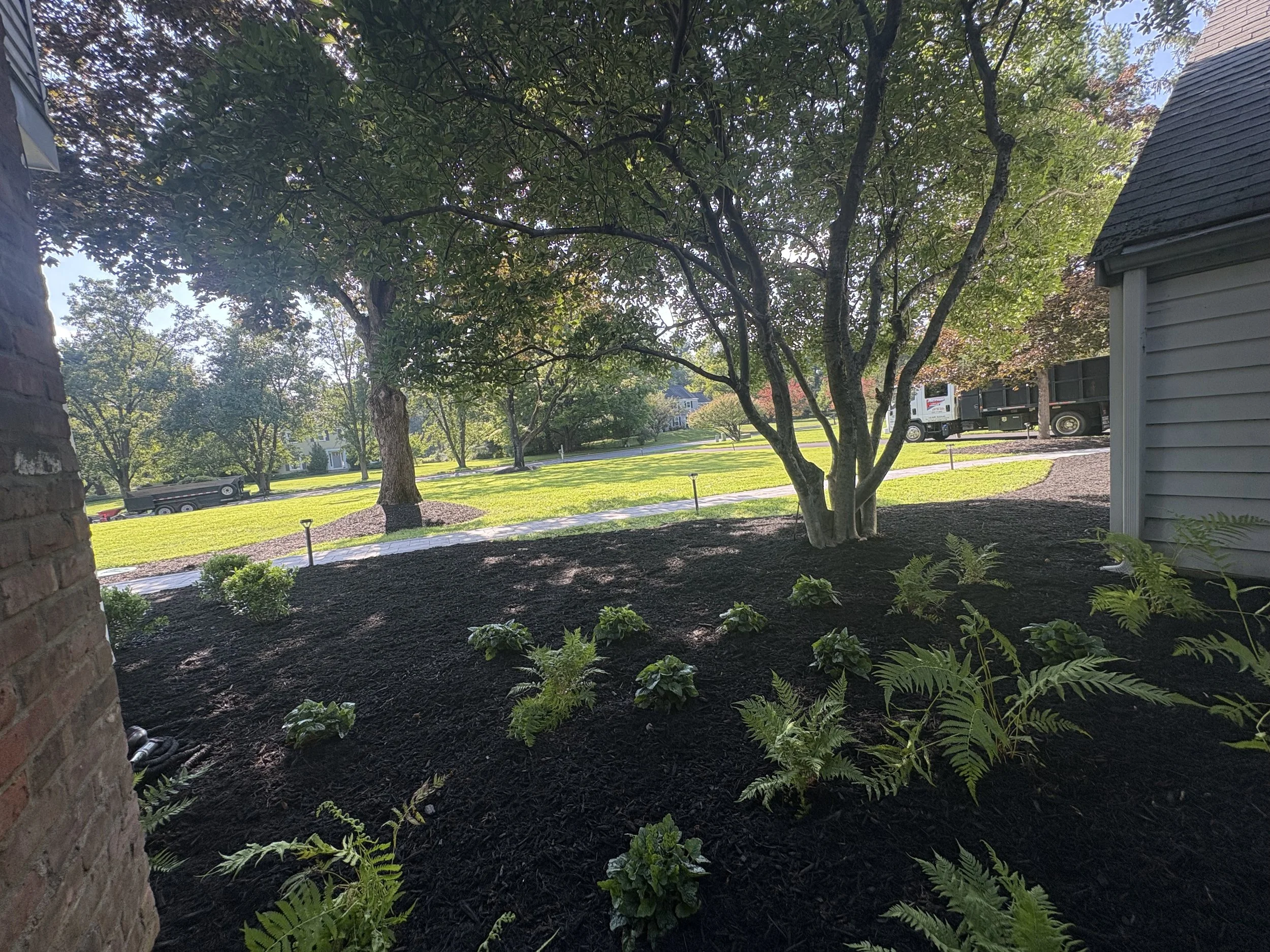
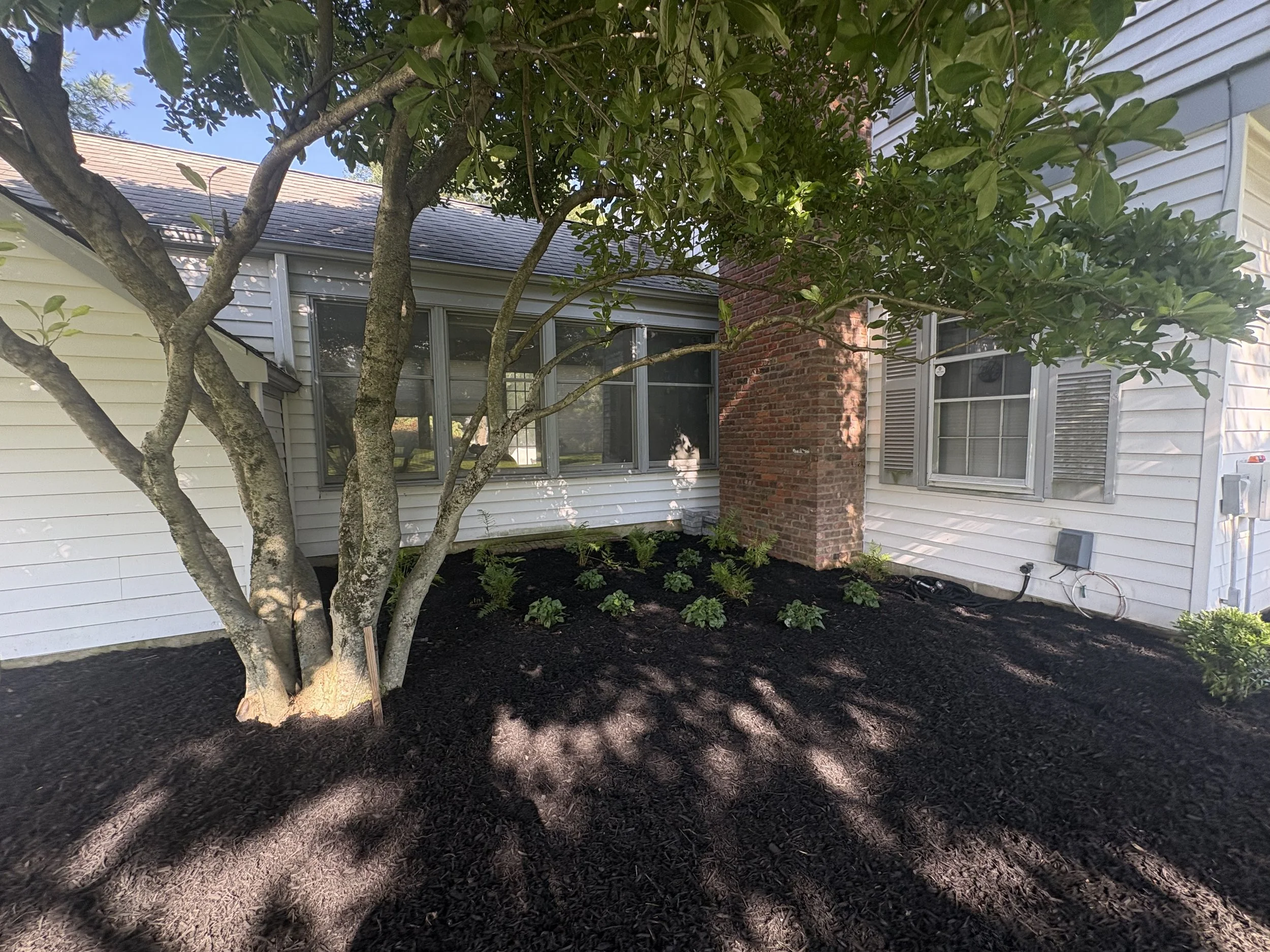
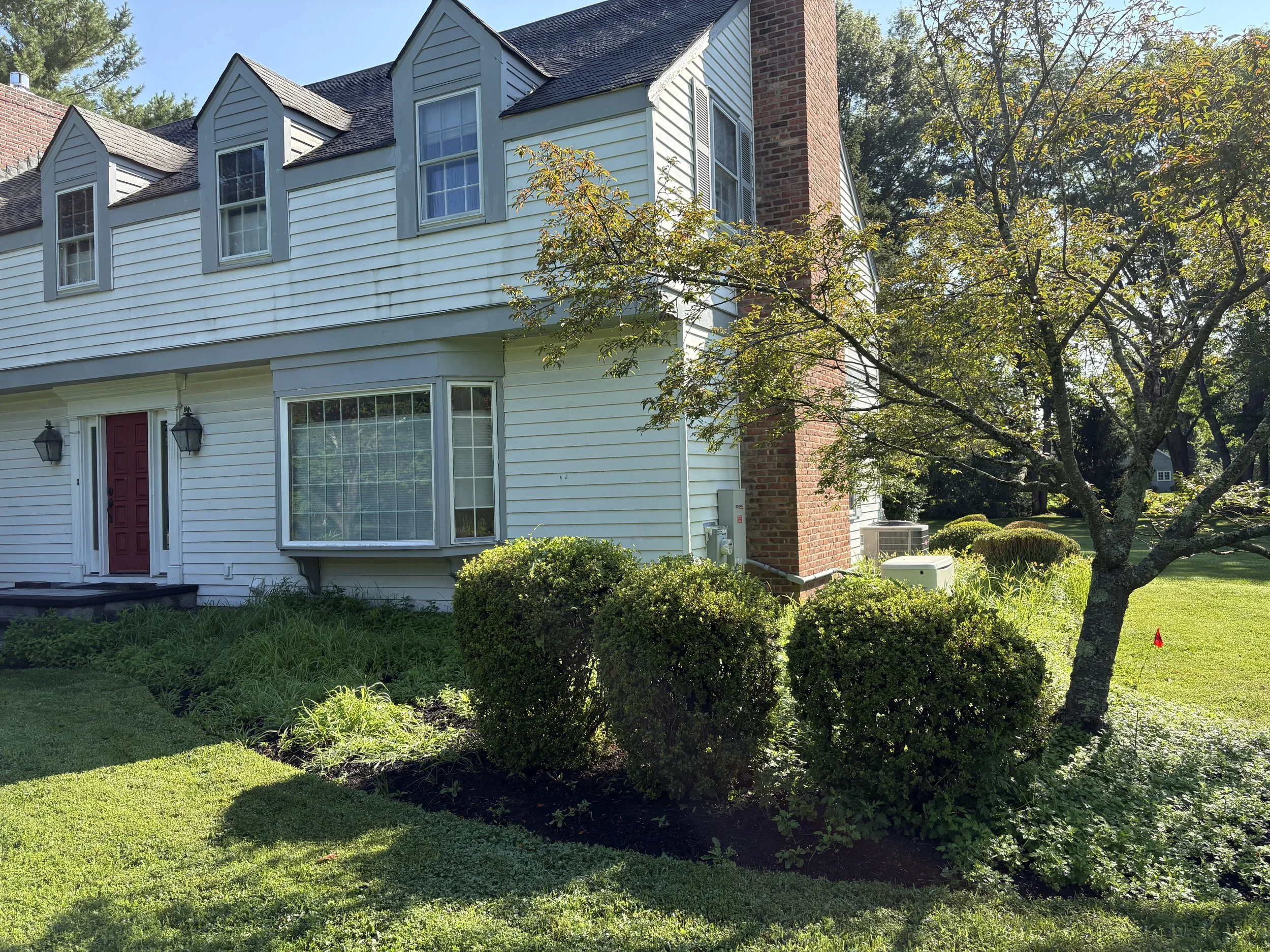
Mature residential landscape with established shrubs and trees, but limited continuity across the foundation beds and entry areas.
-
Strengthen the front foundation planting and create a clearer arrival sequence, while introducing a shade garden within the front courtyard that can also be viewed from the home’s large windows.
-
Evergreen structure at the foundation, layered with shade-tolerant shrubs, ferns, and groundcovers. The courtyard planting extends the character of the property’s shaded rear landscape into the front of the home.
-
A more cohesive front landscape with stronger year-round structure, a softer transition between the house, walk, and lawn, and a garden experience that is visible from both inside and outside the home.
selected images
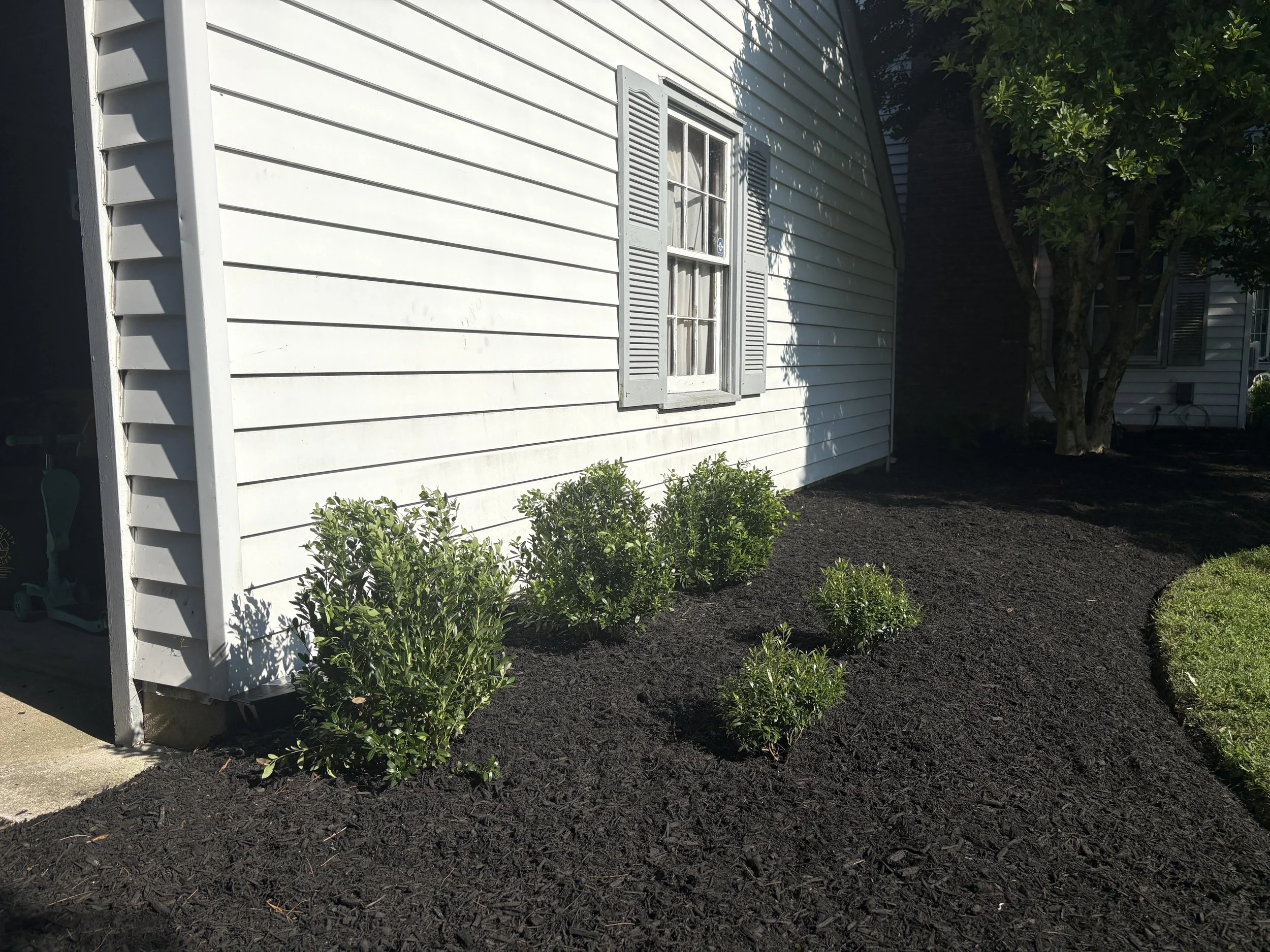
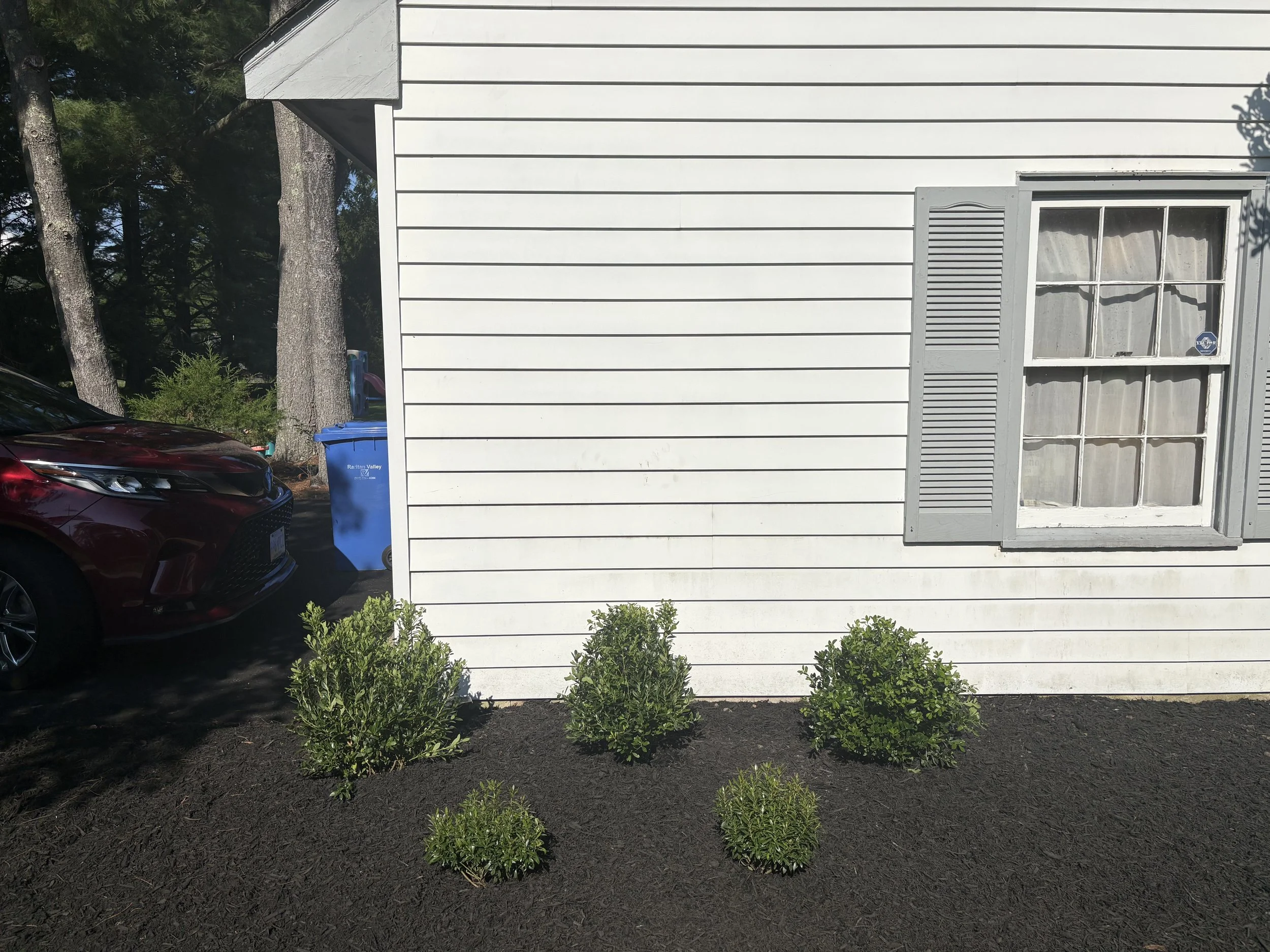
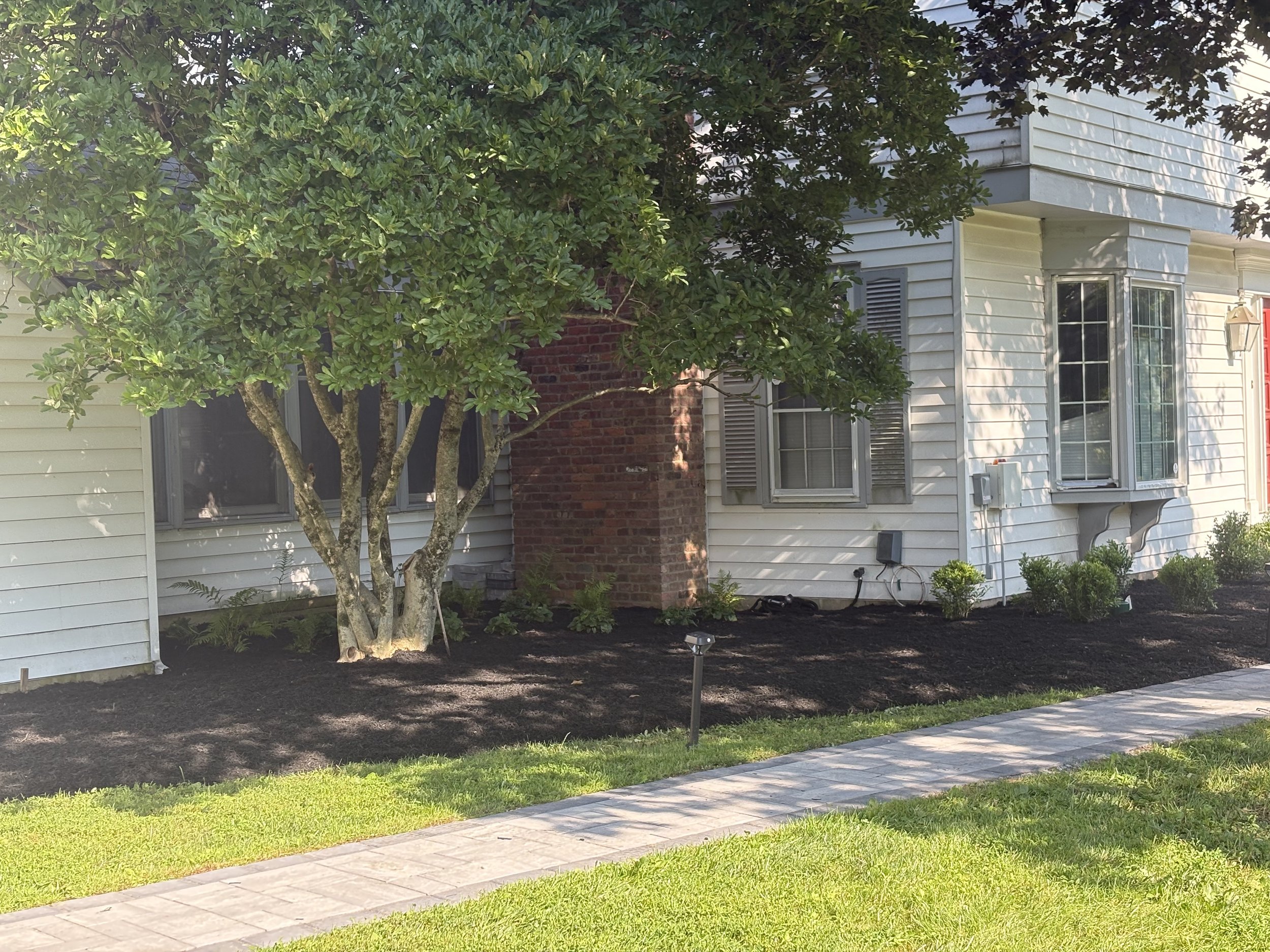
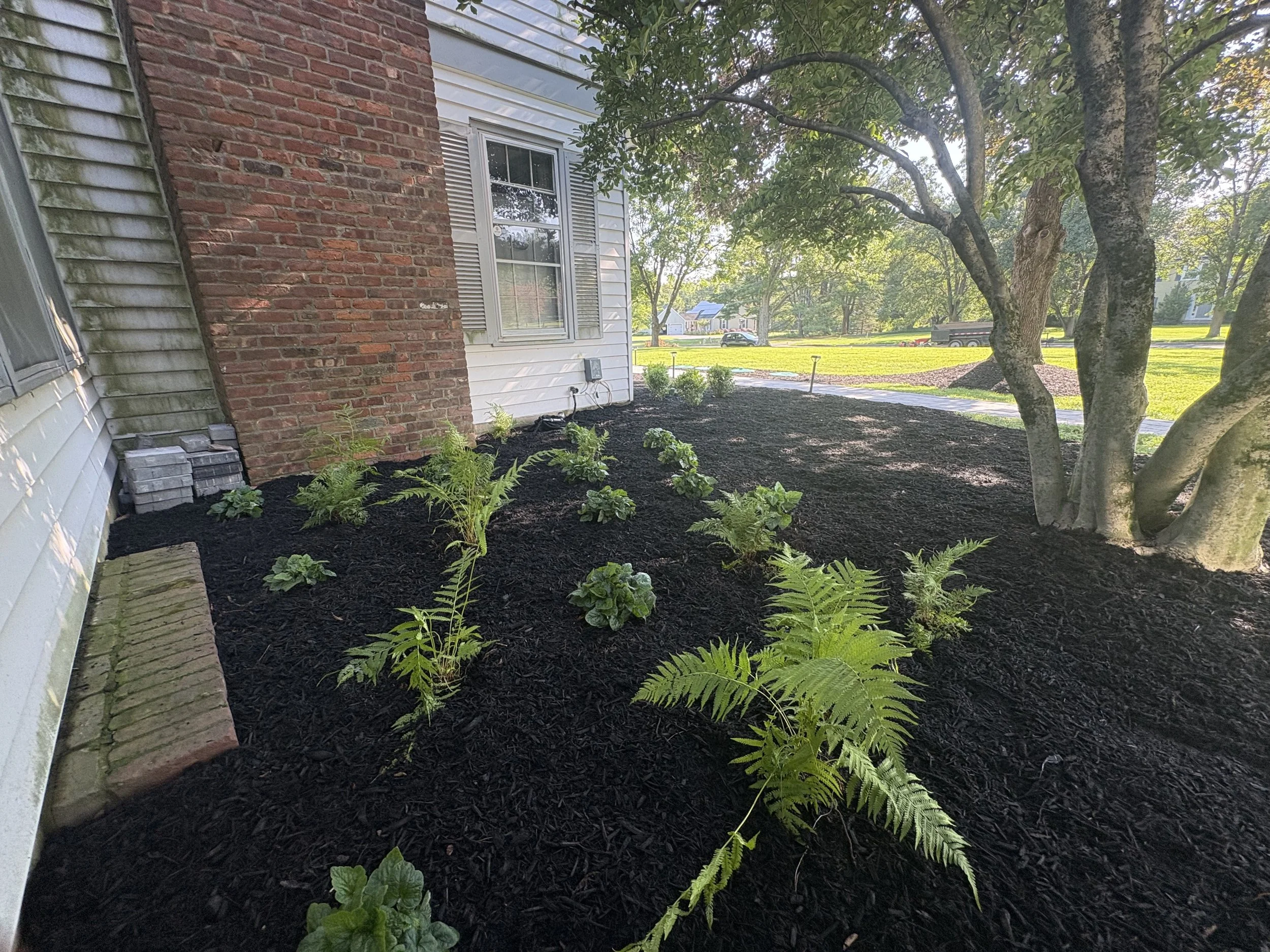
process
-
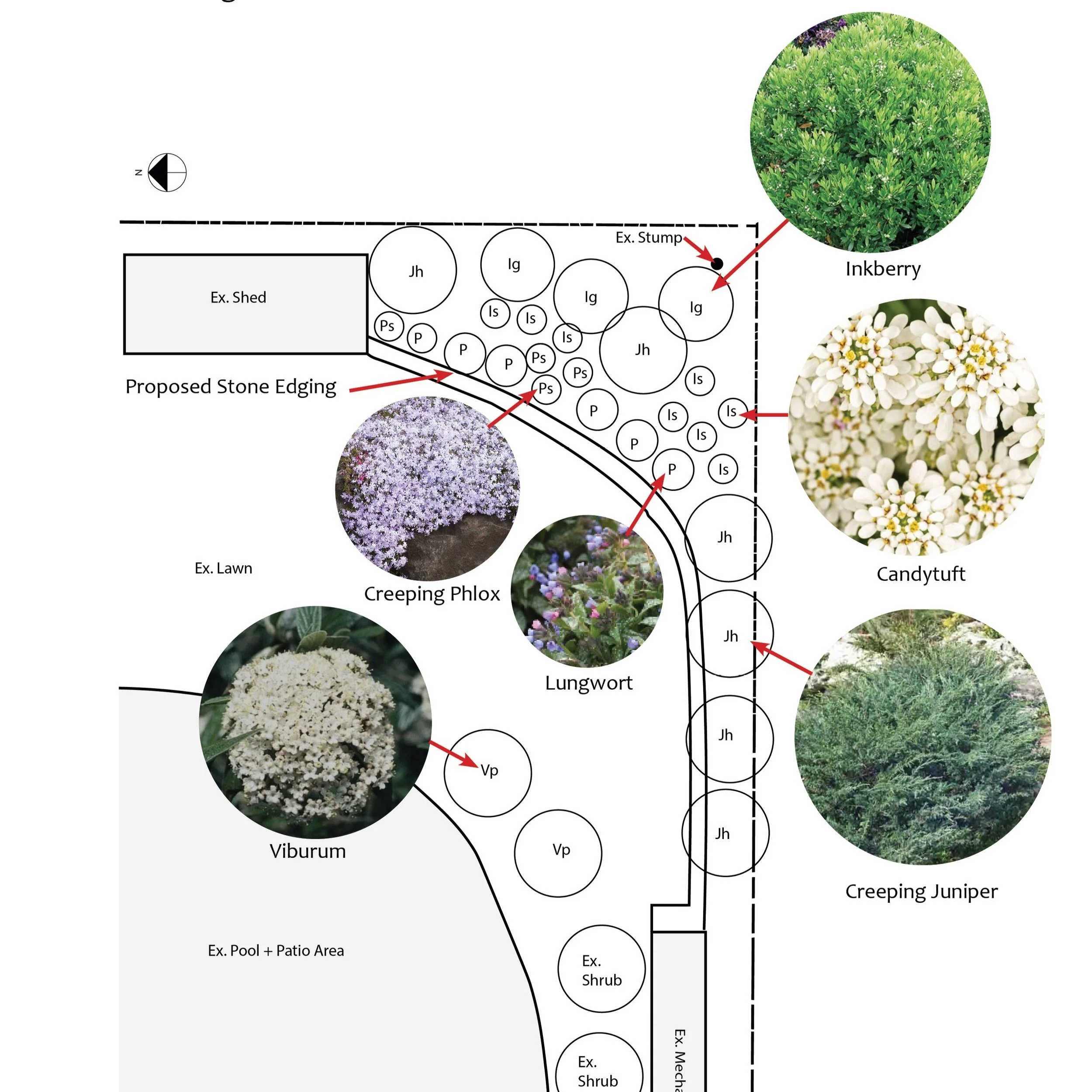
![Landscape design plan featuring various plants and trees, including inkberry, candytuft, creeping juniper, lungwort, creeping phlox, viburnum, and others, with annotations for stone edging, planting areas, and shade structures.]()
Existing front elevation
-
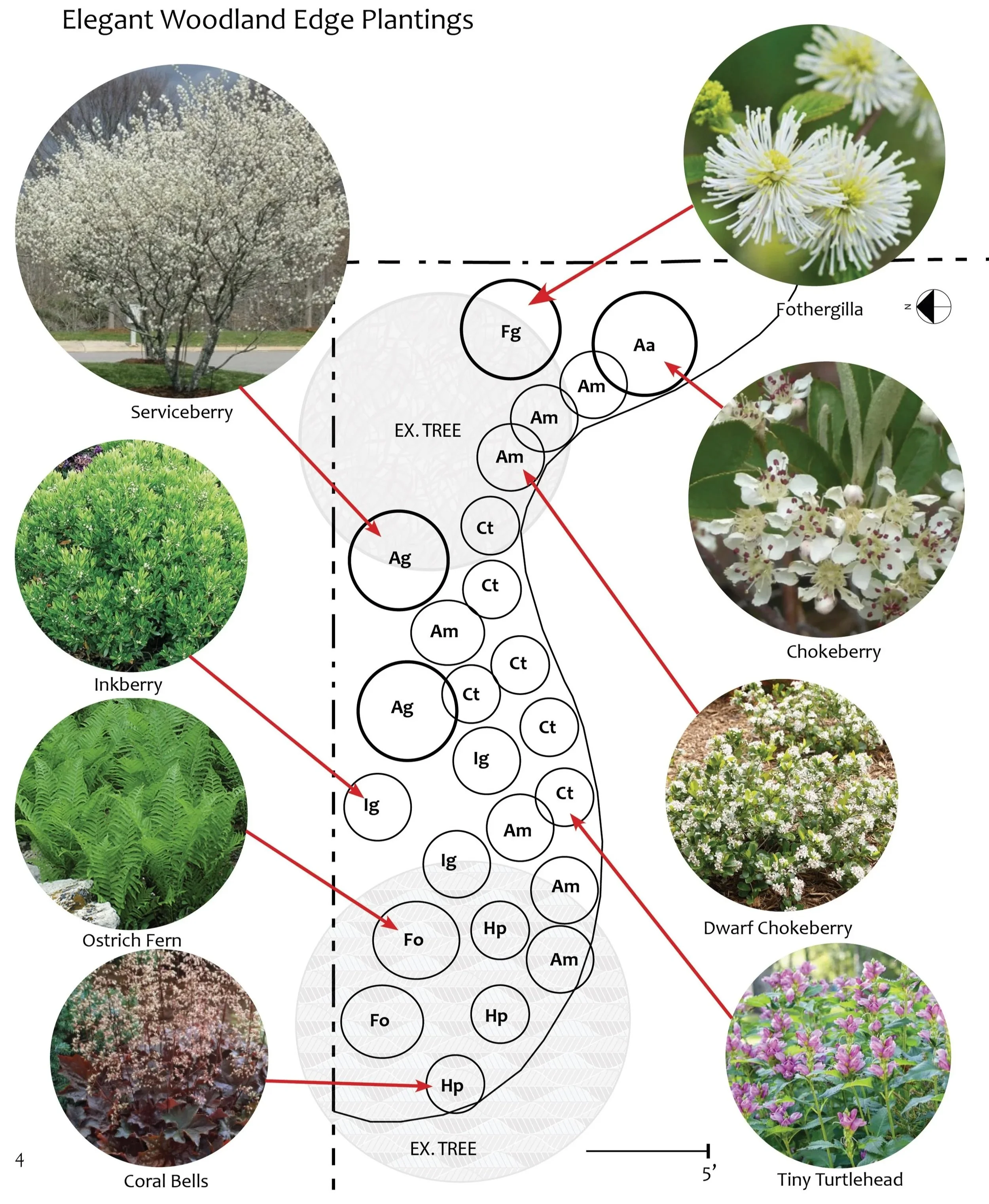
![Diagram of elegant woodland edge plantings with images of various plants such as serviceberry, inkberry, ostrich fern, coral bells, thoregilla, chokeberry, dwarf chokeberry, and tiny turtlehead, with labels and plant codes.]()
Existing front elevation
-
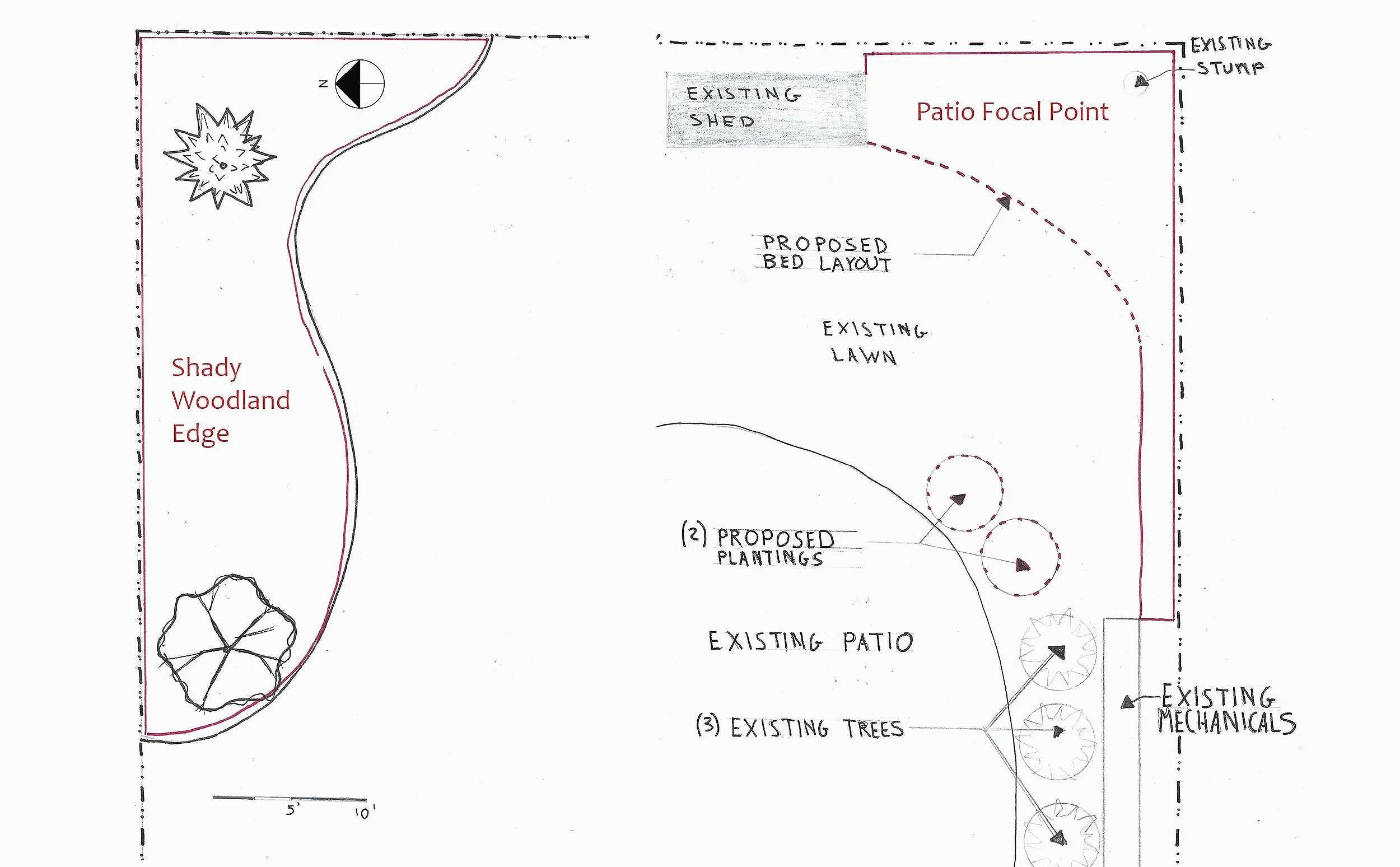
![Landscape plan of a backyard garden with existing and proposed features, including an existing shed, patio focal point, existing lawn, proposed bed layout, proposed plantings, existing patio, existing trees, and existing mechanicals, with a scale at the bottom.]()
Planting plan
-
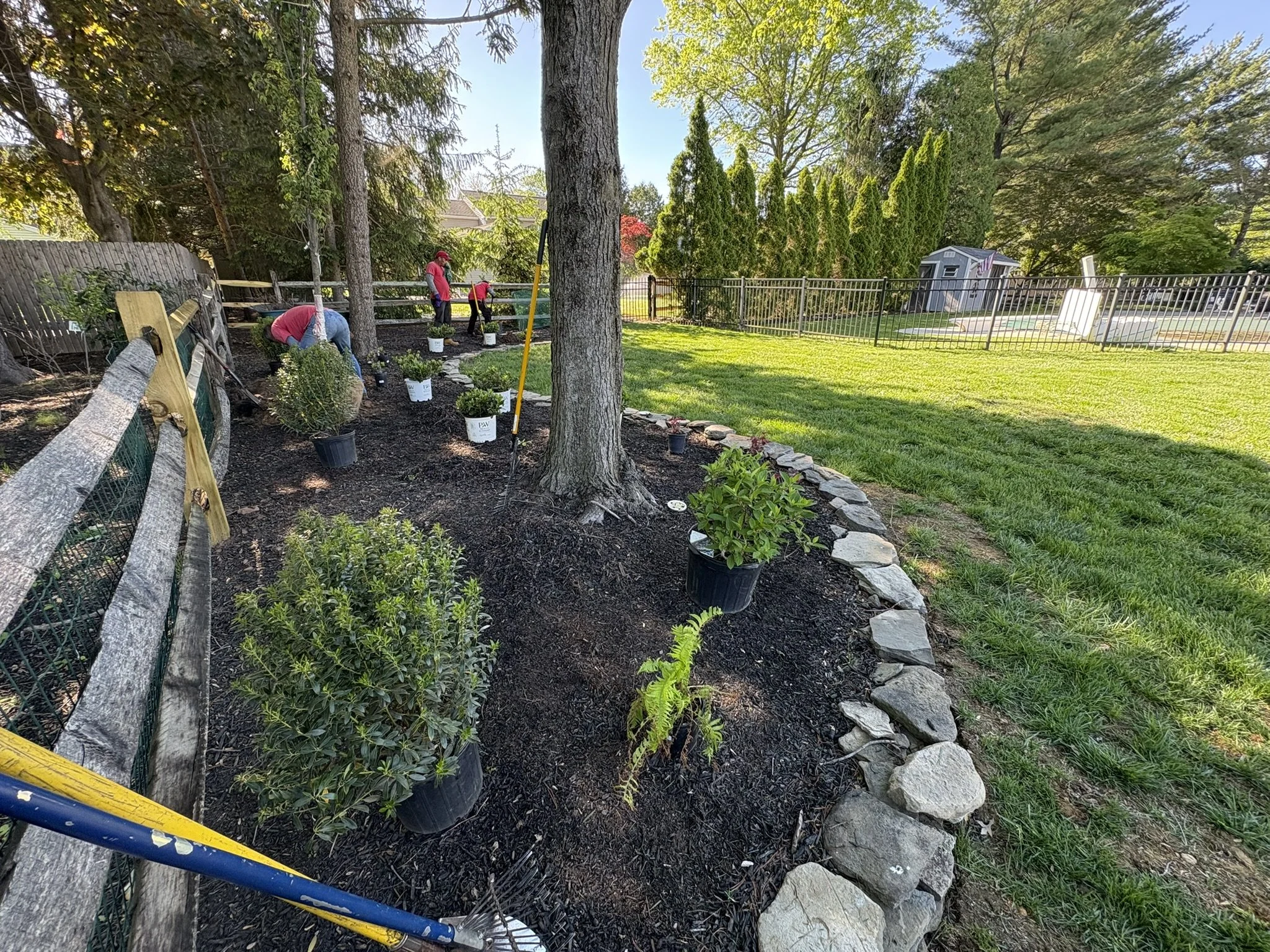
![People planting shrubs and flowers in a landscaped garden bed with a rock border, trees, and a backyard fence on a sunny day.]()
Installation collaboration with Action Lawn & Landscape
Entry Garden Edits
Pennington, NJ
Setting
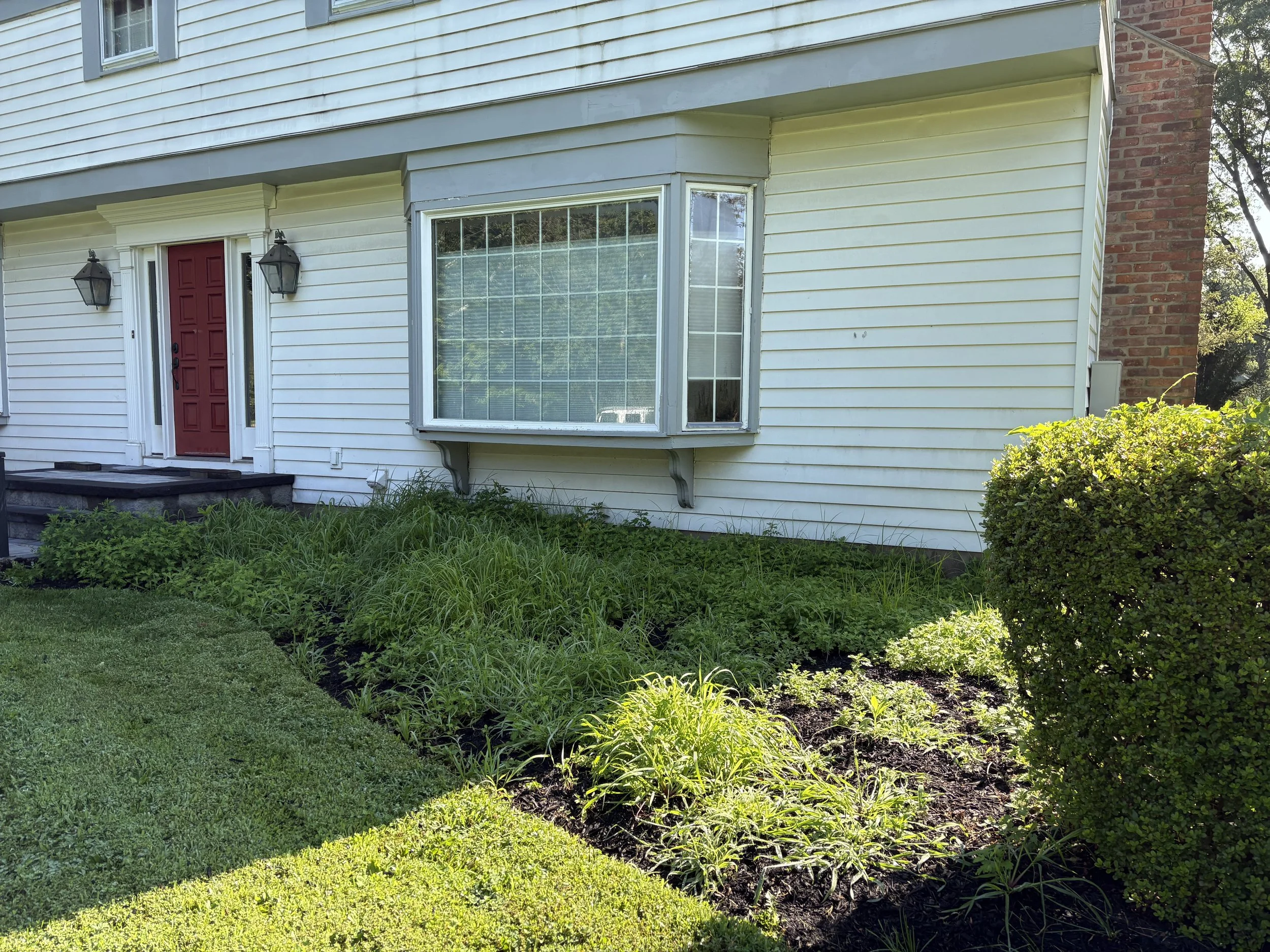
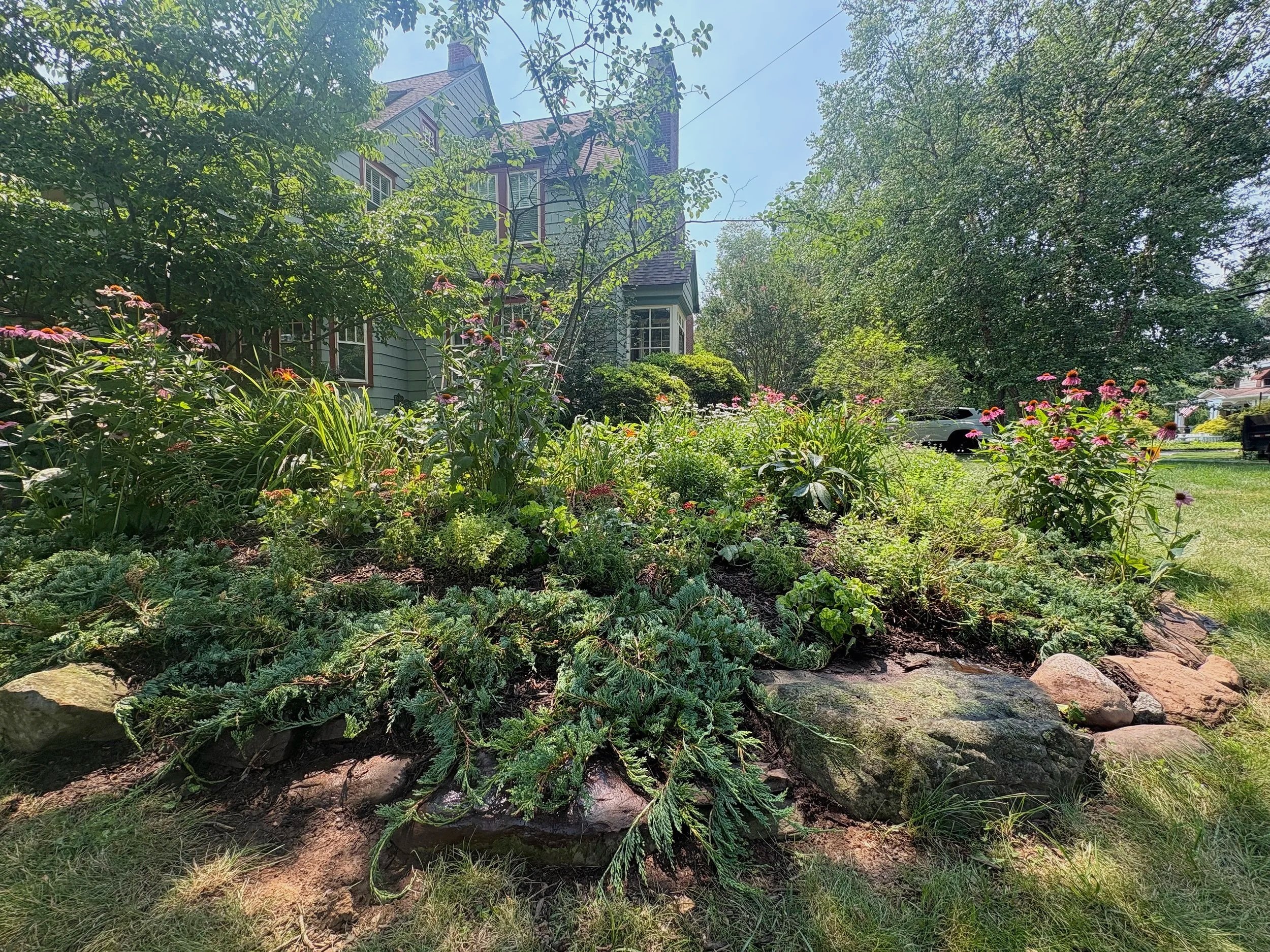
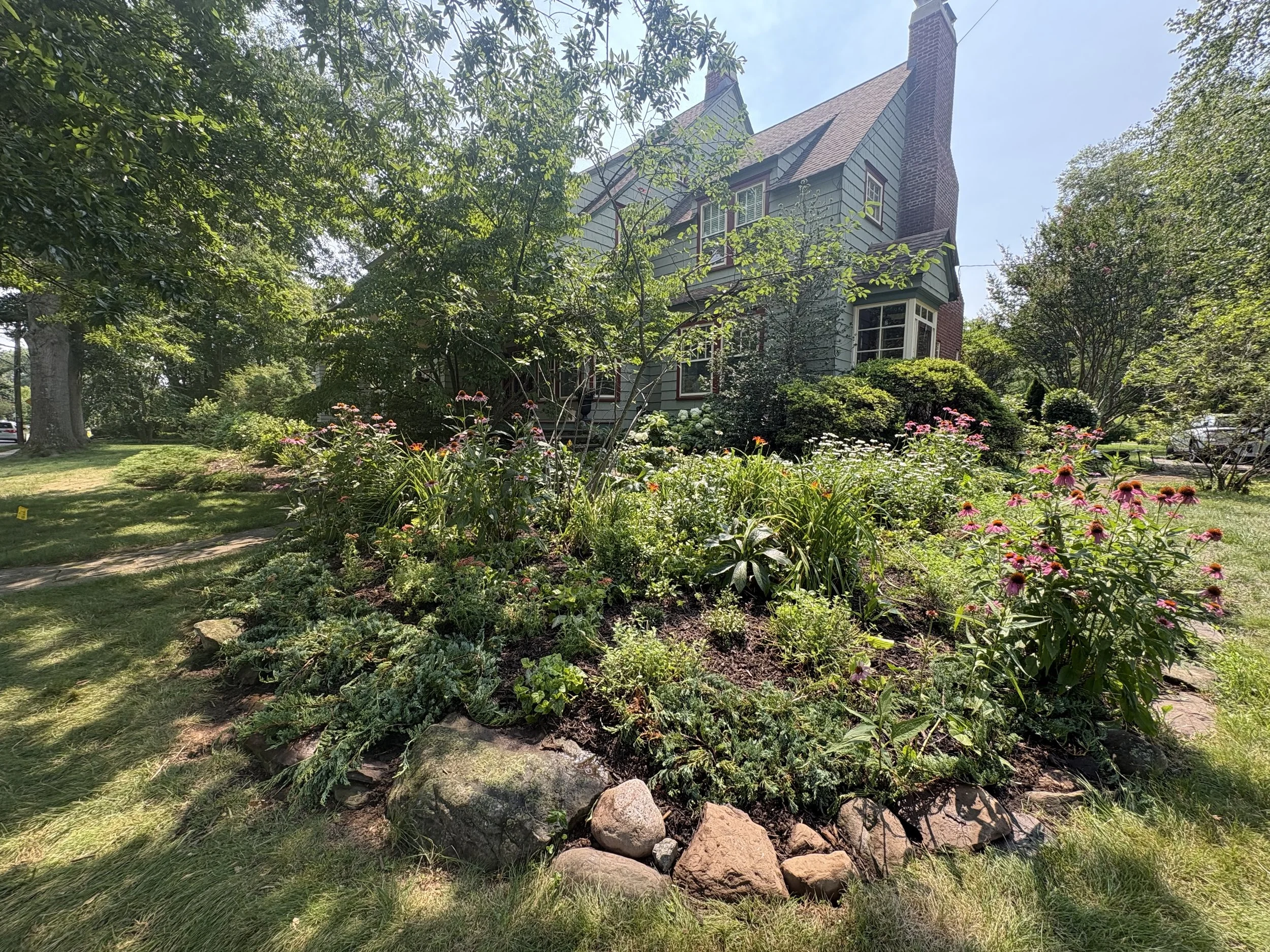
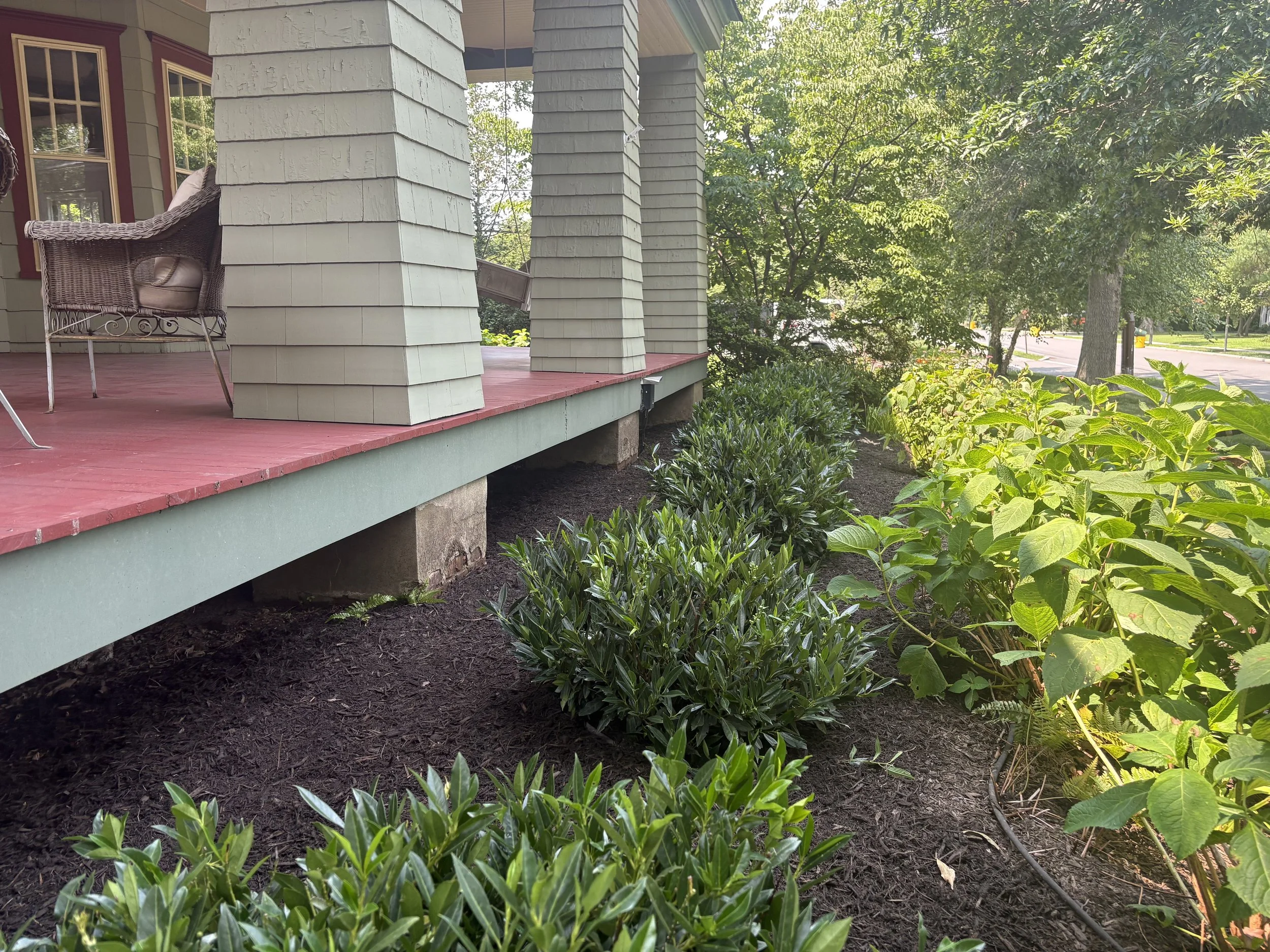
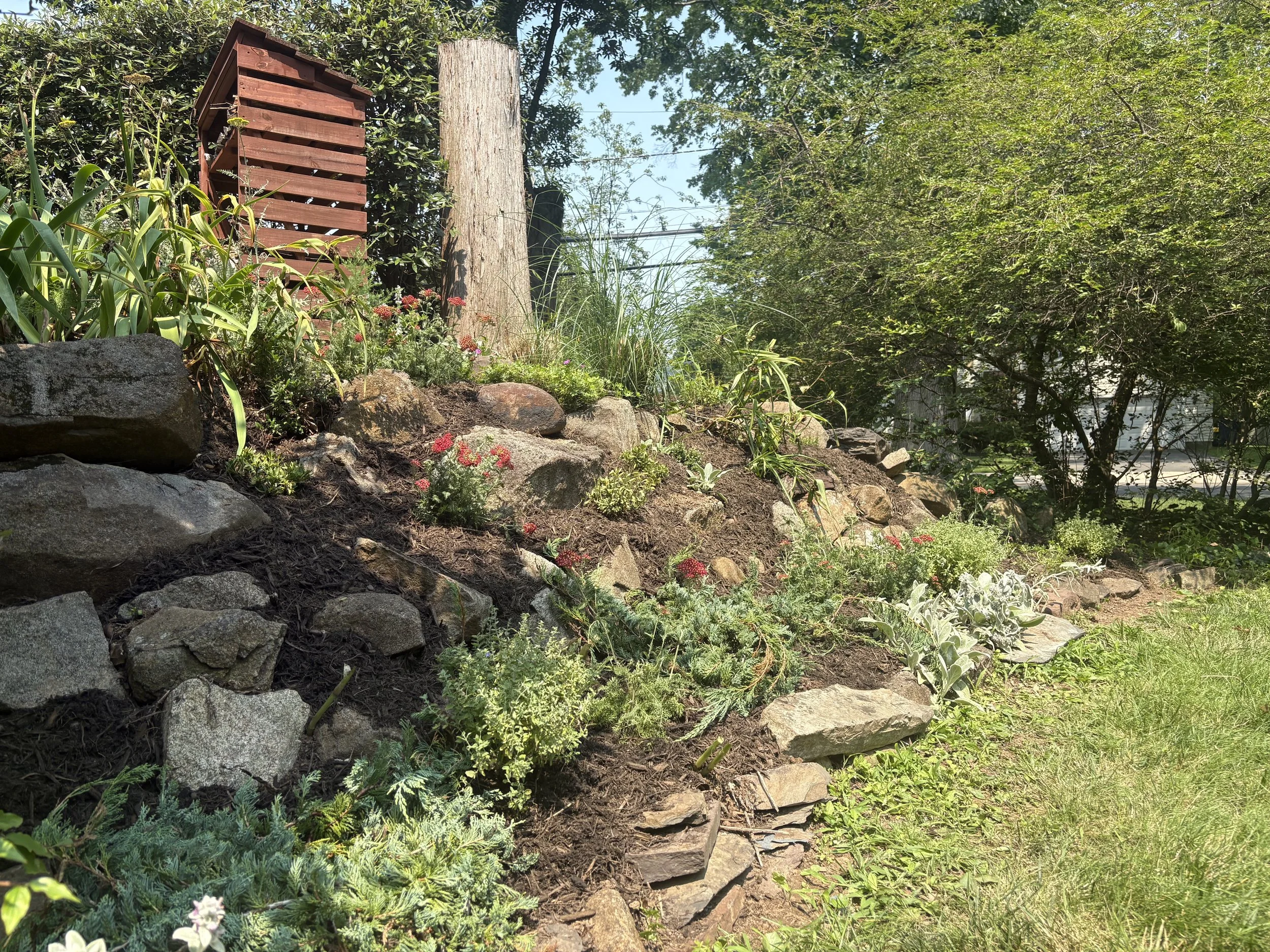
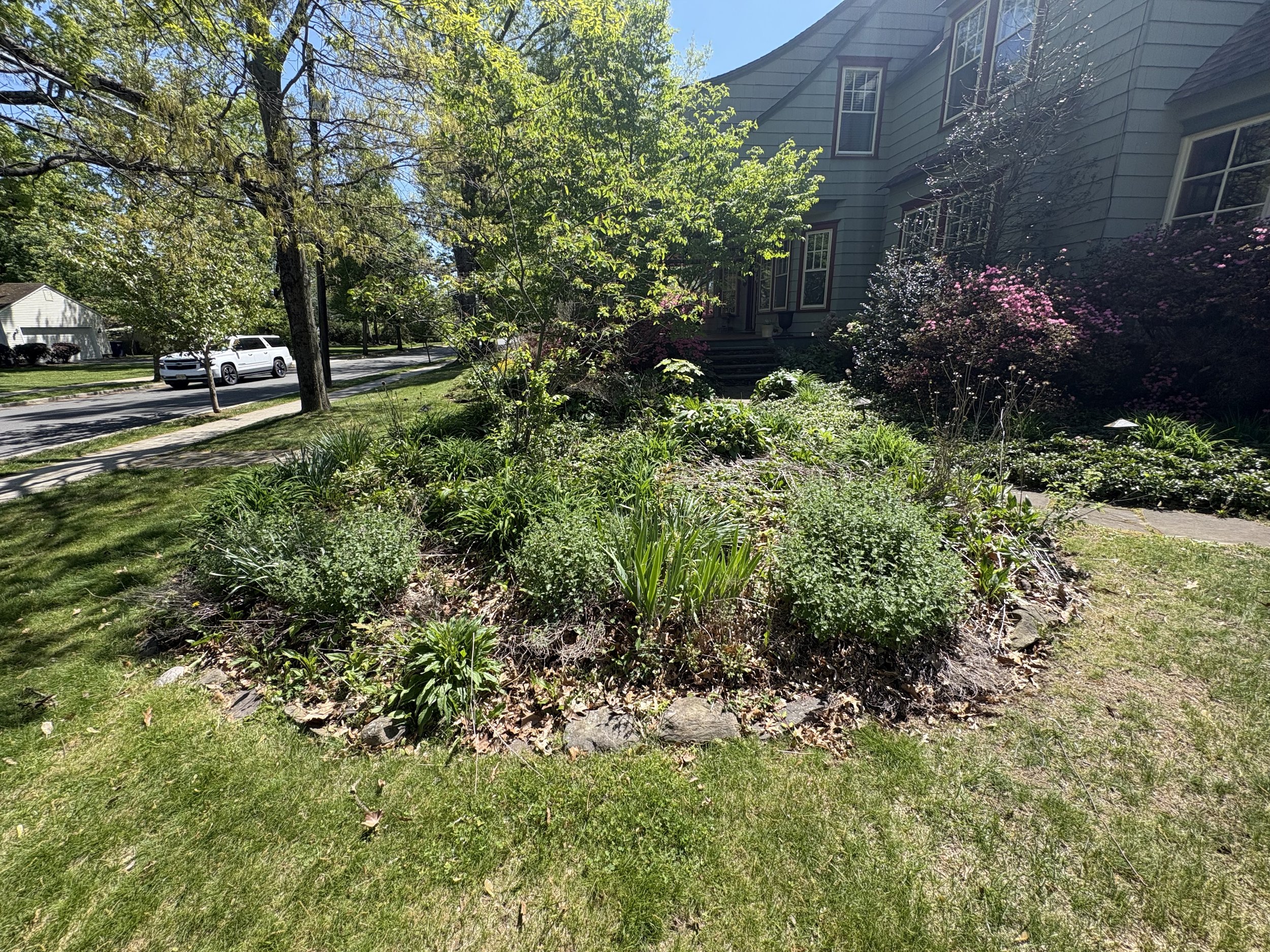
A layered residential garden with established plantings, mature trees, stonework, and several foundation beds in need of editing rather than full replacement.
-
Clarify the existing landscape, strengthen the foundation planting, and improve year-round structure while preserving the garden’s established character.
-
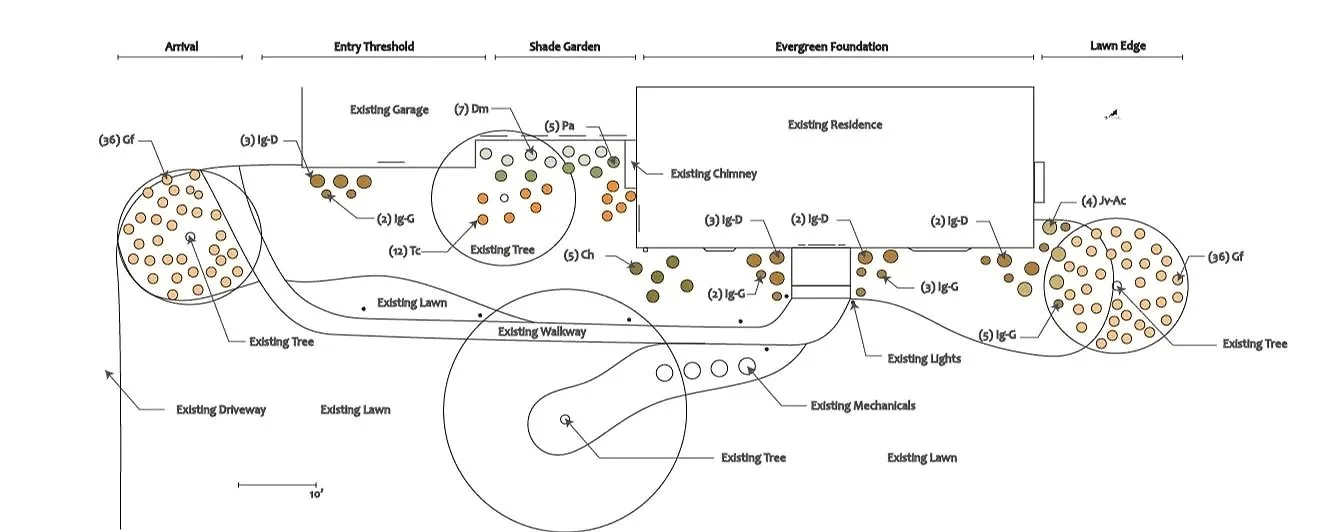
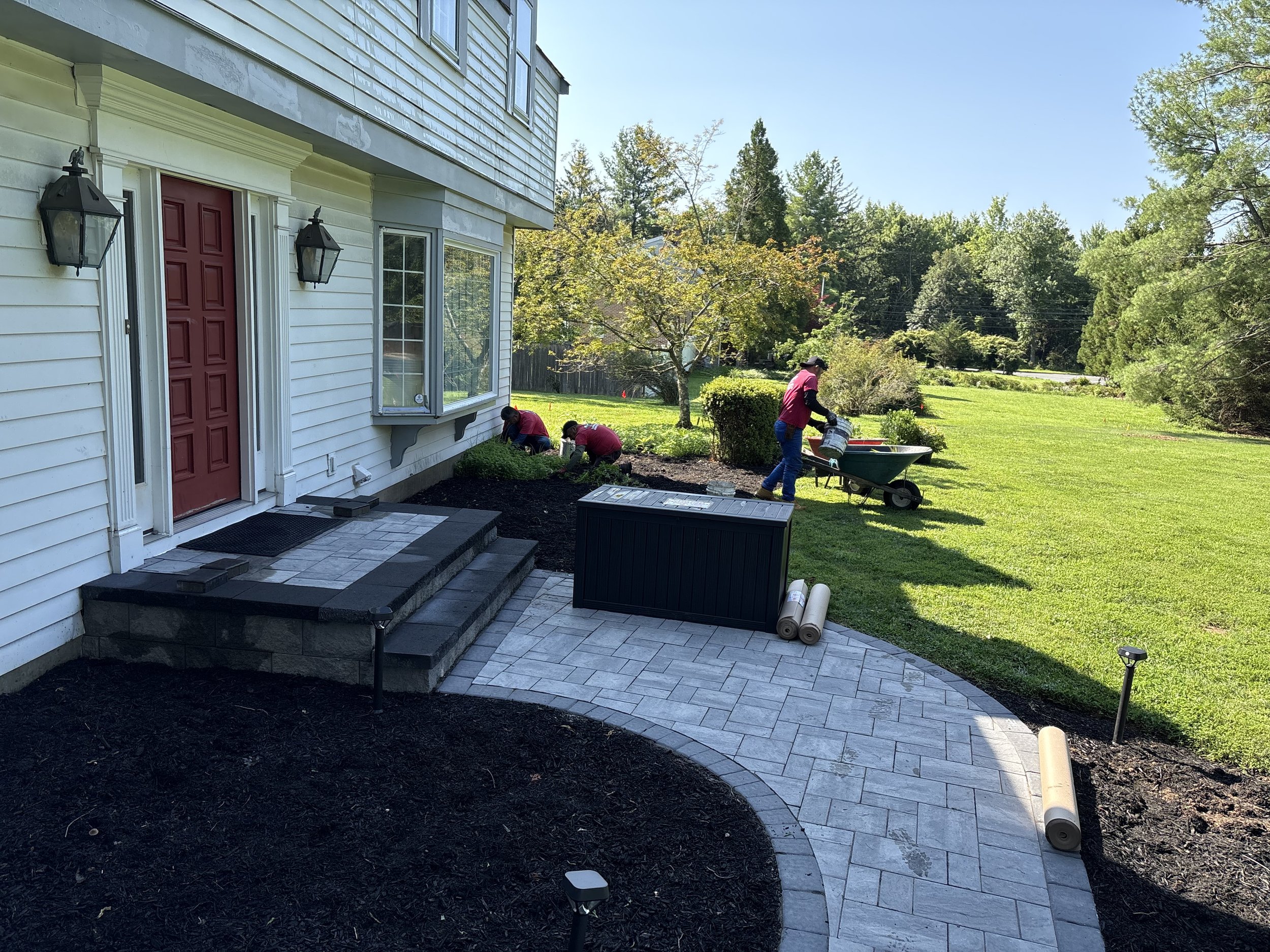
Existing material was selectively removed, thinned, or reorganized. New shrubs, groundcovers, and flowering perennials were added in deliberate masses to define edges, reinforce key views, and connect the individual beds as one landscape.
-
A more legible and cohesive garden with stronger structure, cleaner transitions, and a planting palette designed to settle naturally into the site over time.
selected images
process
-
![Backyard patio area with stone staircase leading to upper deck, black mulch garden beds, a small brick pillar, and various construction materials.]()
Existing conditions
-
![]()
Existing conditions
-
![]()
Existing conditions
-
![]()
Existing Conditions
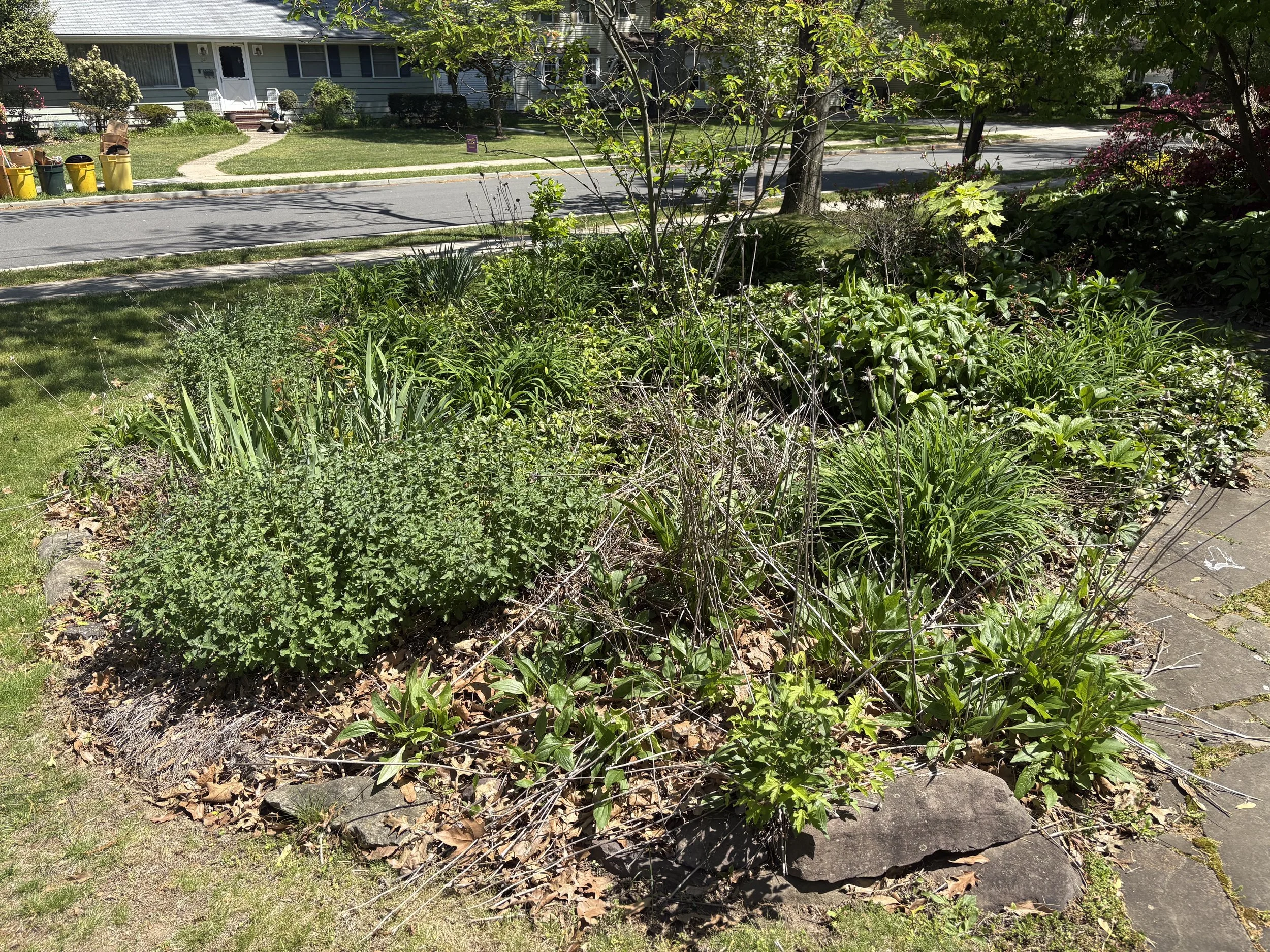
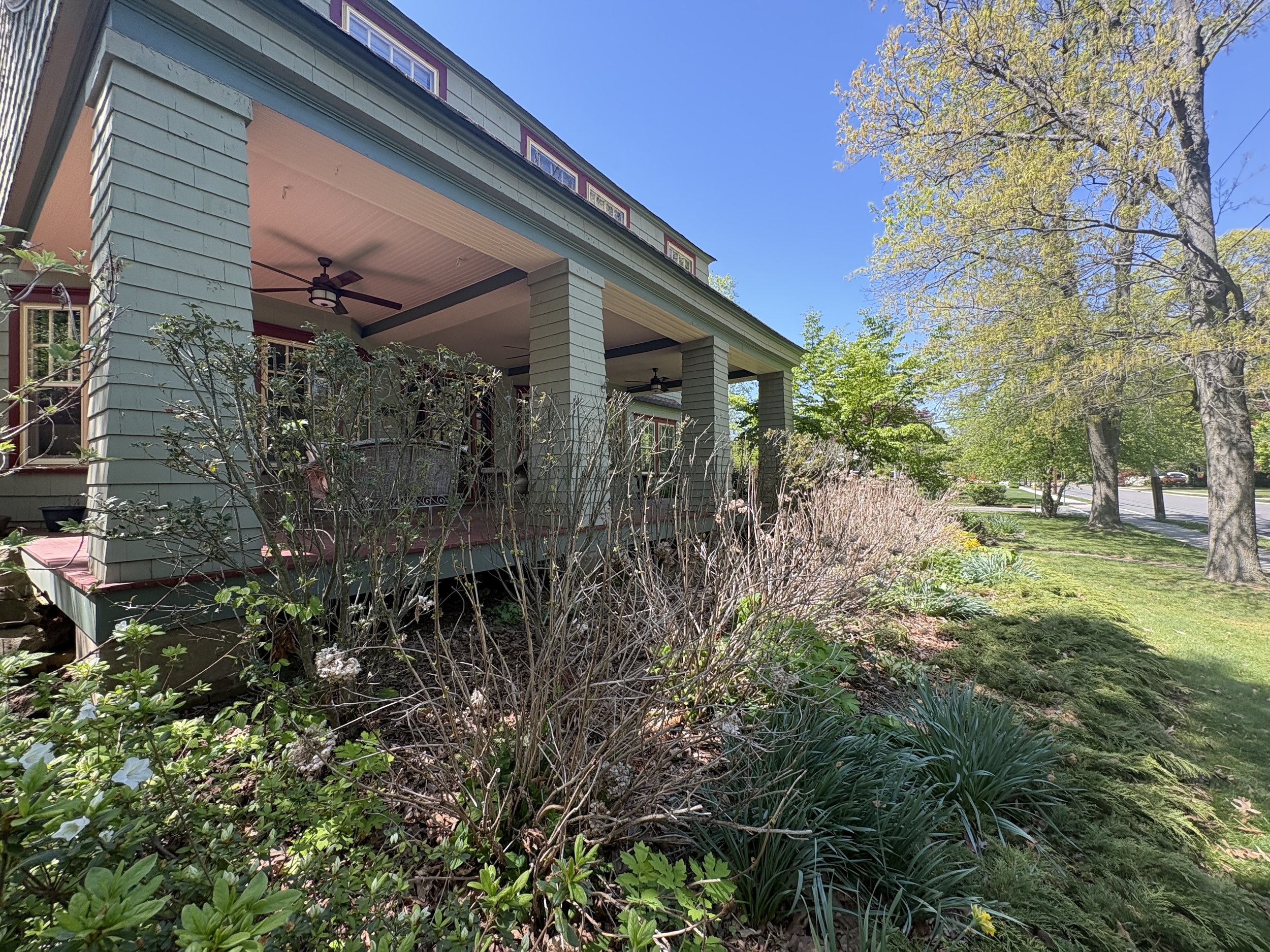
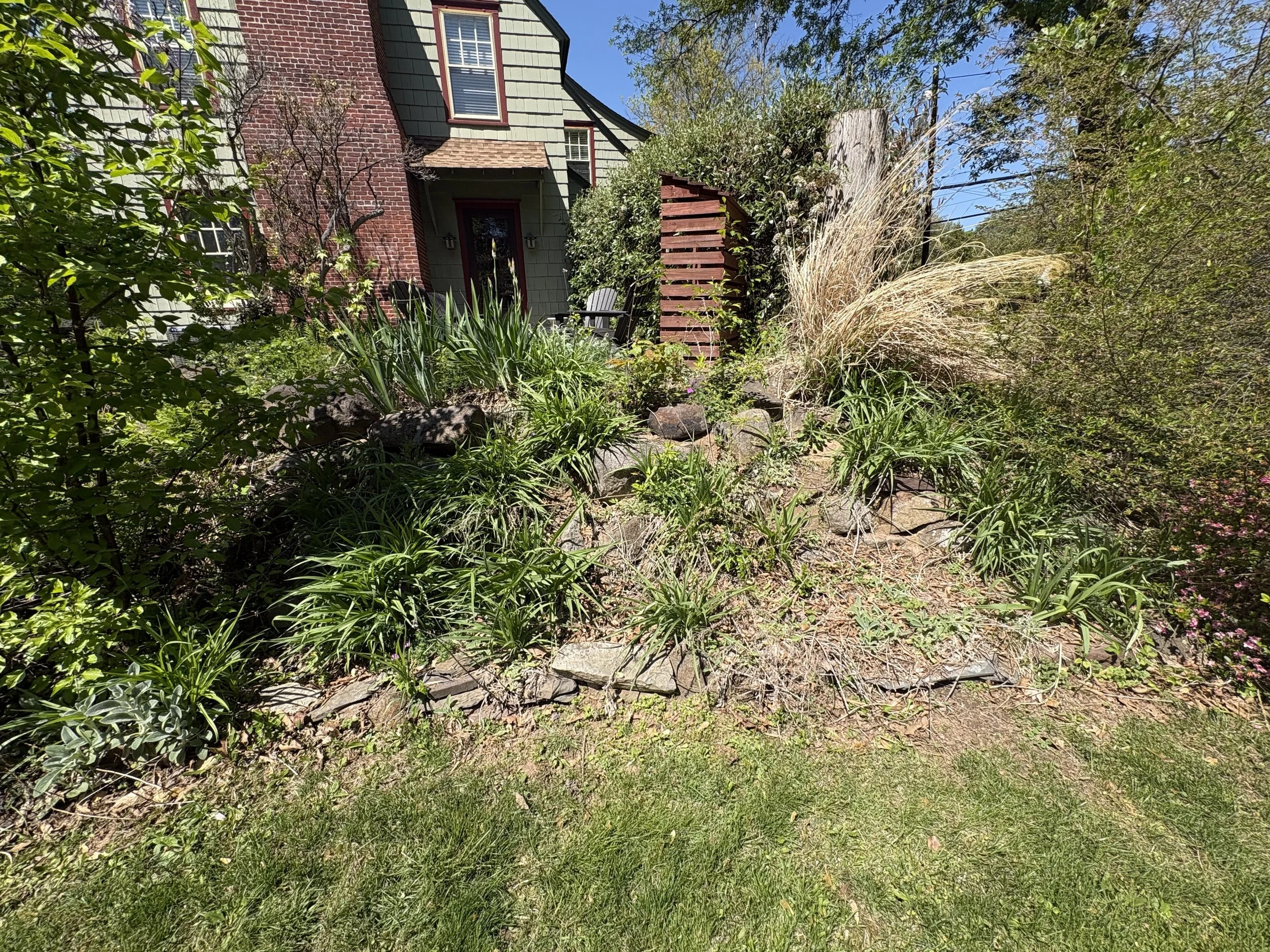
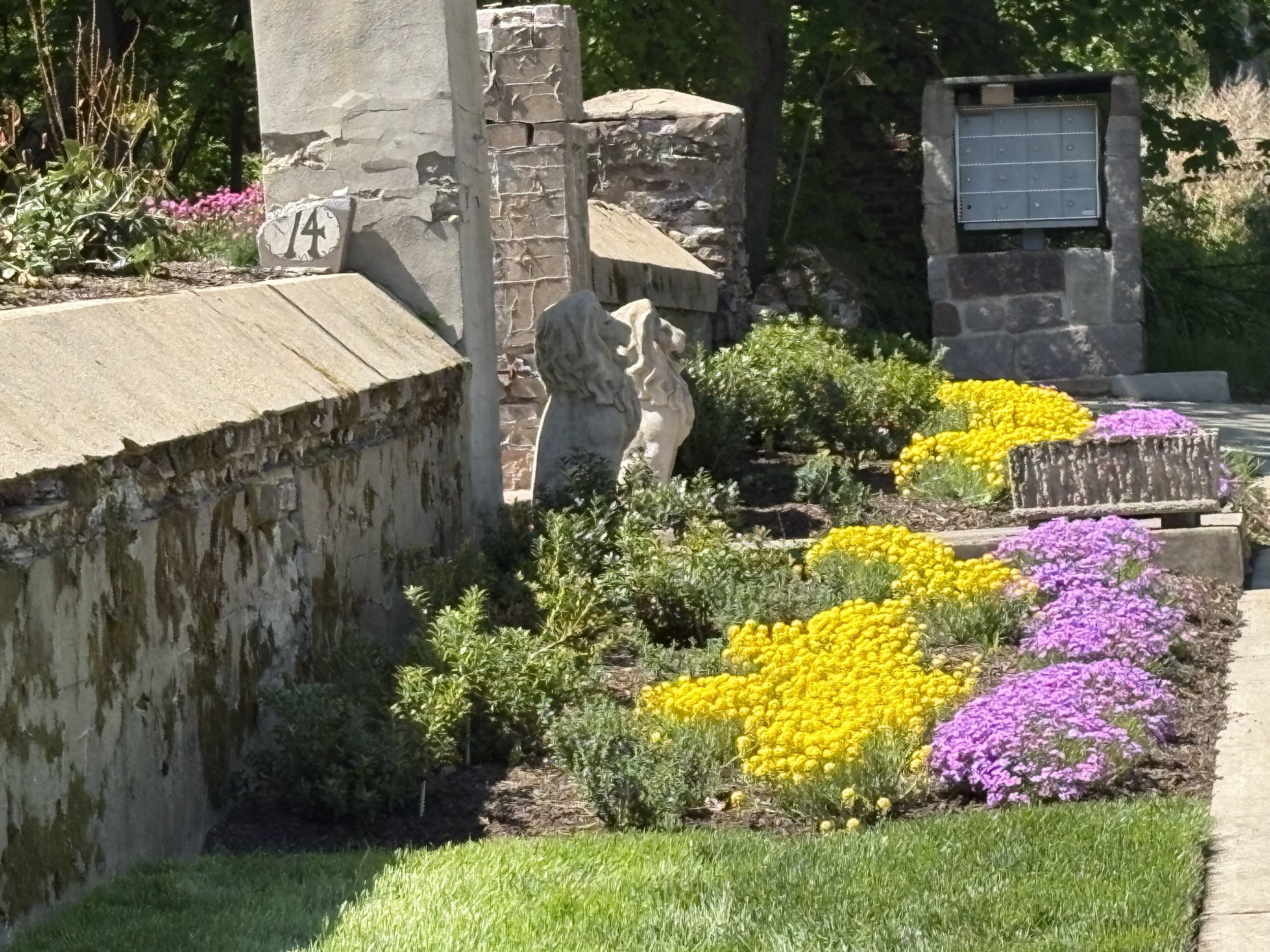
Reimagined Entrance Hopewell, NJ
Existing Conditions
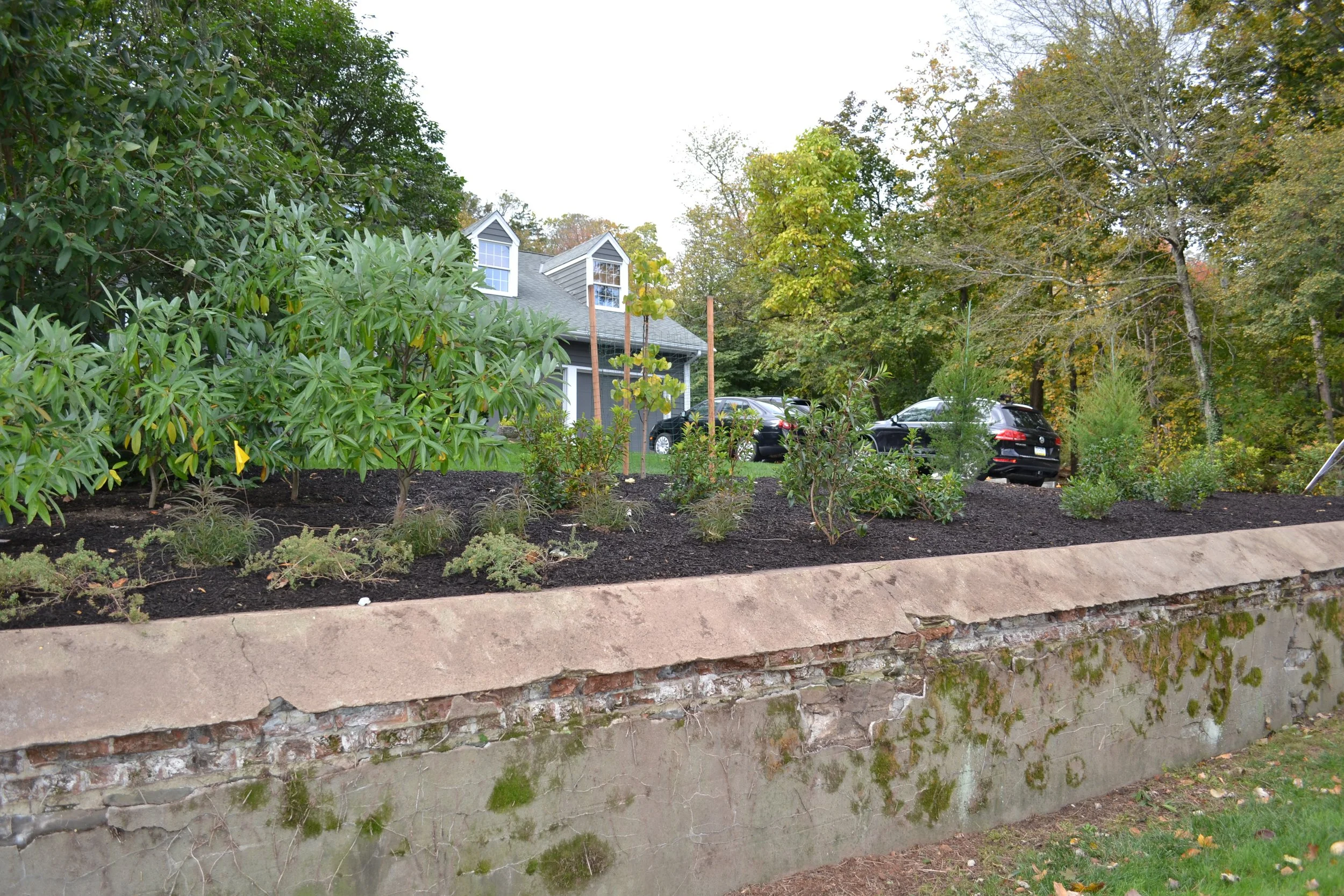
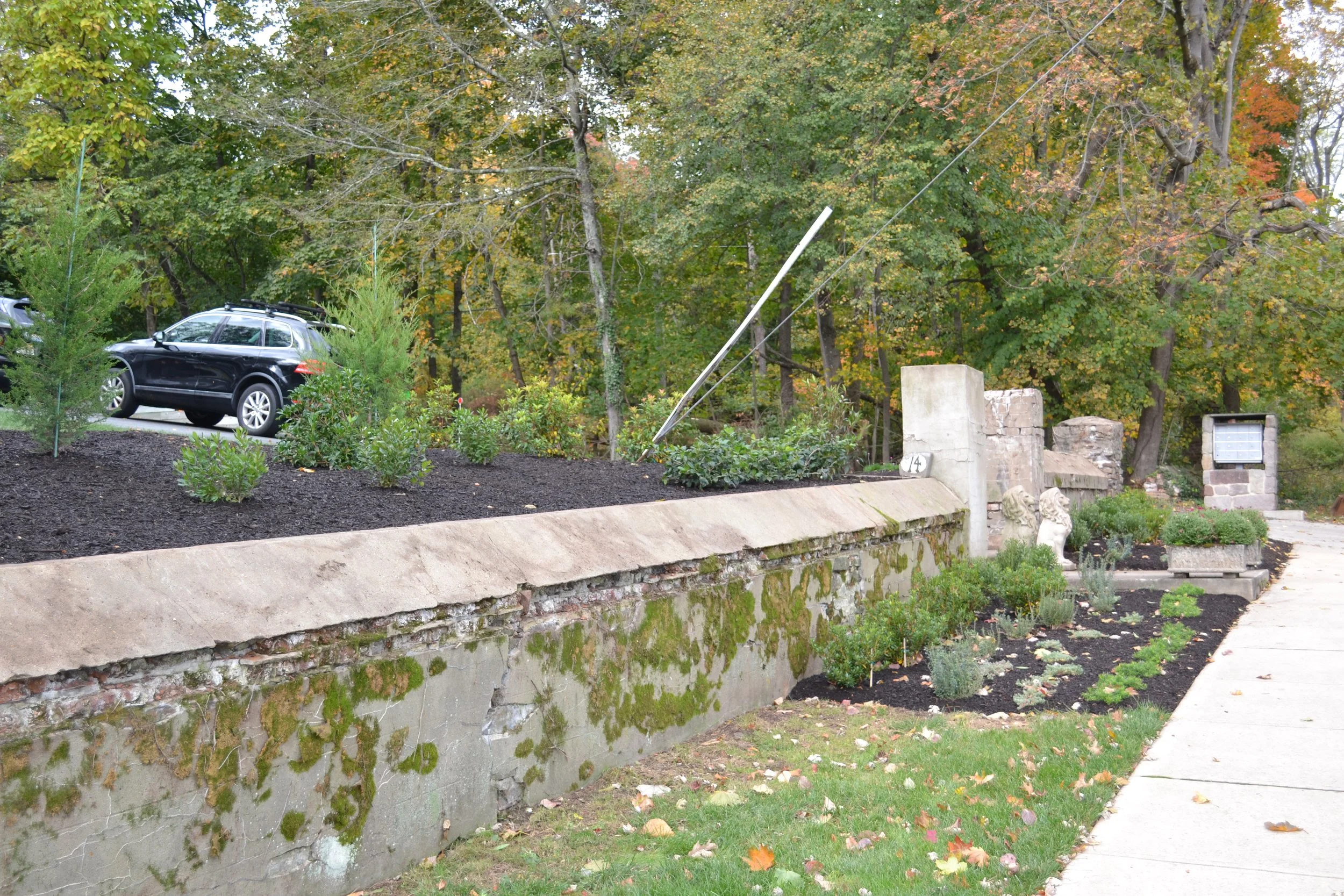
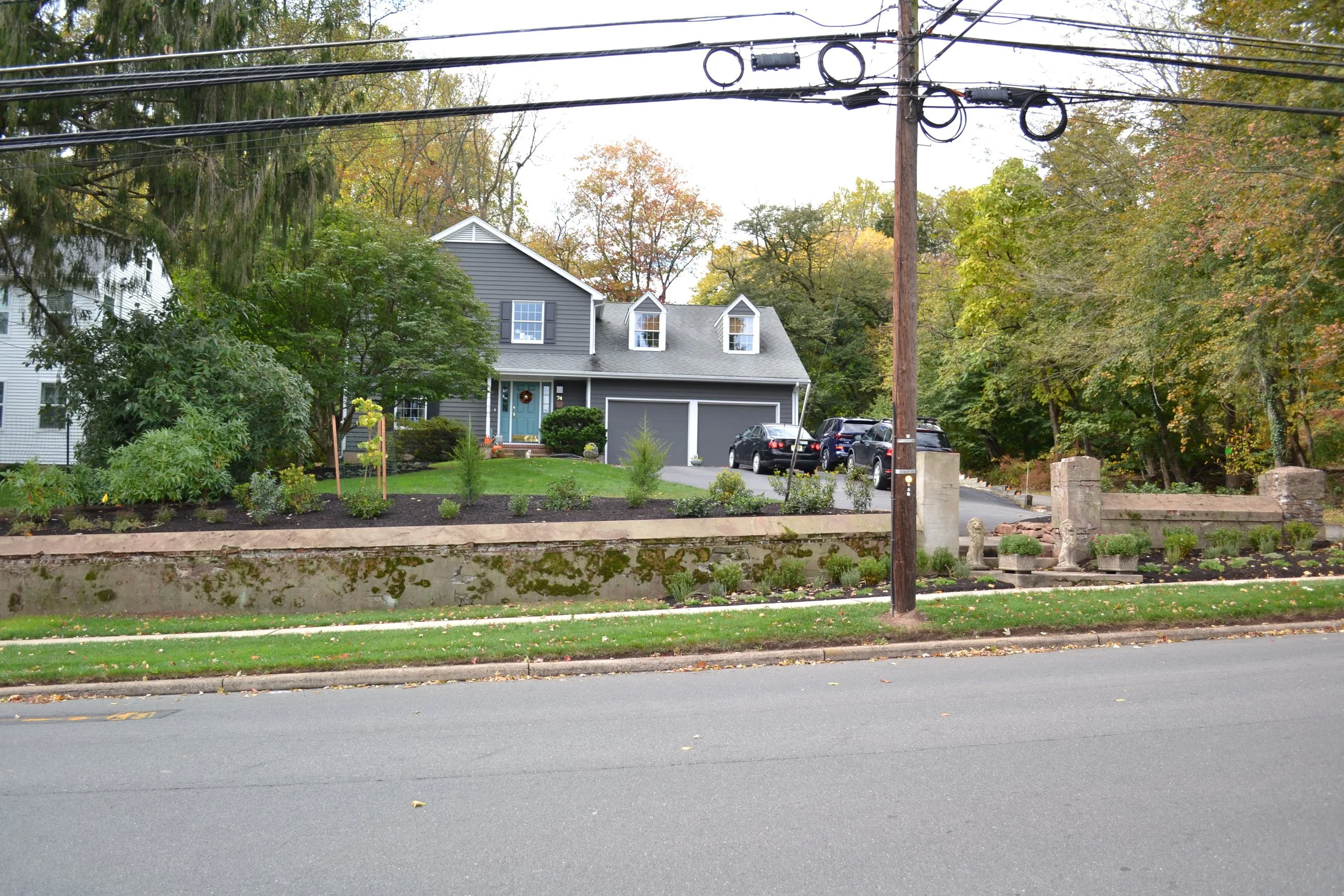
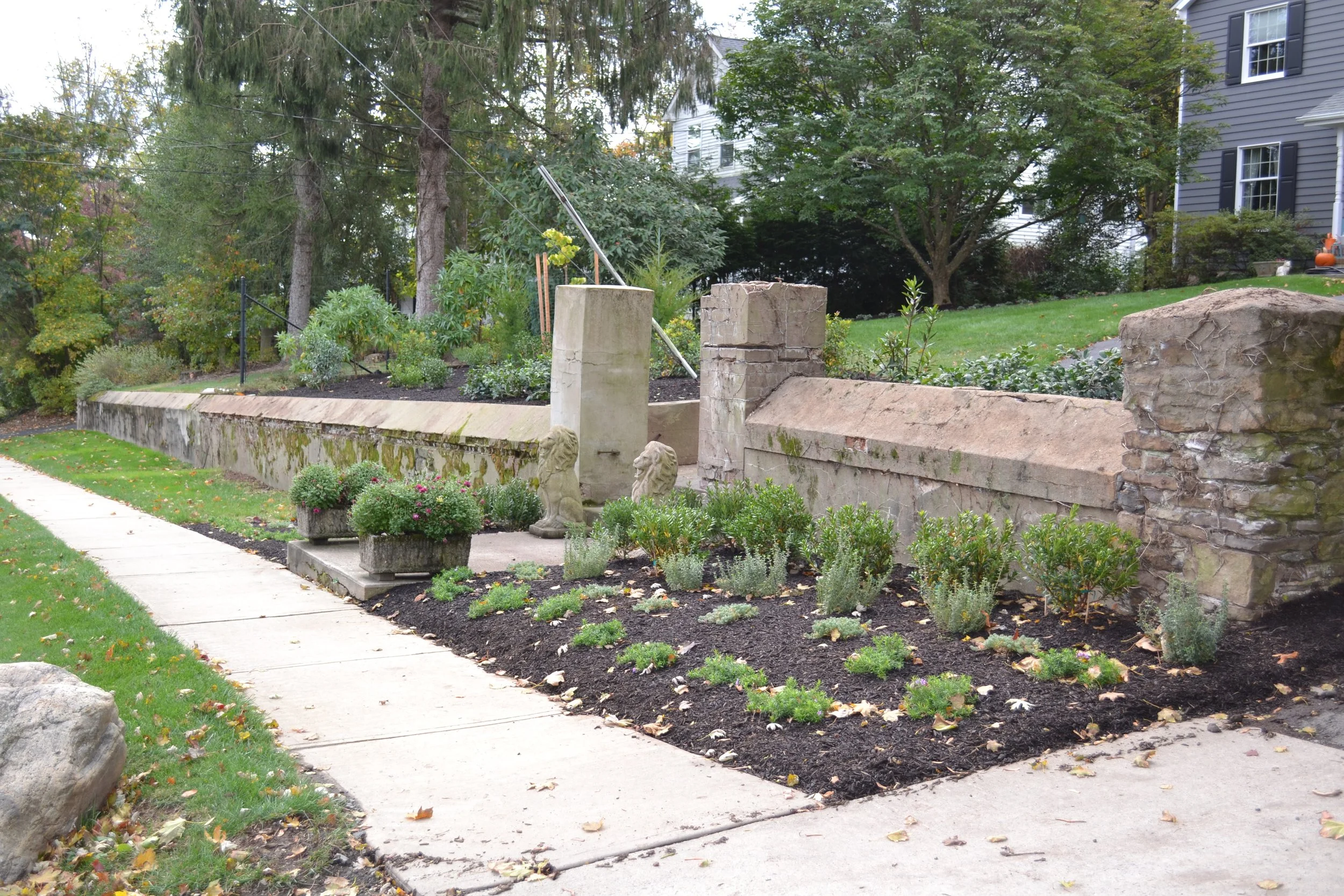
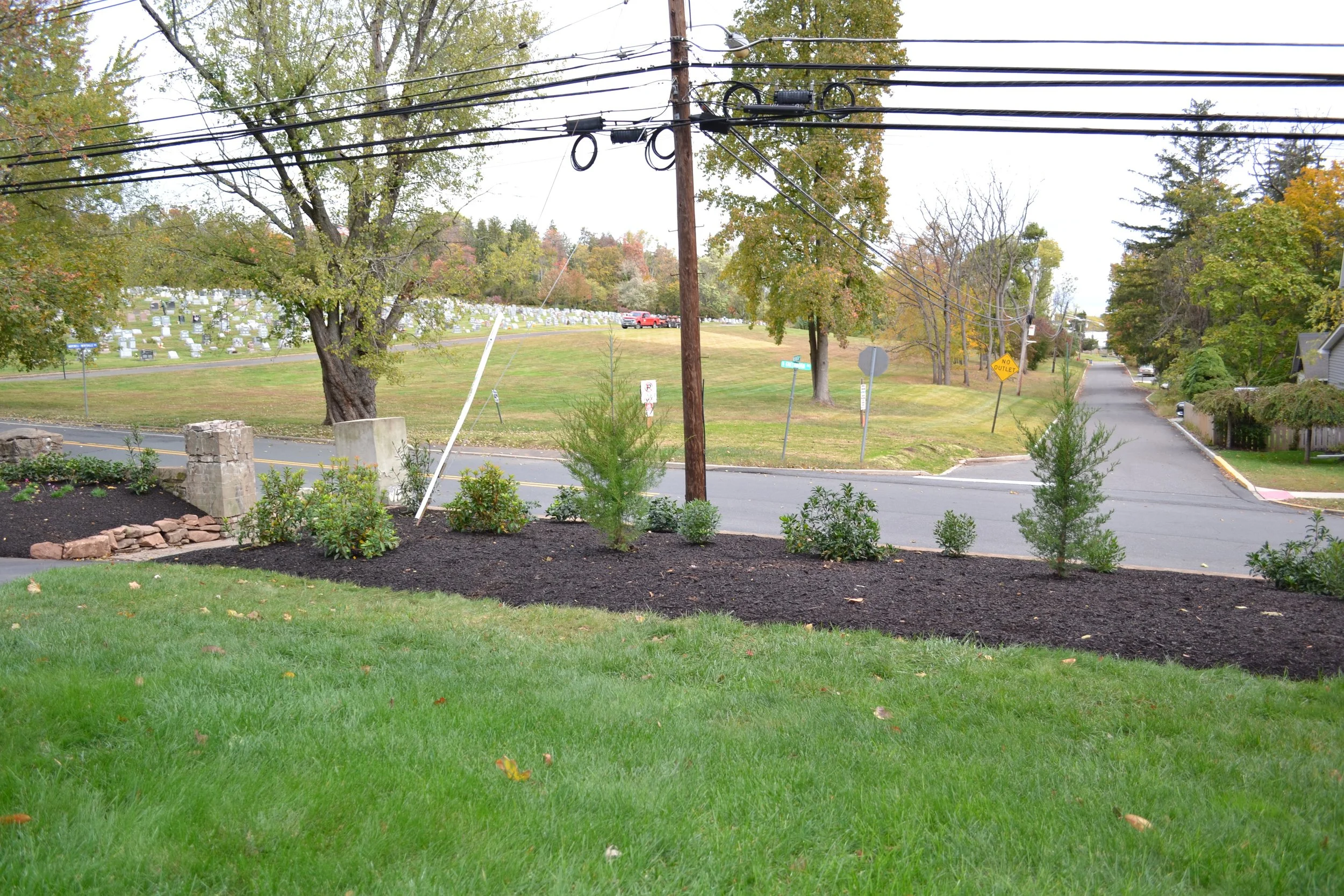
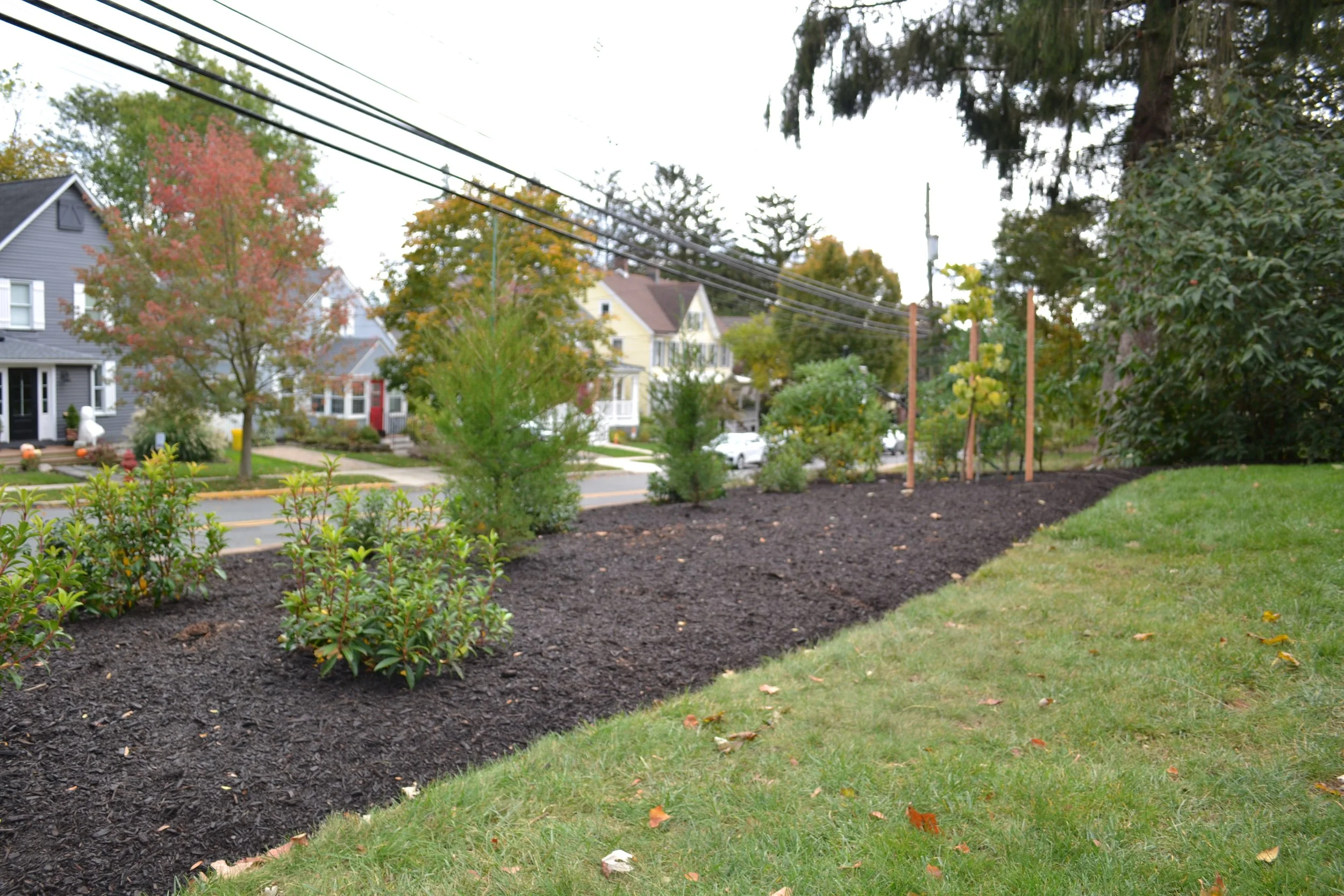
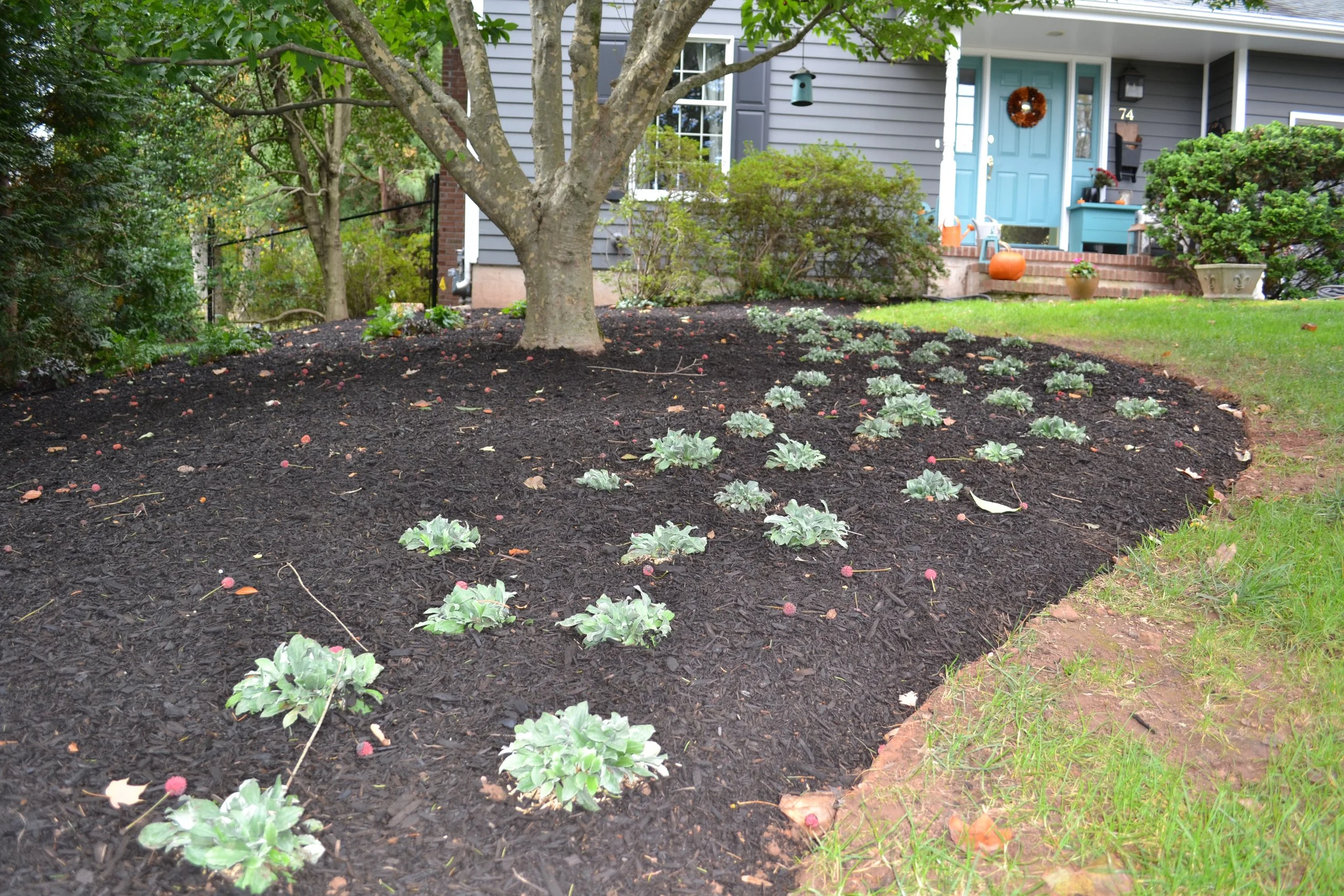
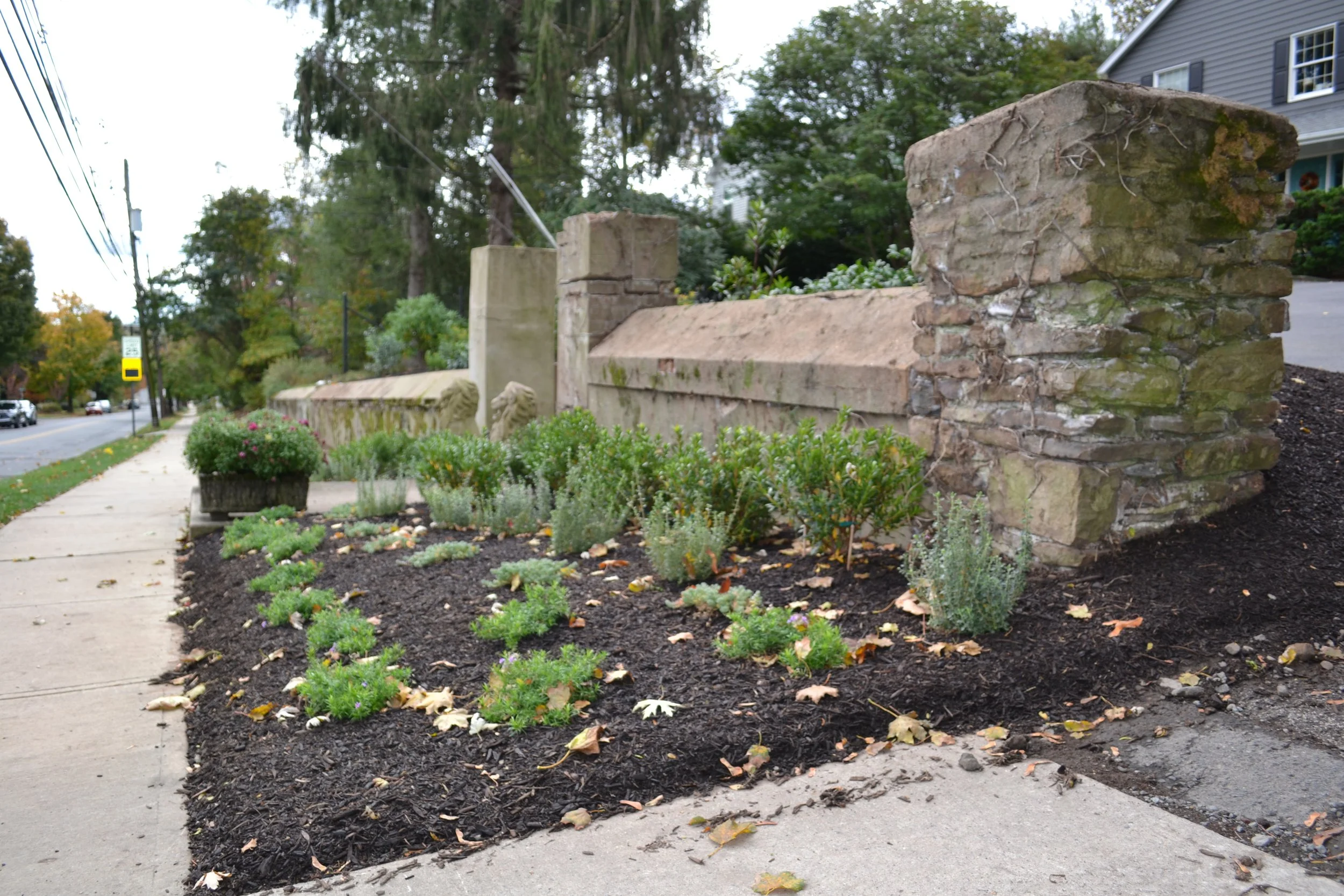
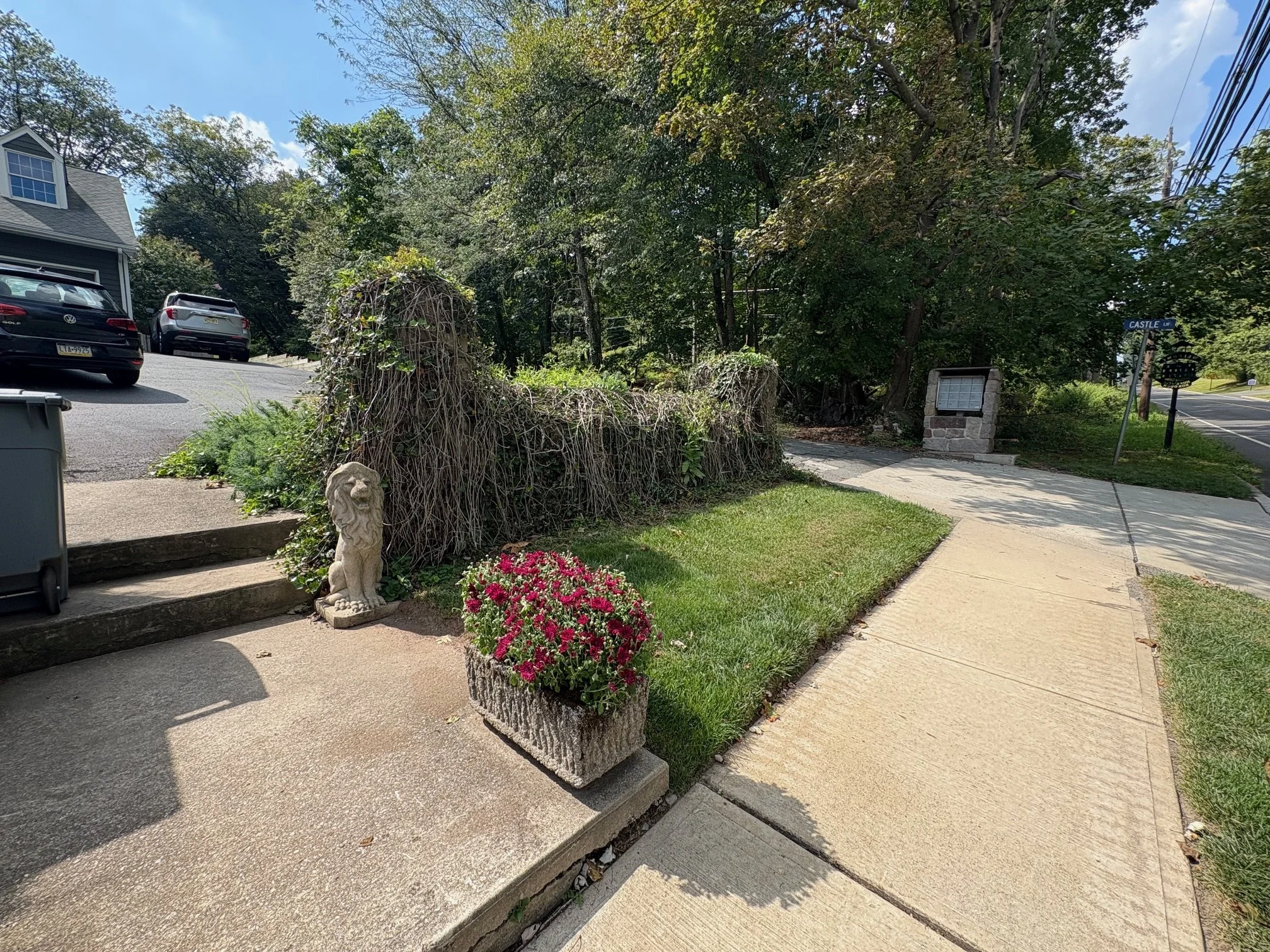
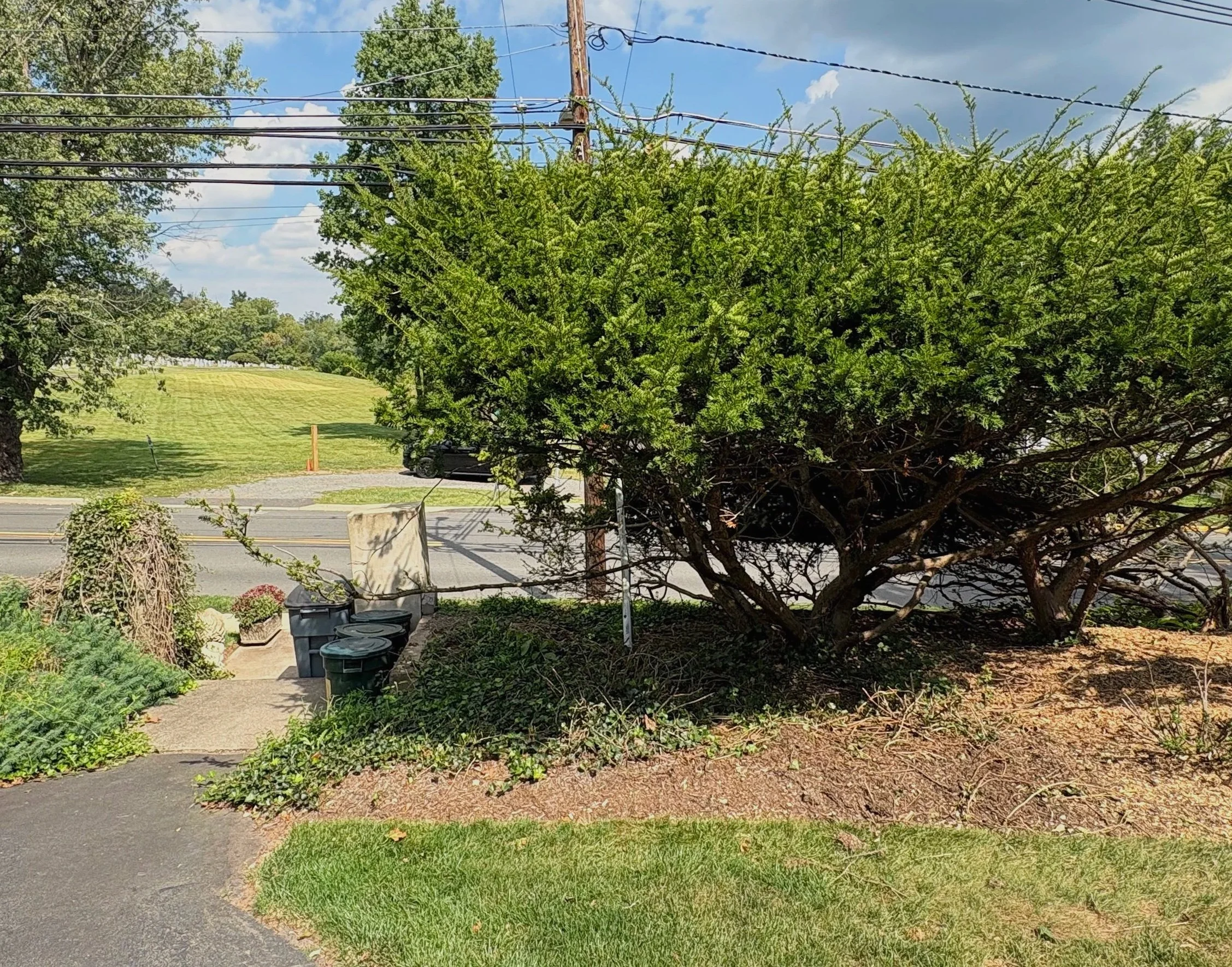
A long retaining wall and mature evergreens shaped the entry, but the planting had grown in too tight. Views to the front door were blocked and the walk felt pinched. The shift from street to walk to door was not clear, so the space read like a pass-through instead of an arrival.
-
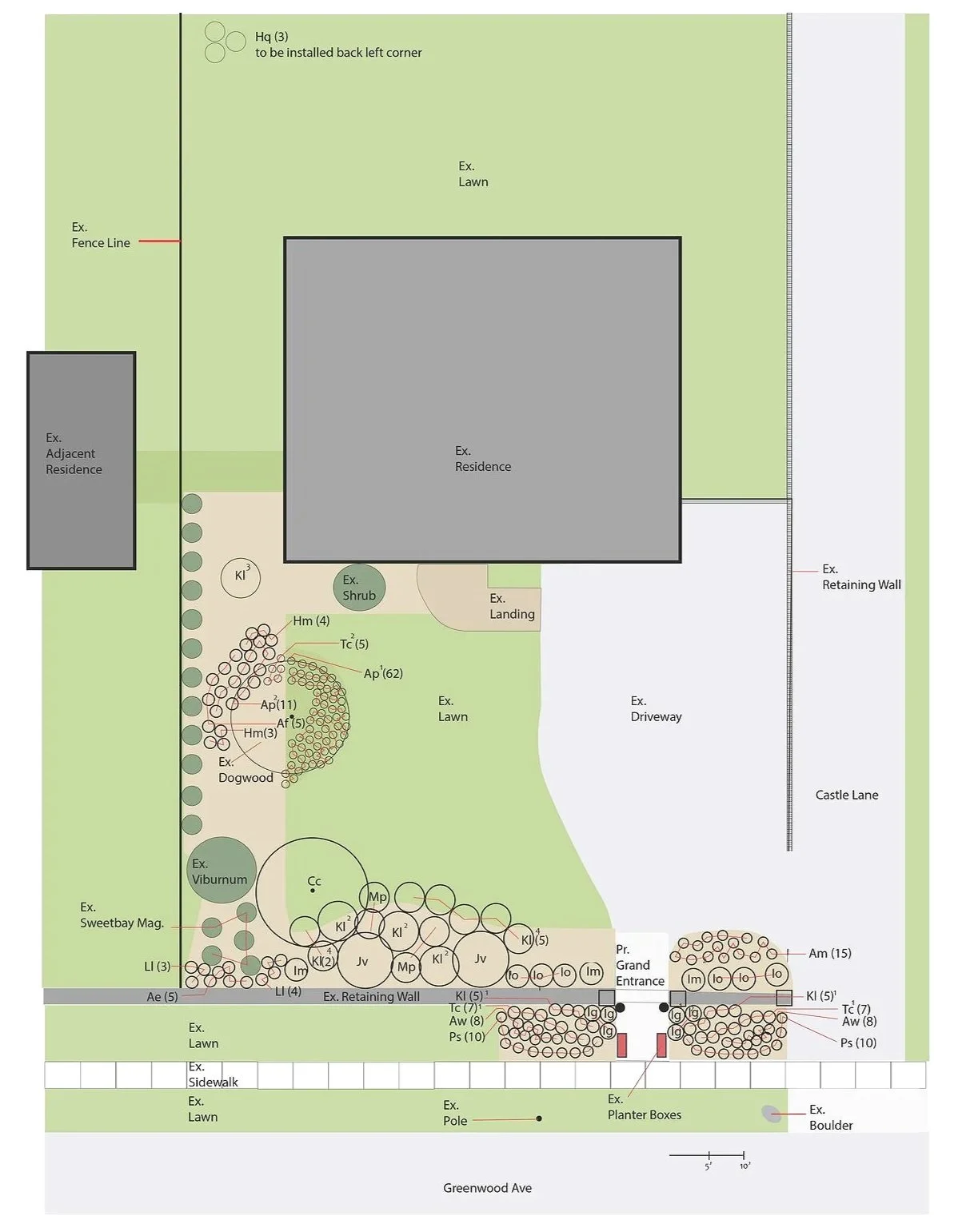
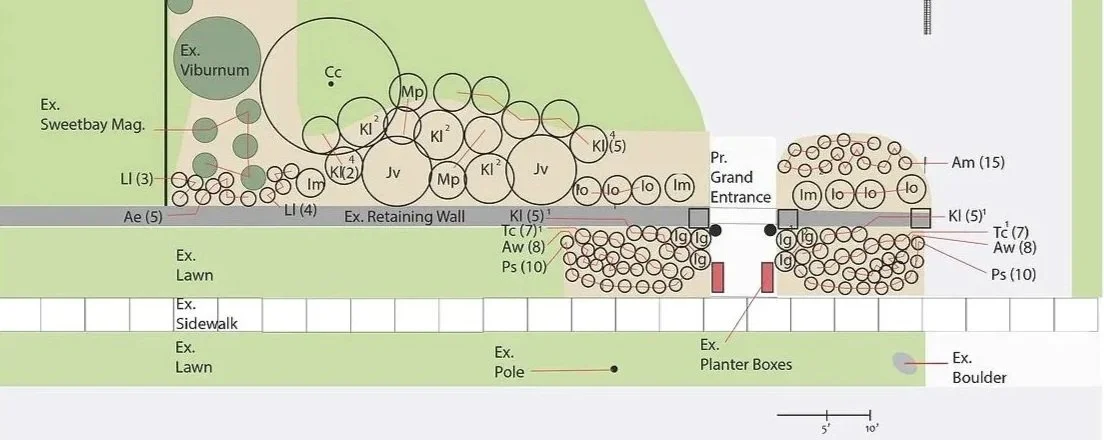
The goal was to make the approach easy to read while keeping the wall and the existing structure. Selective thinning reopened sightlines and brought the columns back into focus. Planting was then reorganized into simple layers that frame the entry and make the sequence from sidewalk to front door feel clear and intentional.
-
Evergreen structure holds the wall line year-round. Ferns and shade-tolerant groundcovers fill the base layer, reduce exposed mulch, and soften the grade change. Christmas fern (Polystichum acrostichoides) carries the woodland feel and adds winter presence without competing with the architecture.
-
The entrance now feels clear and intentional. From the street, the approach is easy to read and the movement is natural. The planting gives the entry definition and character with simple structure and texture, without competing with the wall and column rhythm.
A spring ‘26 patio layout will be a future outcome.
selected images
process
-
![Sidewalk in a residential neighborhood with a small lawn, decorative lion statue, flower pot with pink flowers, mature trees, and parked cars in the background.]()
Existing conditions
-
![A landscape with a large, leafy green shrub in the foreground, a sidewalk with three trash bins, a street with yellow traffic lines, and a grassy hill with trees in the background under a partly cloudy sky.]()
Existing conditions
-
![A landscape landscape plan showing various sections of a yard, including a residence, lawn, driveway, retaining wall, entrance, and planted trees and shrubs with labels and annotations.]()
Technical planting plan
-
![A landscape garden plan showing various plant beds, retaining walls, lawn areas, and designated planting sections with labeled plant types and quantities. It includes pathways, a grand entrance, and specific garden features like planters and boulders.]()
Entry focus area
-
![Architectural site plan showing residence, pathway, stairs, walkway, patio, and wall with measurements in feet.]()
Patio layout study
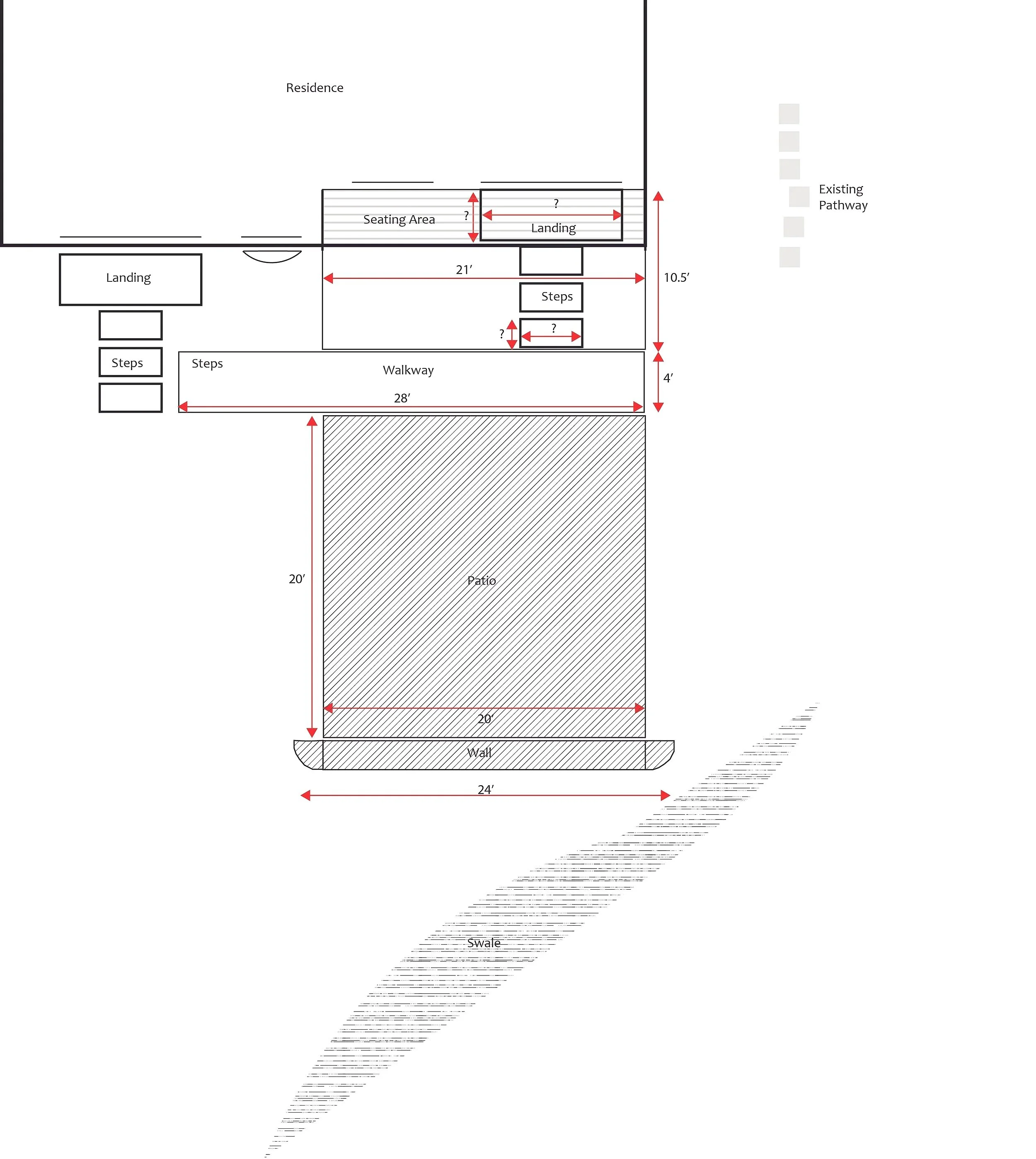
Front Entry Reset
Pennington, NJ
Existing Conditions
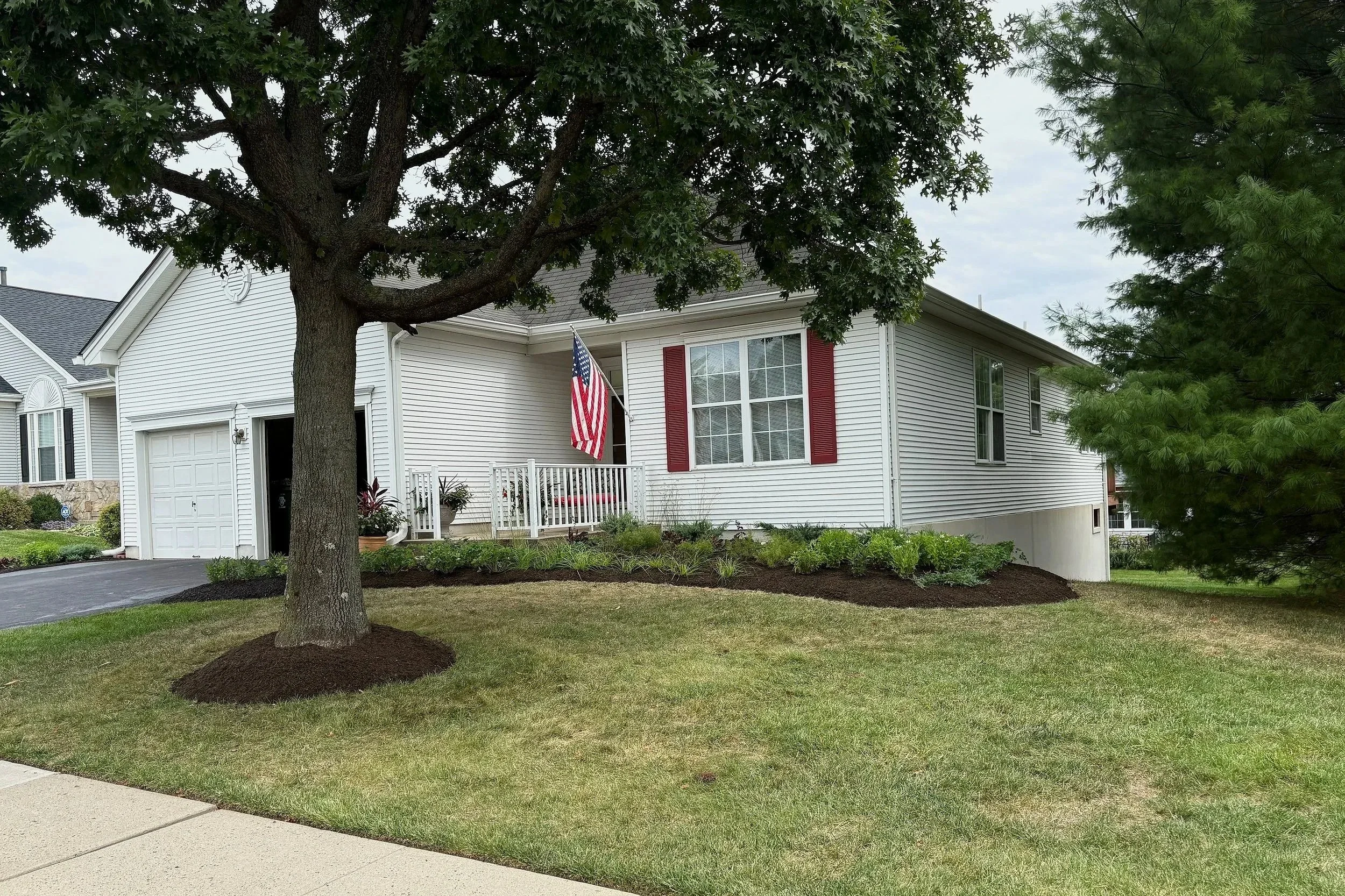
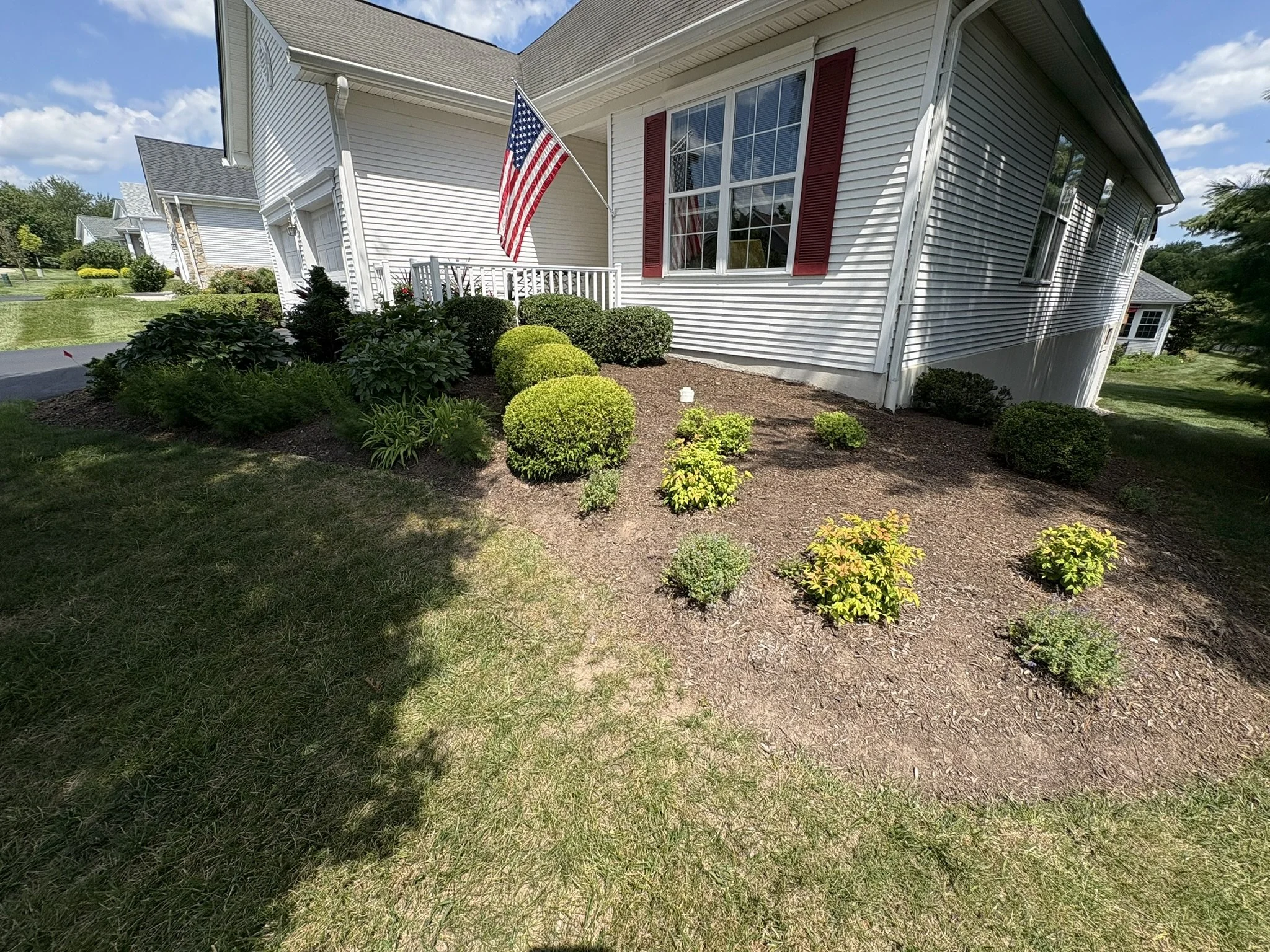
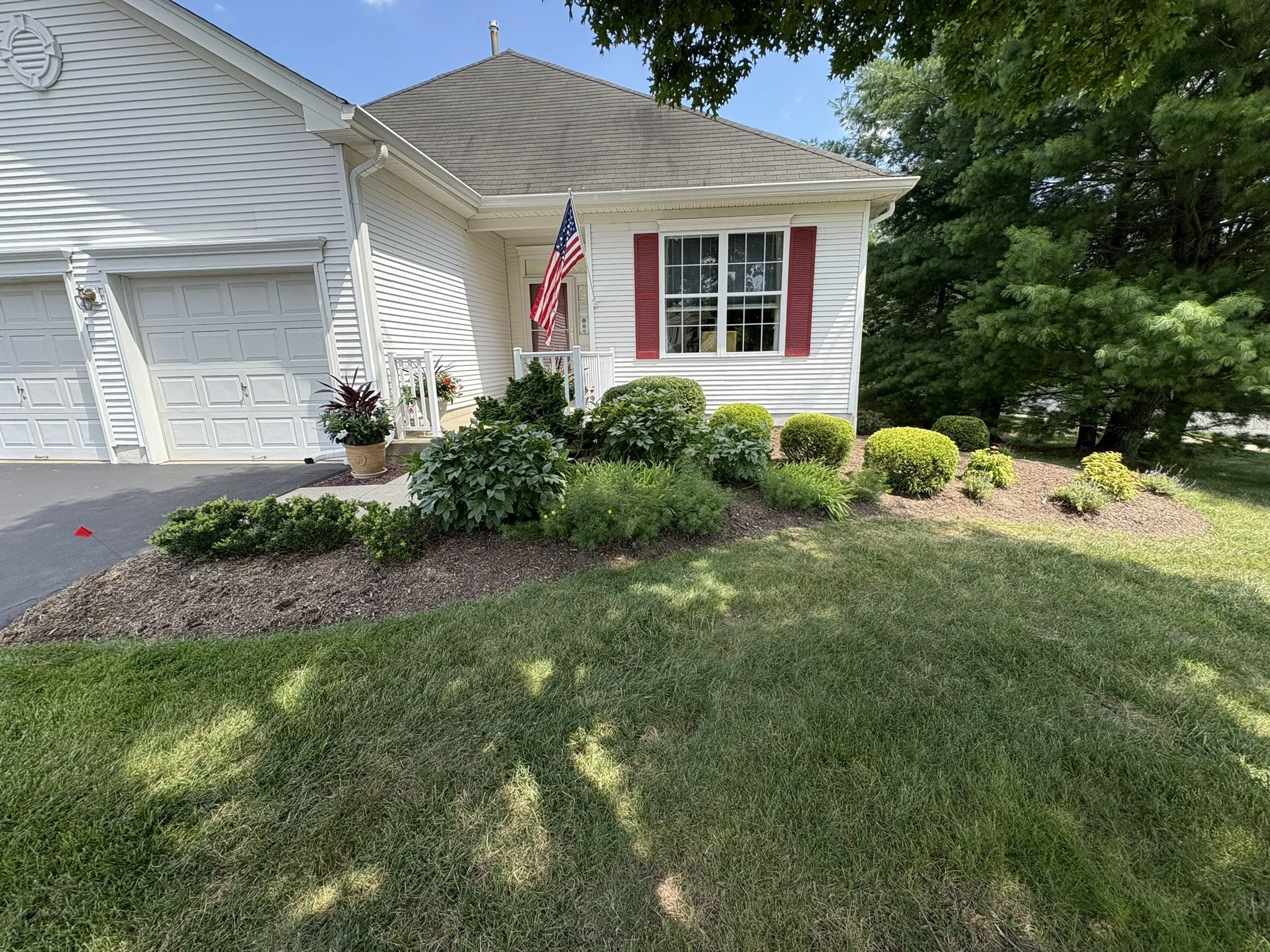
Foundation shrubs had grown into an uneven mass, obscuring the entry and weakening the relationship between house, walk, and lawn. The porch was less visible from the street, and the planting edge no longer provided a clear arrival structure.
-
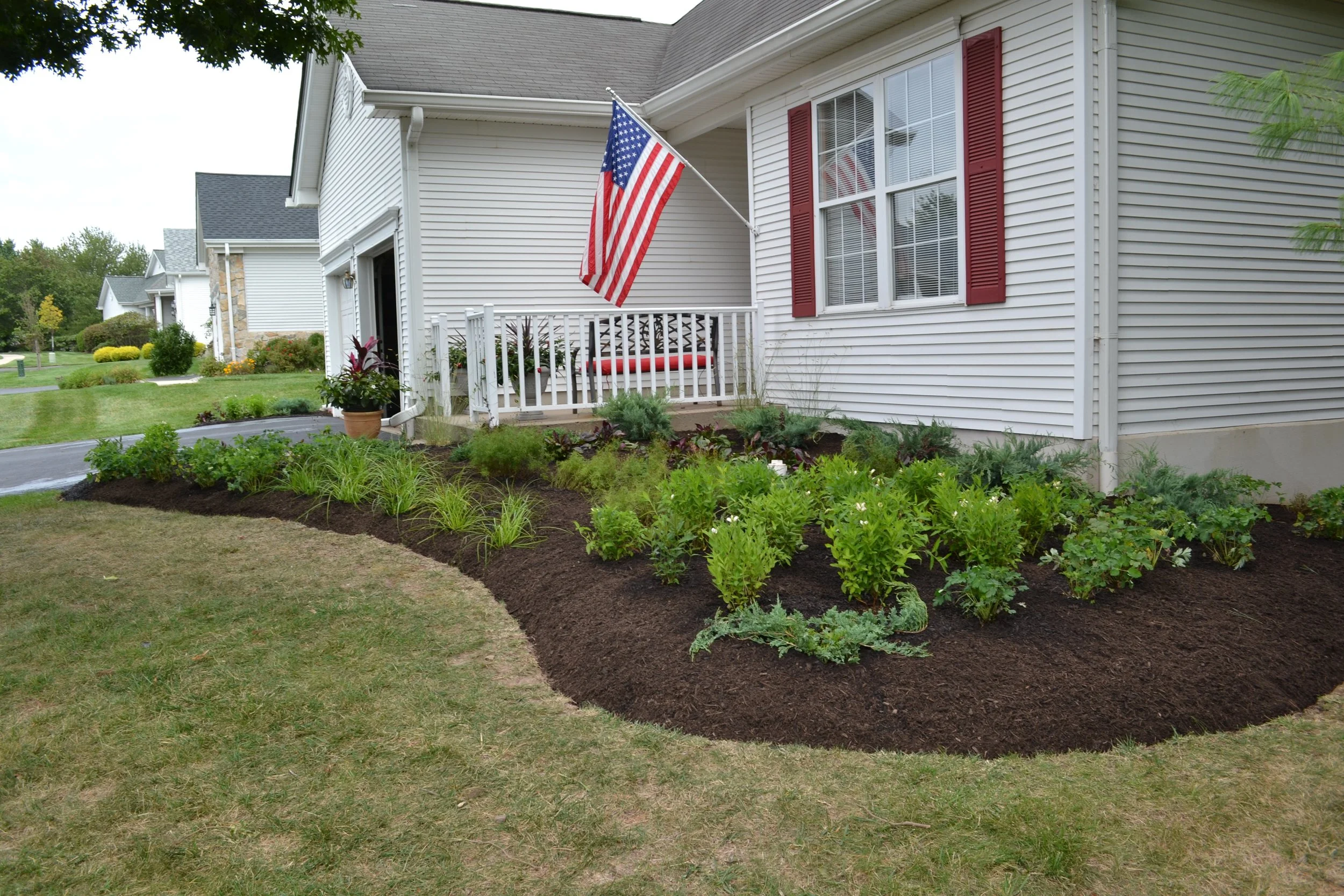
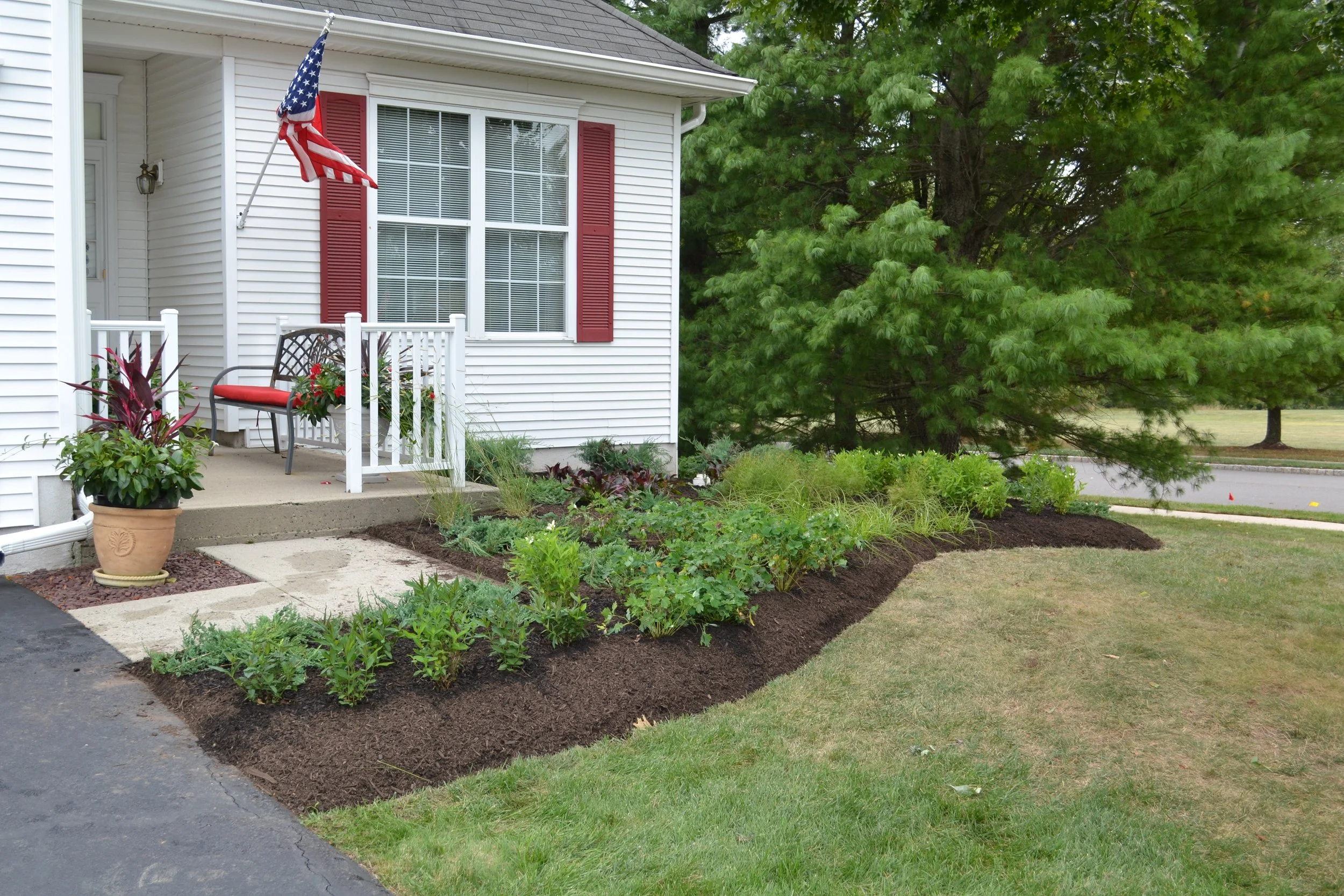
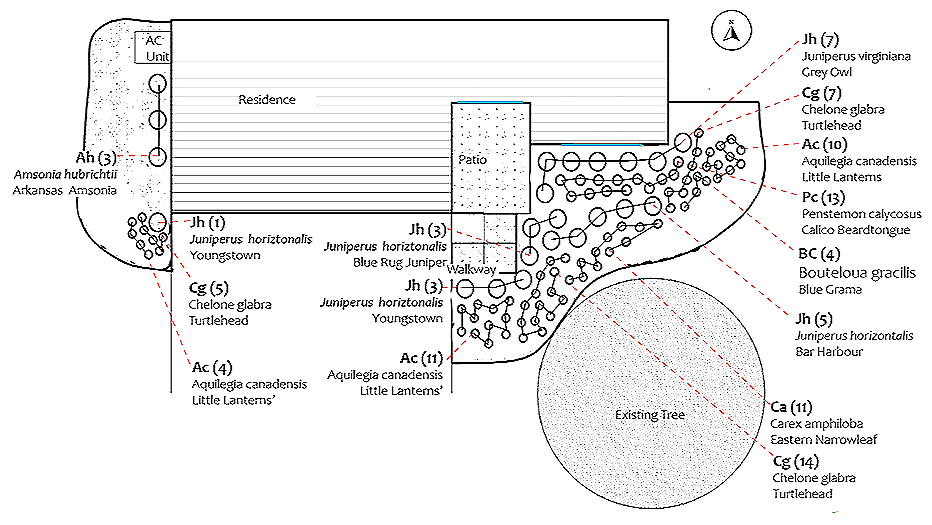
The goal was to clarify the entry sequence with one continuous bed that reshapes the front lawn edge and frames the porch approach. Selective removals reopened sightlines and restored a clean structure. The bed line was refined to guide movement and give the front elevation a calmer foreground.
-
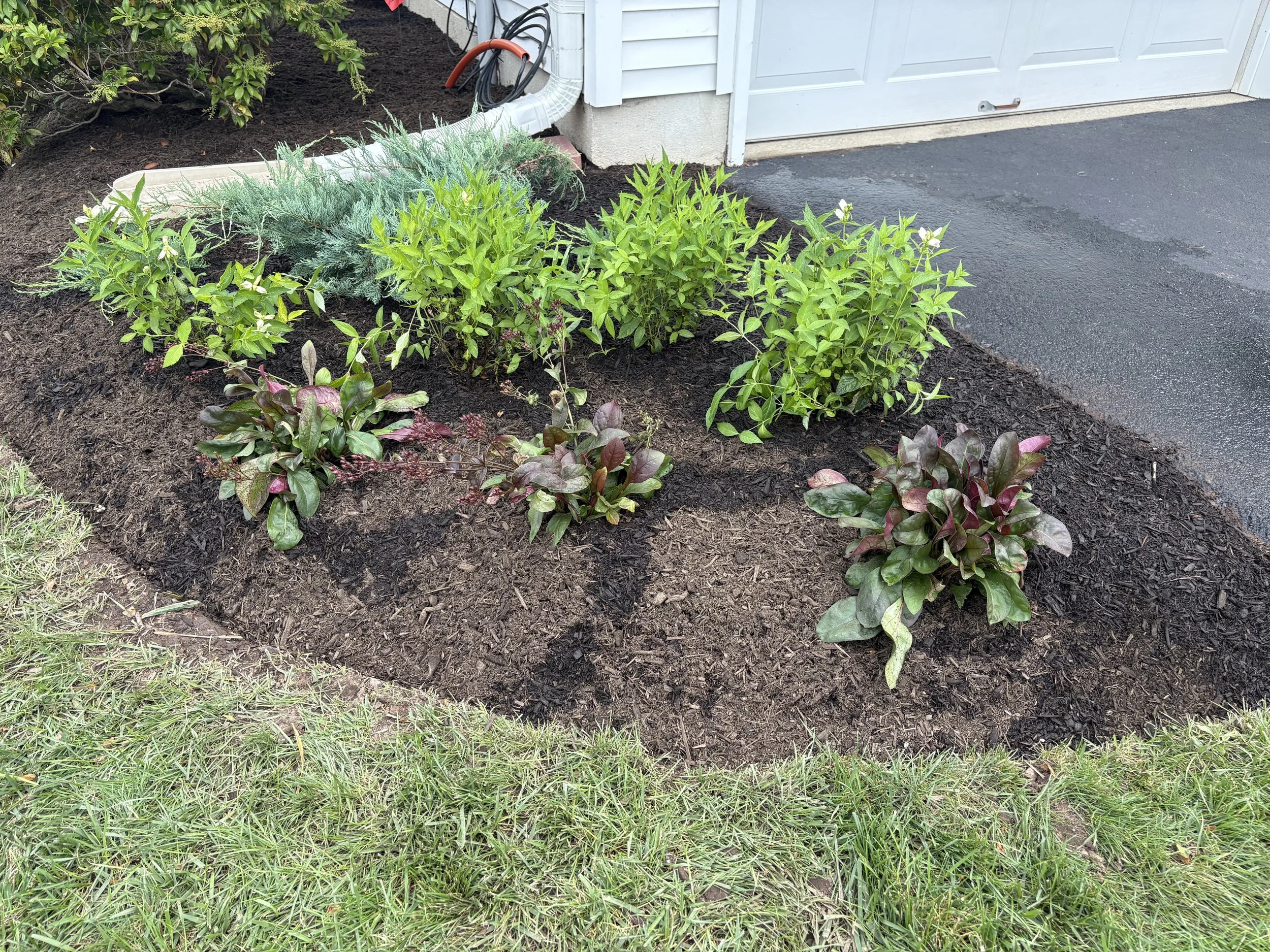
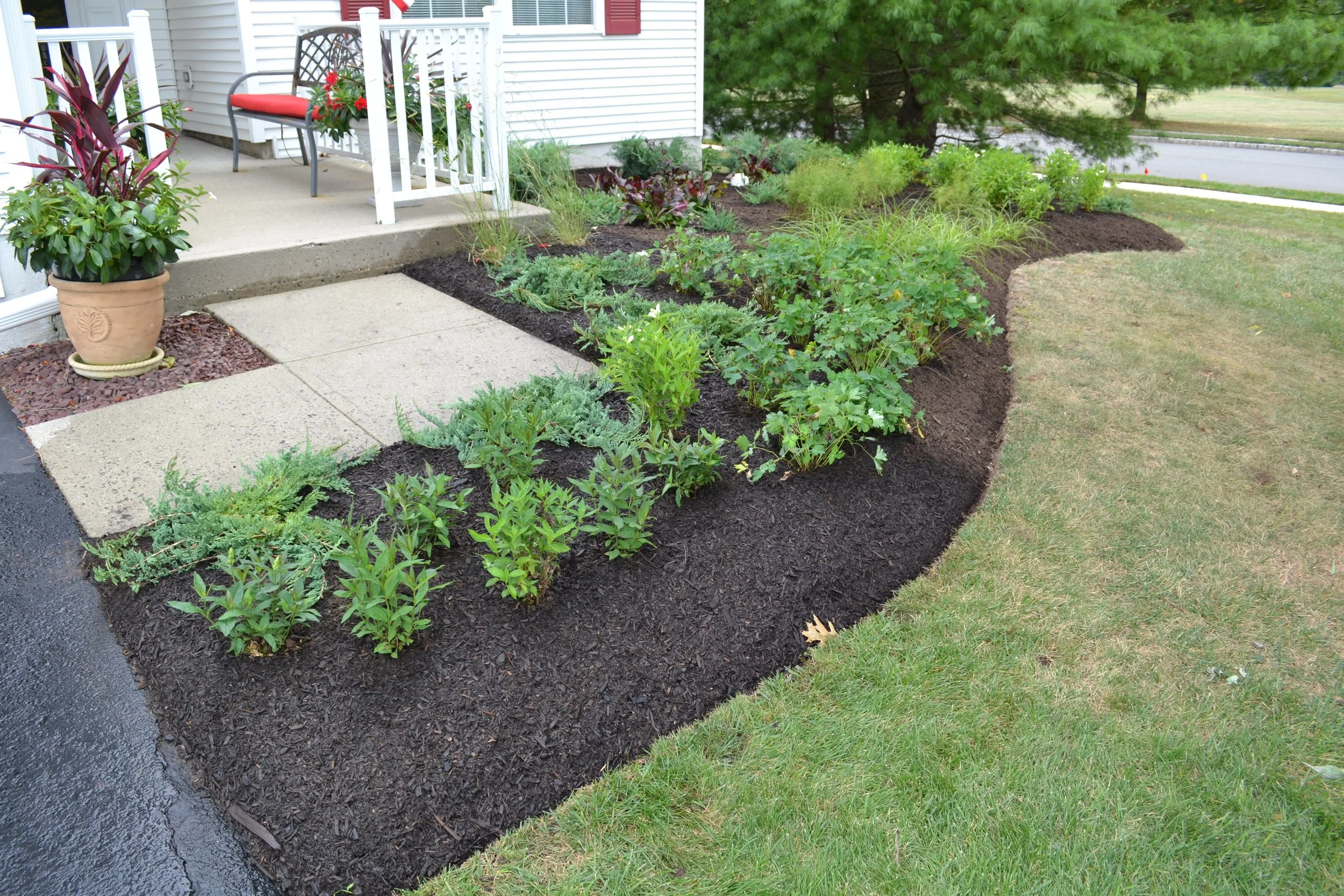
Layered shrubs and perennials were organized in repeating masses to create year-round form with controlled seasonal change. Evergreen junipers (Juniperus horizontalis) define the ground plane, while turtlehead (Chelone glabra), beardtongue (Penstemon calycosus), and columbine (Aquilegia canadensis ‘Little Lanterns’) add bloom, texture, and pollinator value. Simplified groupings improve durability and make maintenance more straightforward as the planting matures.
-
The entry now reads as intentional and legible from the street. The approach is clearer, the lawn edge is defined, and the planting reinforces the porch as the focal point while building long-term cohesion.
selected images
process
-
![Front yard of a house with landscaped garden, American flag on a flagpole, white house with red shutters, green bushes, and a clear blue sky.]()
Existing conditions
-
![Landscape design plan showing layout of trees, shrubs, and pathways with labels for various plant species and features like a patio, existing tree, and walkways.]()
Technical planting plan
-
![A white house with red shutters on the windows, a front porch with an American flag, and a well-maintained garden with shrubs and flowers. The driveway has a garage door, and there are trees in the background.]()
Existing conditions
Design + Build
Blue Bell, PA
Existing Conditions
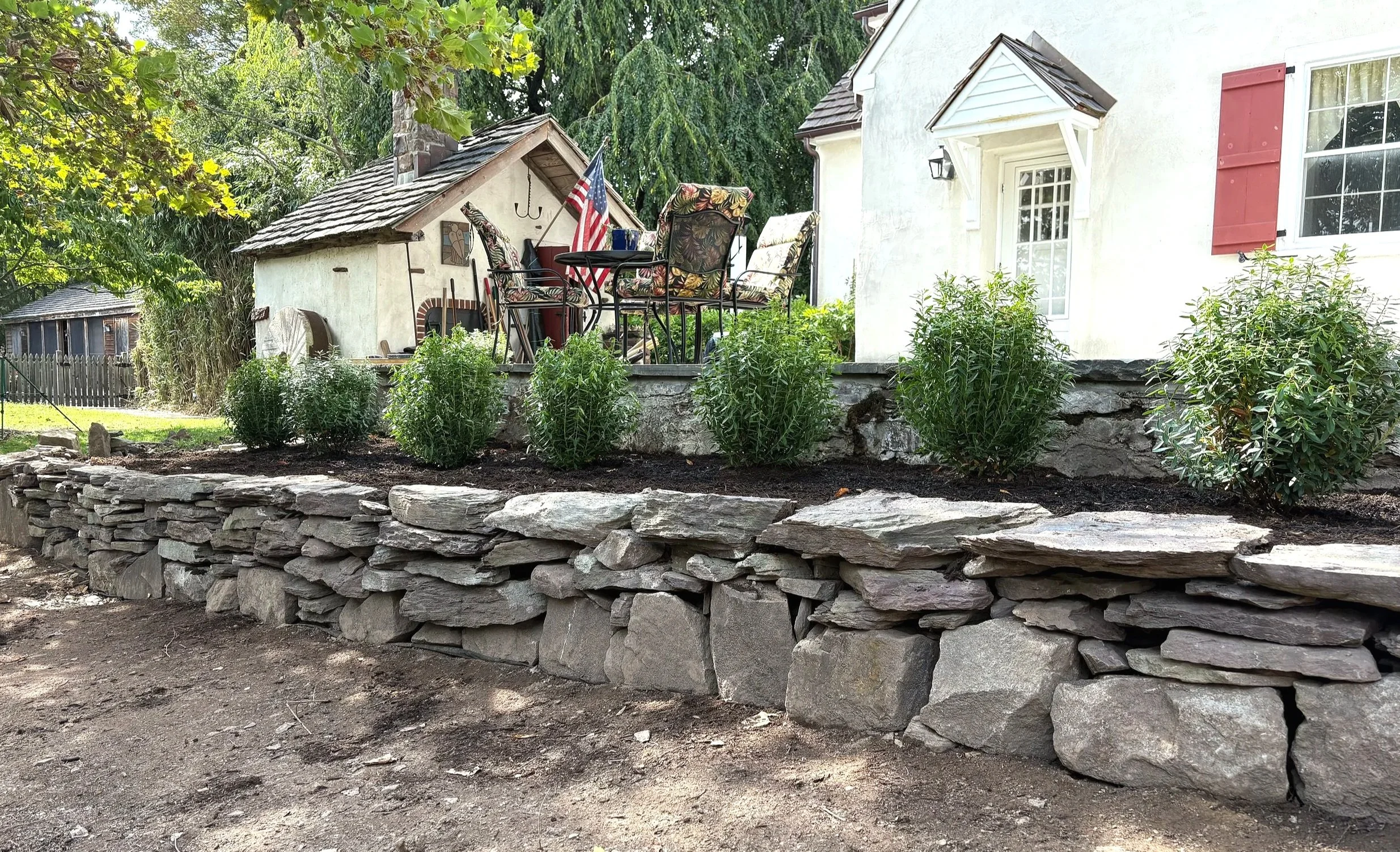
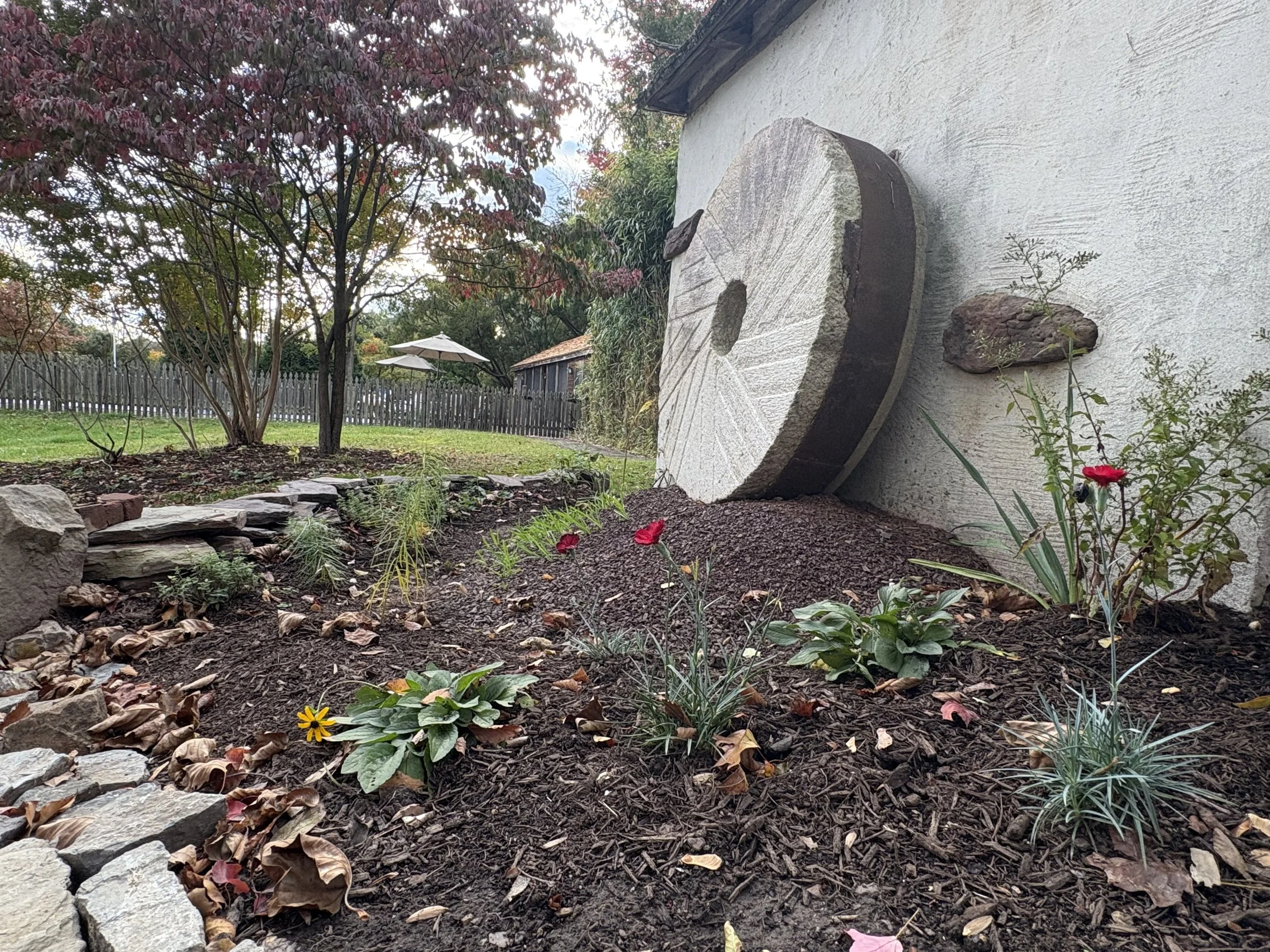
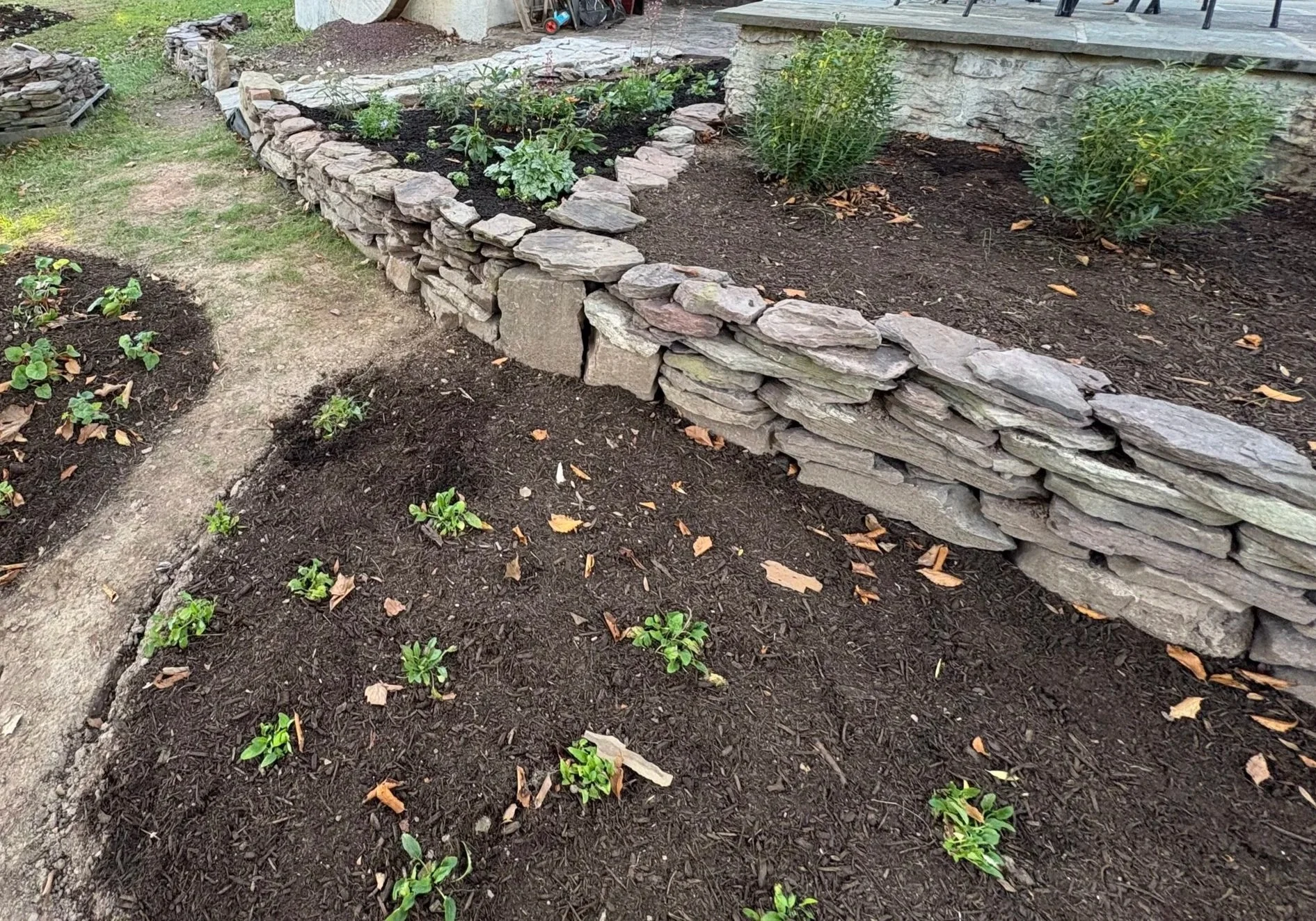
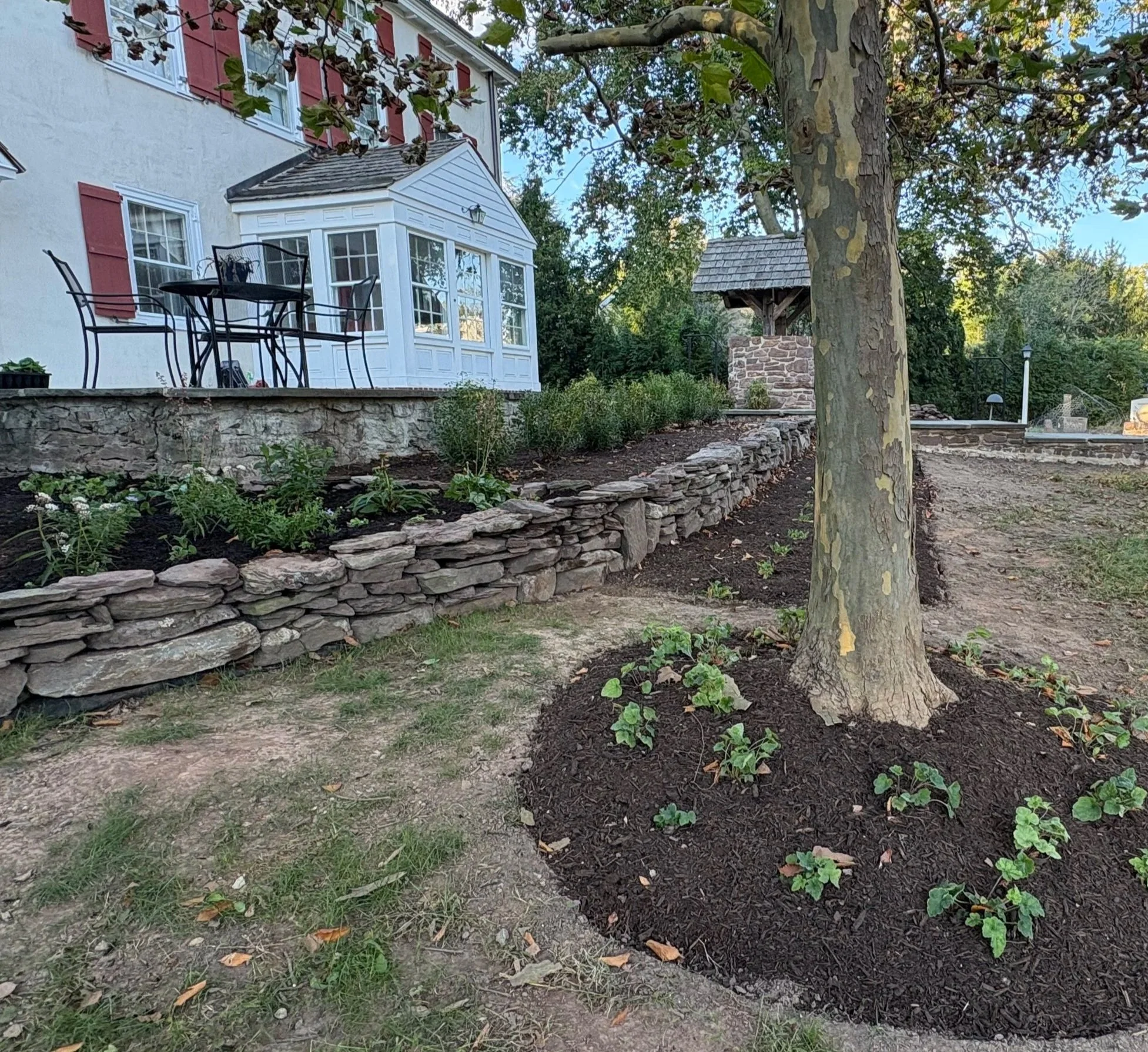
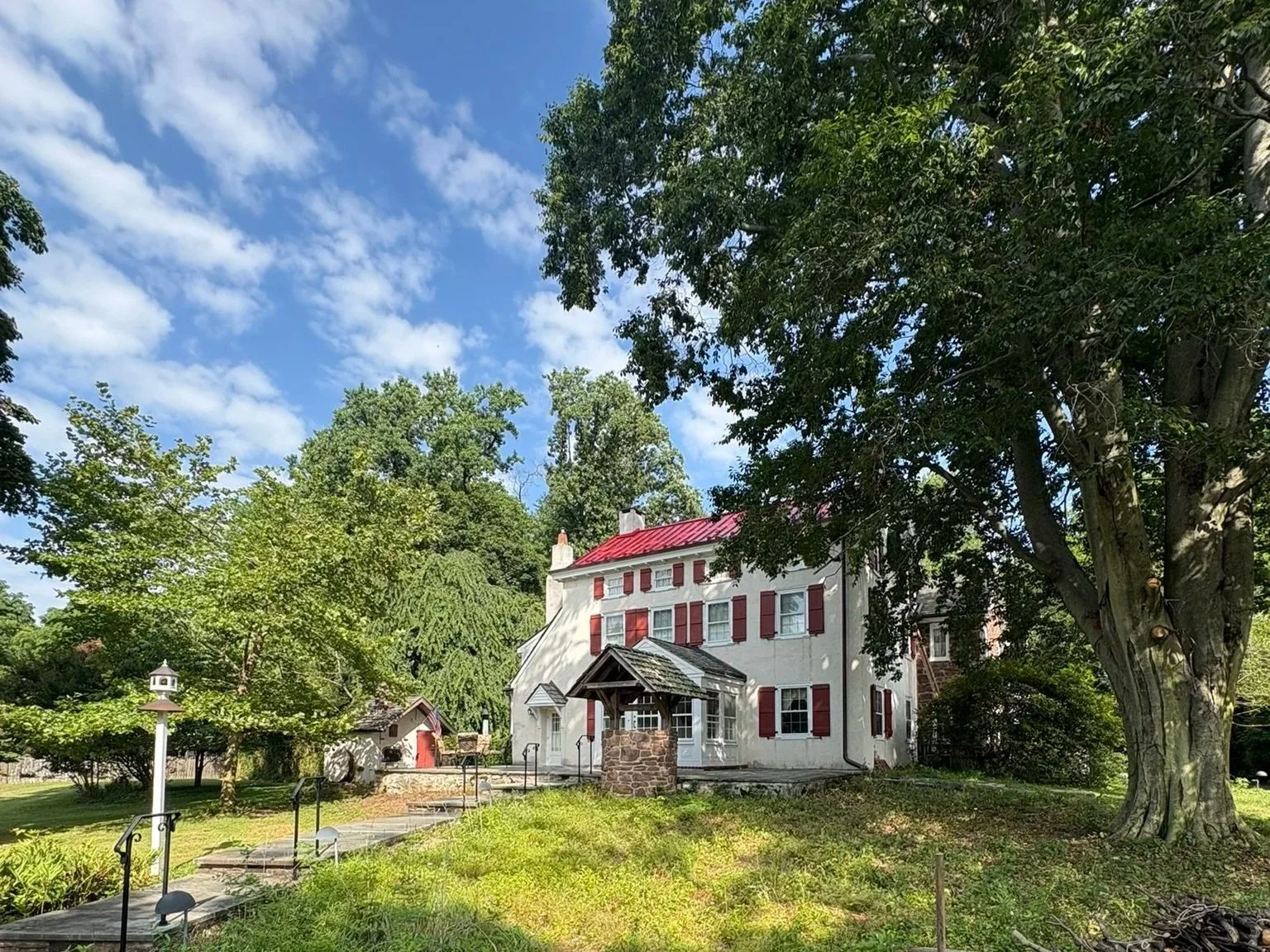
An existing stone patio created the grade change to the yard, and the surrounding edge was dominated by English ivy and other invasive plants. The site was primed for color and native plants and overall needed an upgraded visual aesthetic.
-
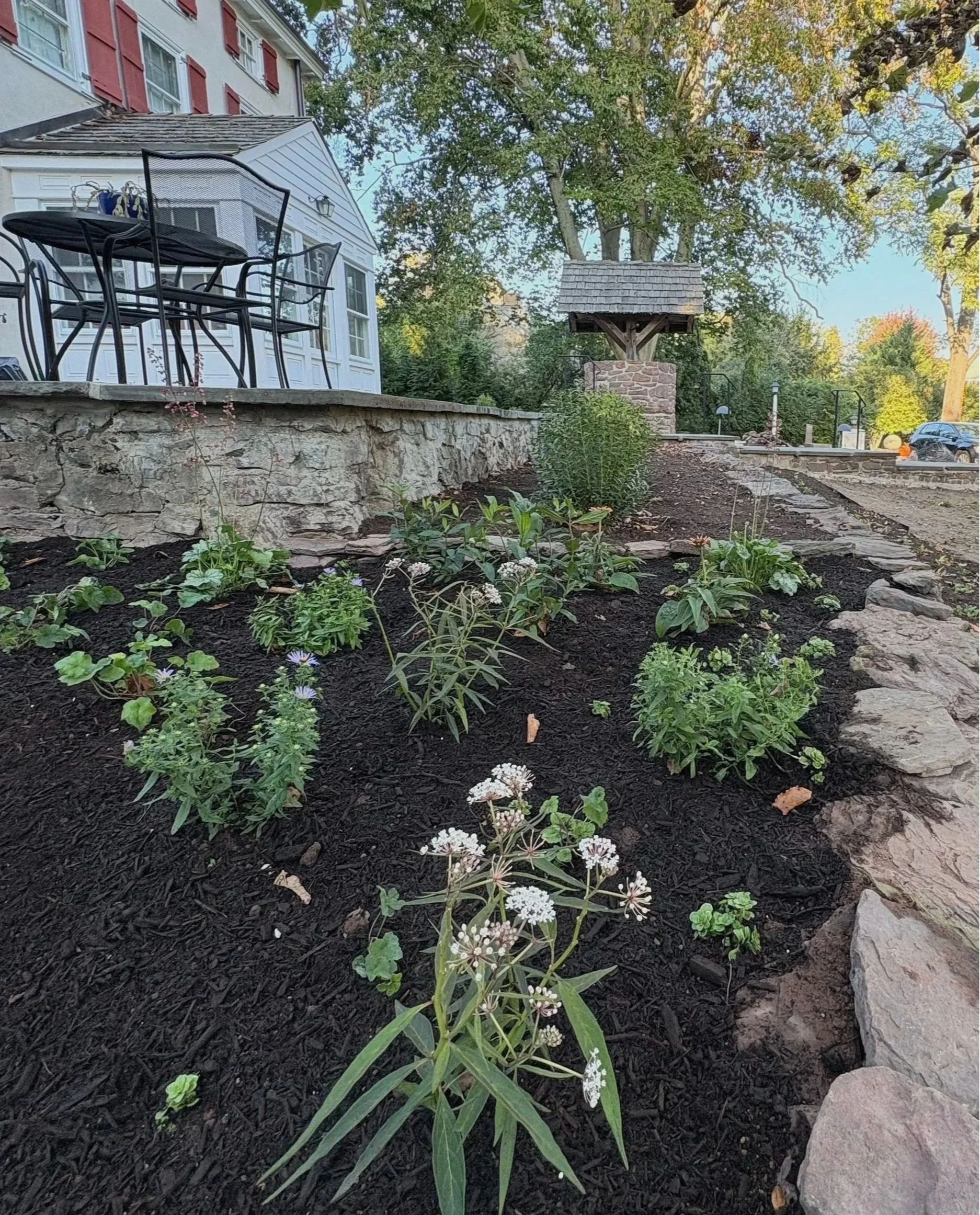
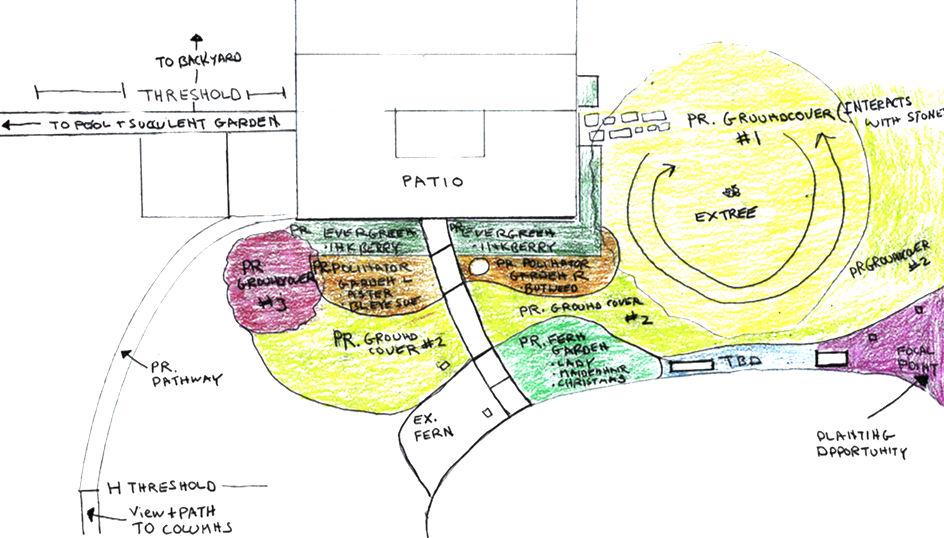
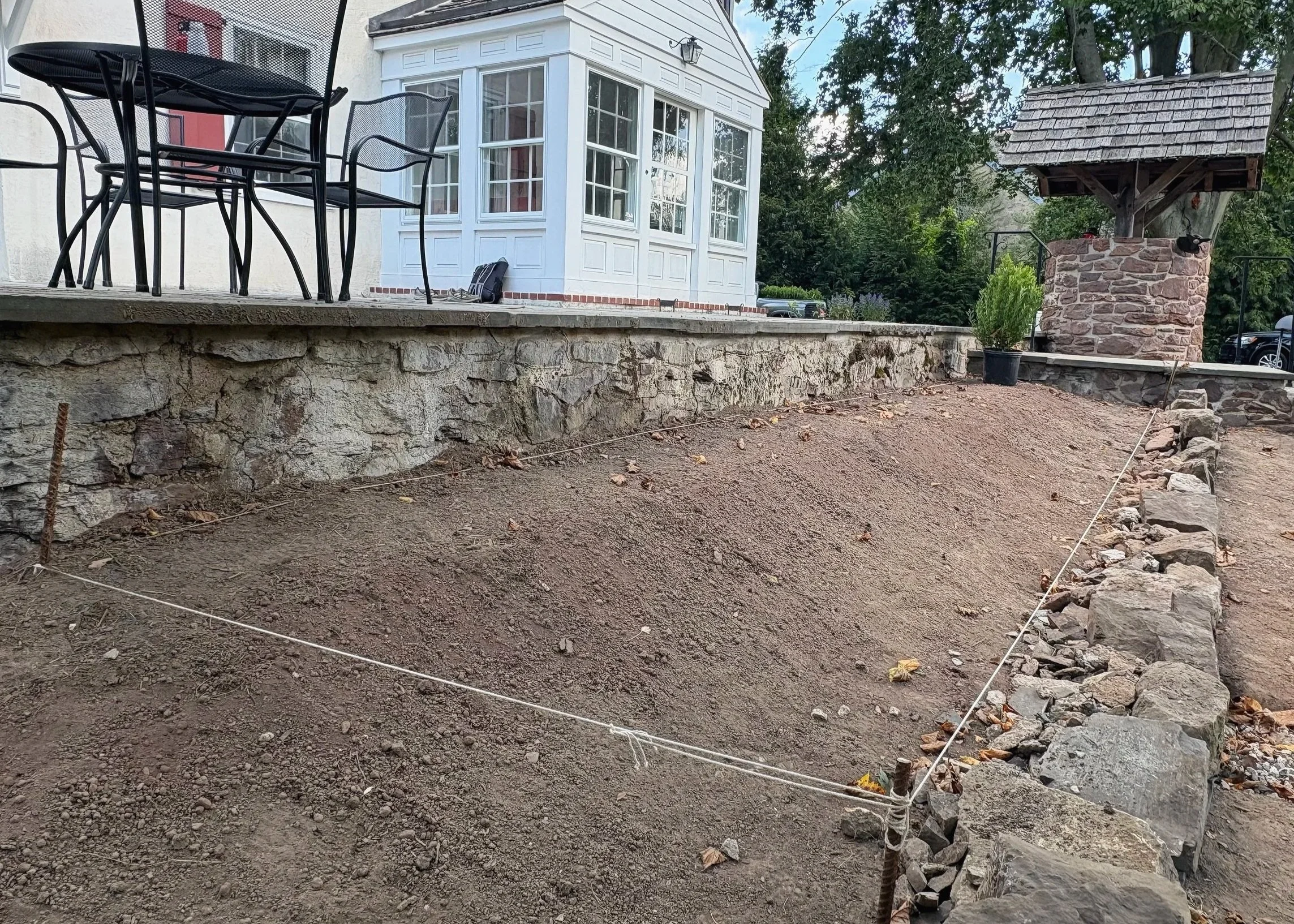
The goal was to upgrade the visual aesthetic and create a clear, intentional transition from the patio to the yard. I designed and built the tiered planting and the dry-laid stone wall to resolve the grade change. Invasive plants were removed, and the planting was organized to provide structure, seasonal interest, and a cohesive flow that ties the entrance and patio into the overall landscape.
-
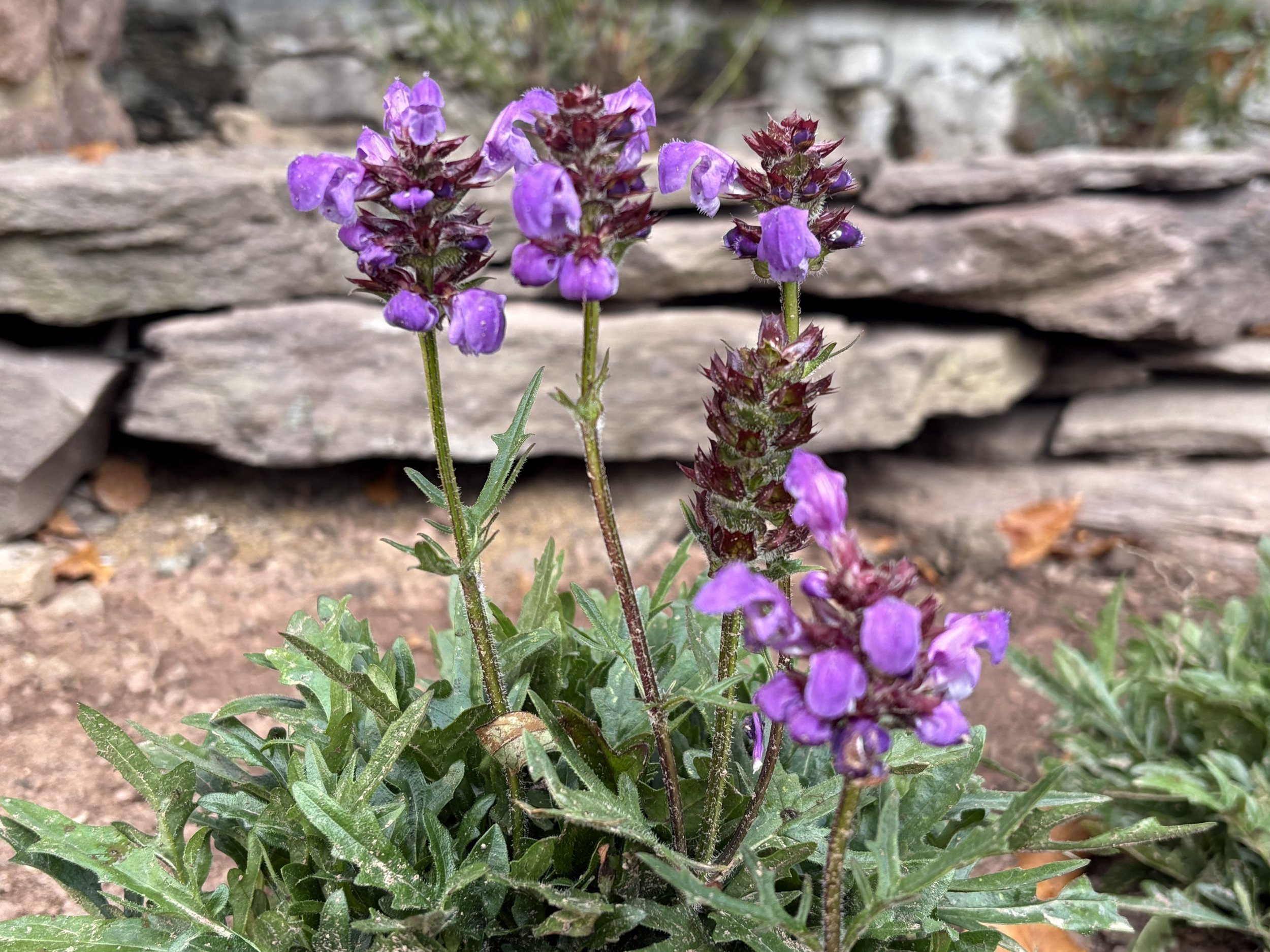
The planting framework centers on year-round structure and ecological function. Inkberry (Ilex glabra) anchors the tiered beds, providing evergreen form. Self-heal (Prunella vulgaris) knits the ground plane as a native, resilient groundcover. Layered shrubs and perennials round out the palette, offering seasonal interest and defining focal points throughout the space.text goes here
-
The finished landscape gives the front of the home greater structure and depth, with a layered planting palette that provides year-round presence and seasonal variation.
selected images
process
-
![A white multi-story house with red shutters and a red roof, surrounded by green trees and a blue sky with clouds.]()
Existing conditions
-
![Hand-drawn landscape plan featuring several garden and outdoor areas, including pr. ground cover #1 and #2, pr. evergreen junipers, pr. groundcover #3, pr. fern, and other plantings, with pathways, existing features, and designated planting opportunities.]()
Concept diagram
-
![A backyard area under renovation showing a cleared dirt space bordered by soil and rocks, with a stone retaining wall and a patio with outdoor furniture, a well, and a small enclosed porch in the background.]()
Site preparation
-
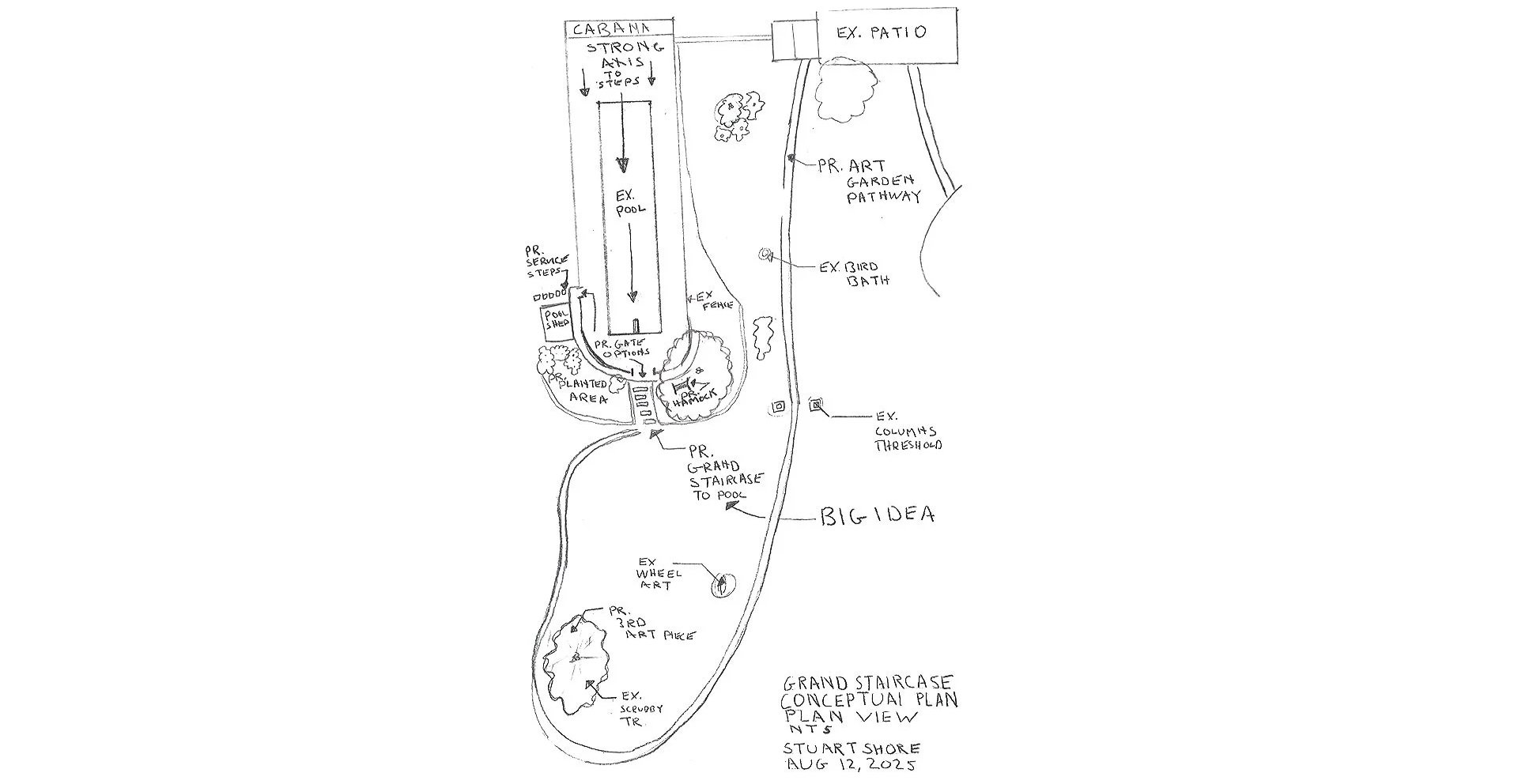
![Hand-drawn conceptual plan of a backyard layout with features labeled, including a swimming pool, a grand staircase, planting areas, a patio, art gardens, bird baths, ex-wheels, a sculpture trail, and water features, with notes on structural support and design ideas.]()
Concept diagram
-
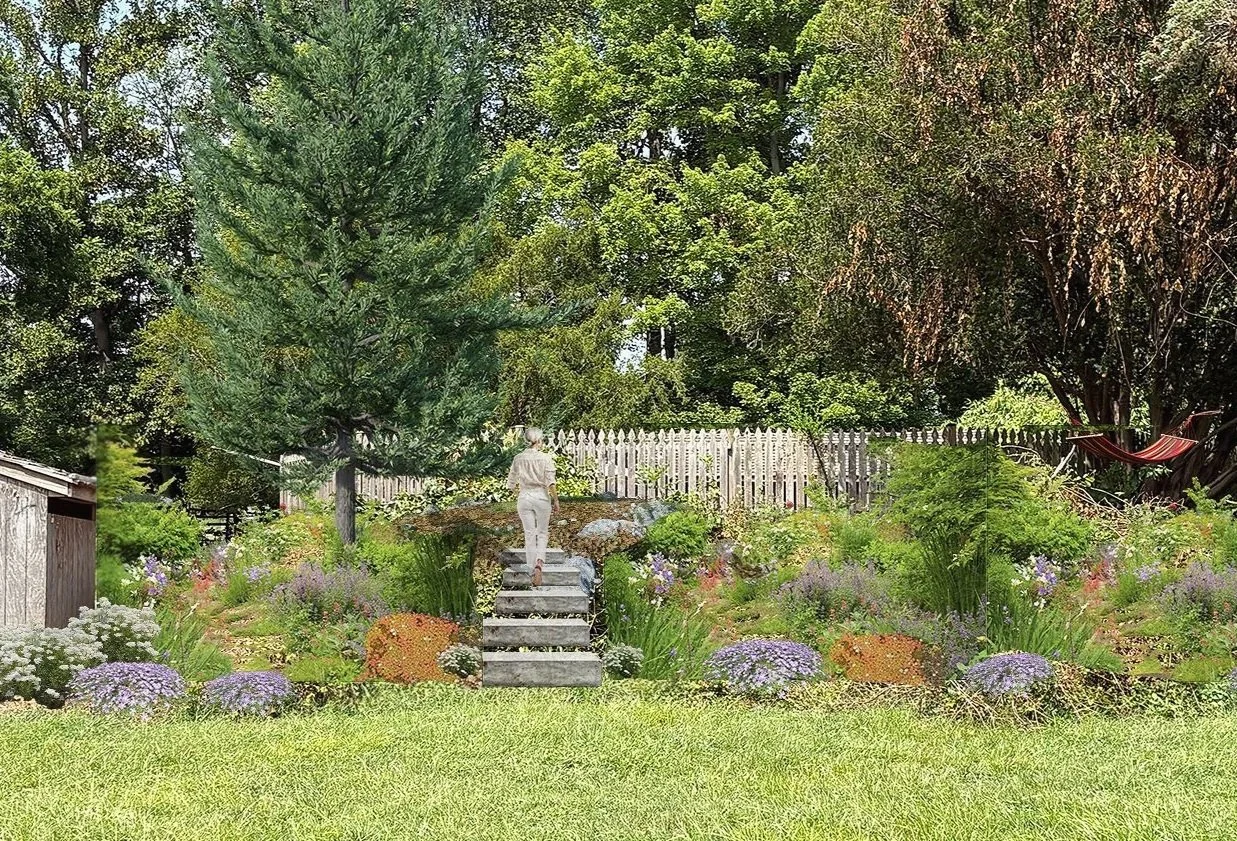
![A garden with a grassy lawn, colorful flower beds, trees, a wooden fence, a person walking up stone steps, a small shed, and a hammock among the trees.]()
Digital rendering
Foundation Refresh +
Patio Garden
Pennington, NJ
Existing Conditions
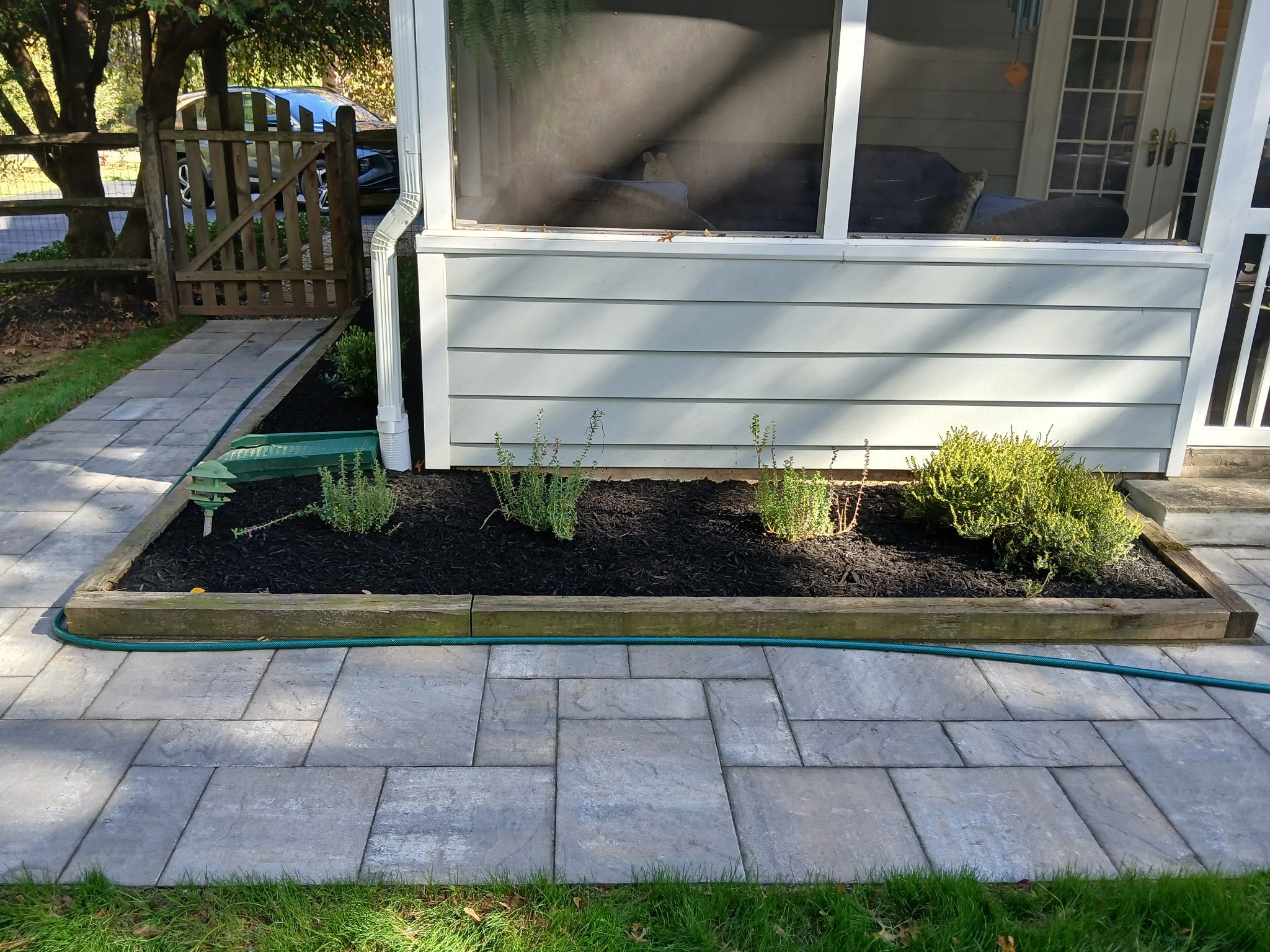
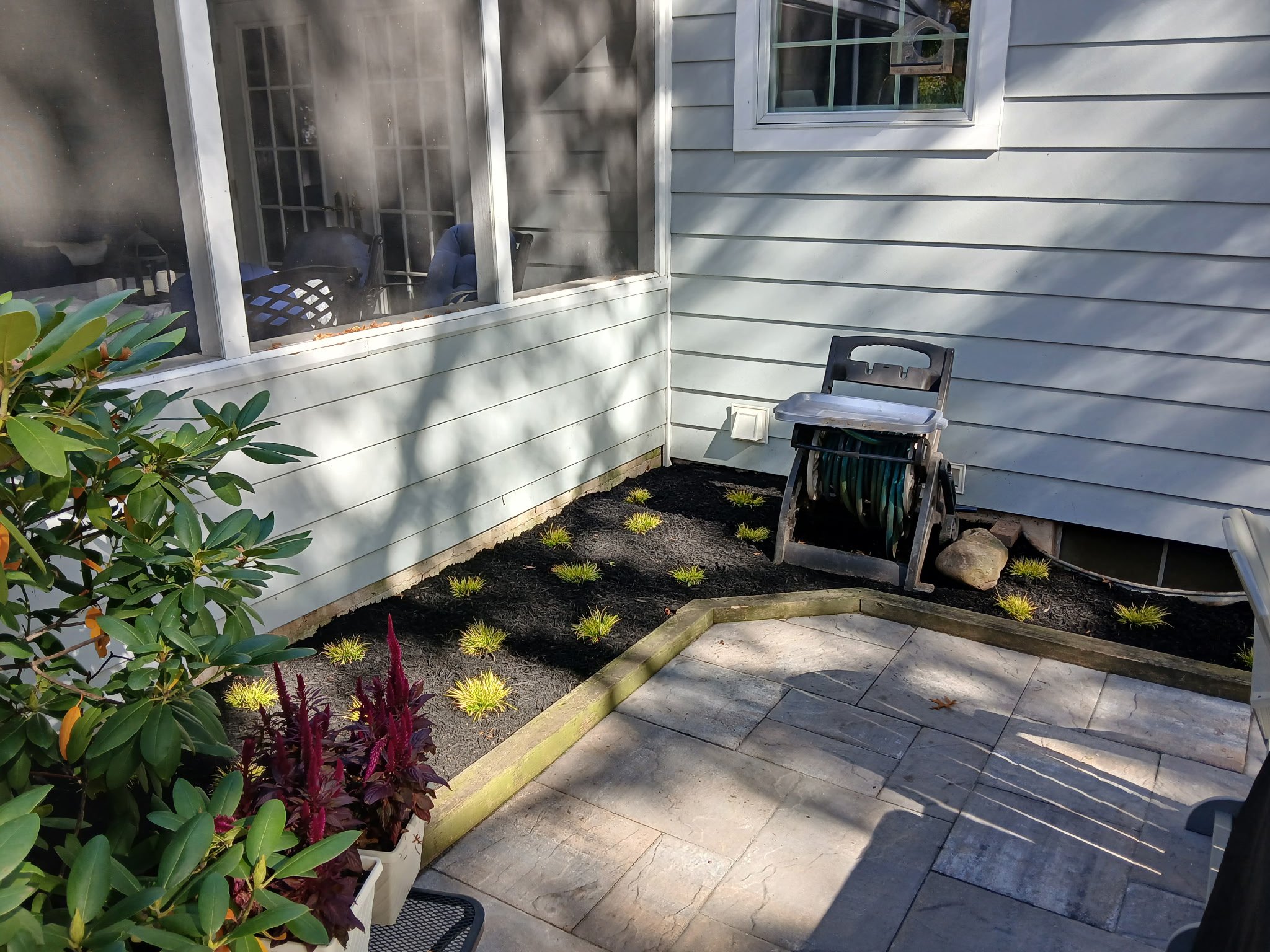
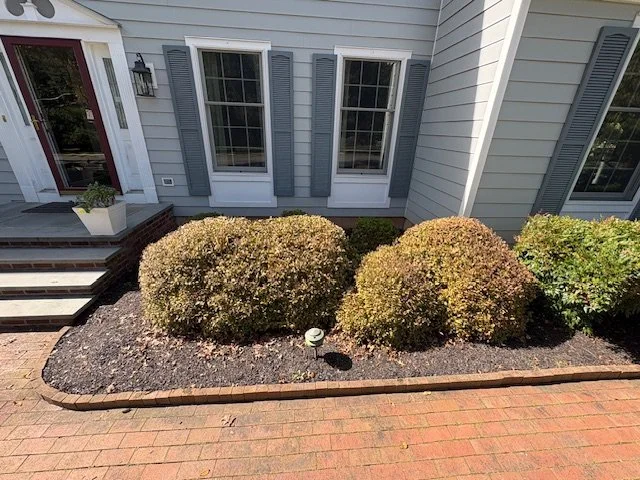
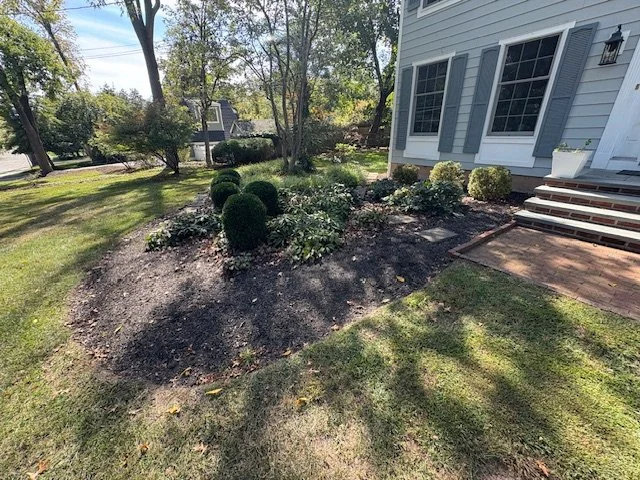
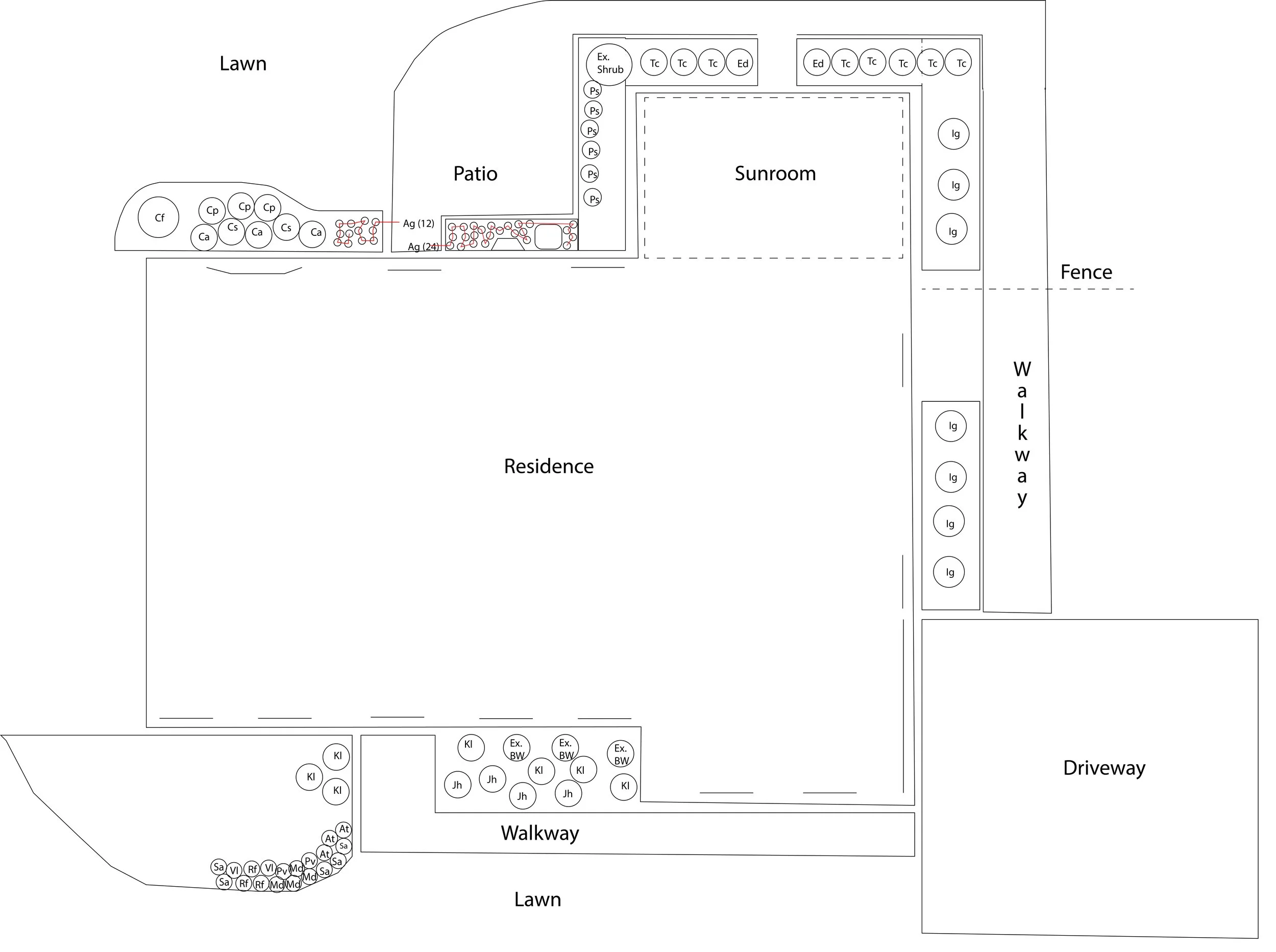
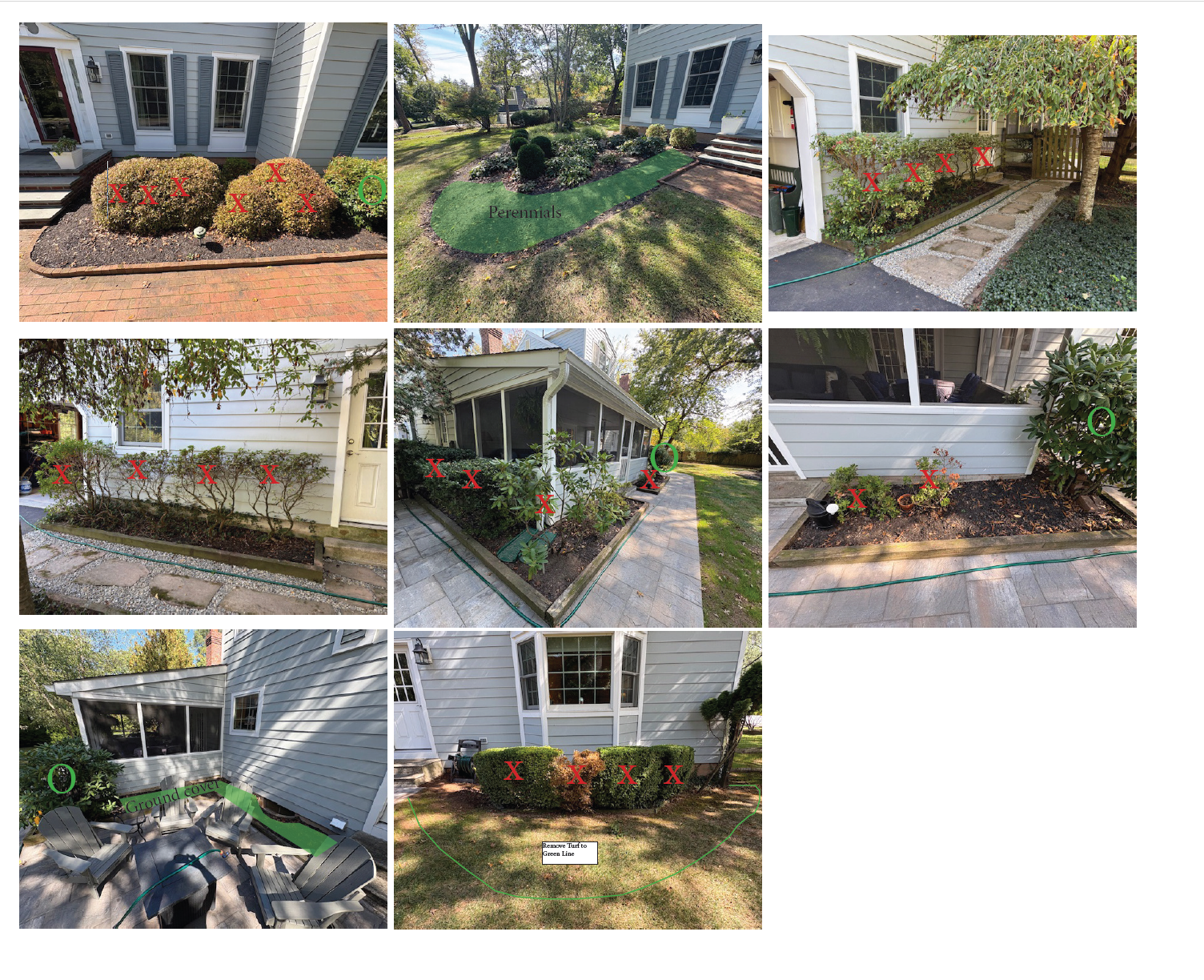
The front foundation beds had become uneven and tired, with little seasonal structure. In the back, a new patio created a destination, but surrounding beds were dominated by overgrown shrubs and leftover planting zones that did not support circulation, views, or use.
-
Refresh the entry with a clean, native-forward foundation composition. Reset the patio setting by thinning overgrowth, opening sightlines, and rebuilding planting layers from the house outward. Add an aromatic shrub garden near the patio to bring fragrance and a walk-by experience.
-
Refresh the entry with a clean, native-forward foundation composition. Reset the patio setting by thinning overgrowth, opening sightlines, and rebuilding planting layers from the house outward. Add an aromatic shrub garden near the patio to bring fragrance and a walk-by experience.
-
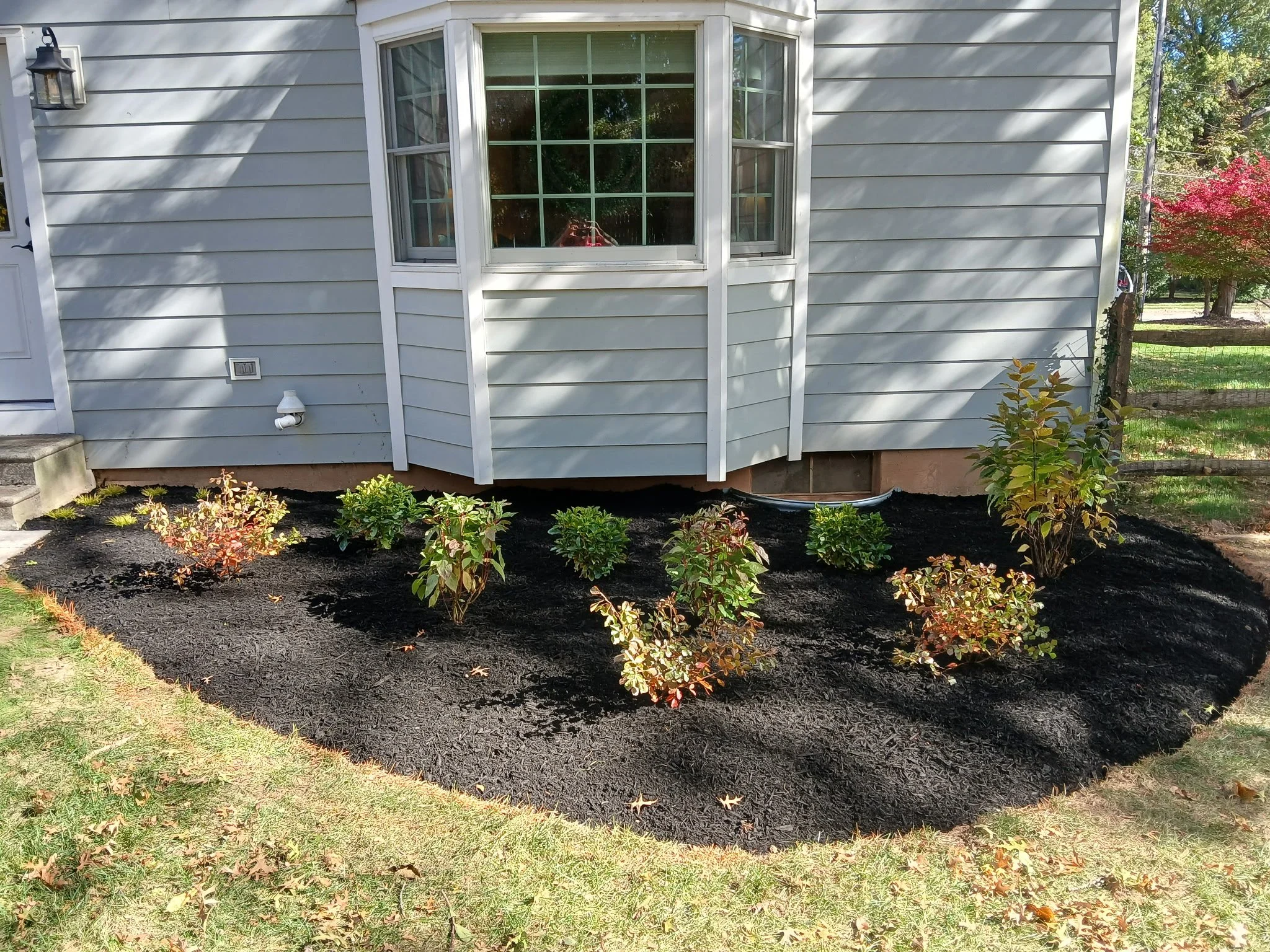
The landscape now reads as cohesive from entry to patio. The front feels current and structured, and the back is calmer and more purposeful, with a defined garden setting and a memorable aromatic layer.
selected images
process
-
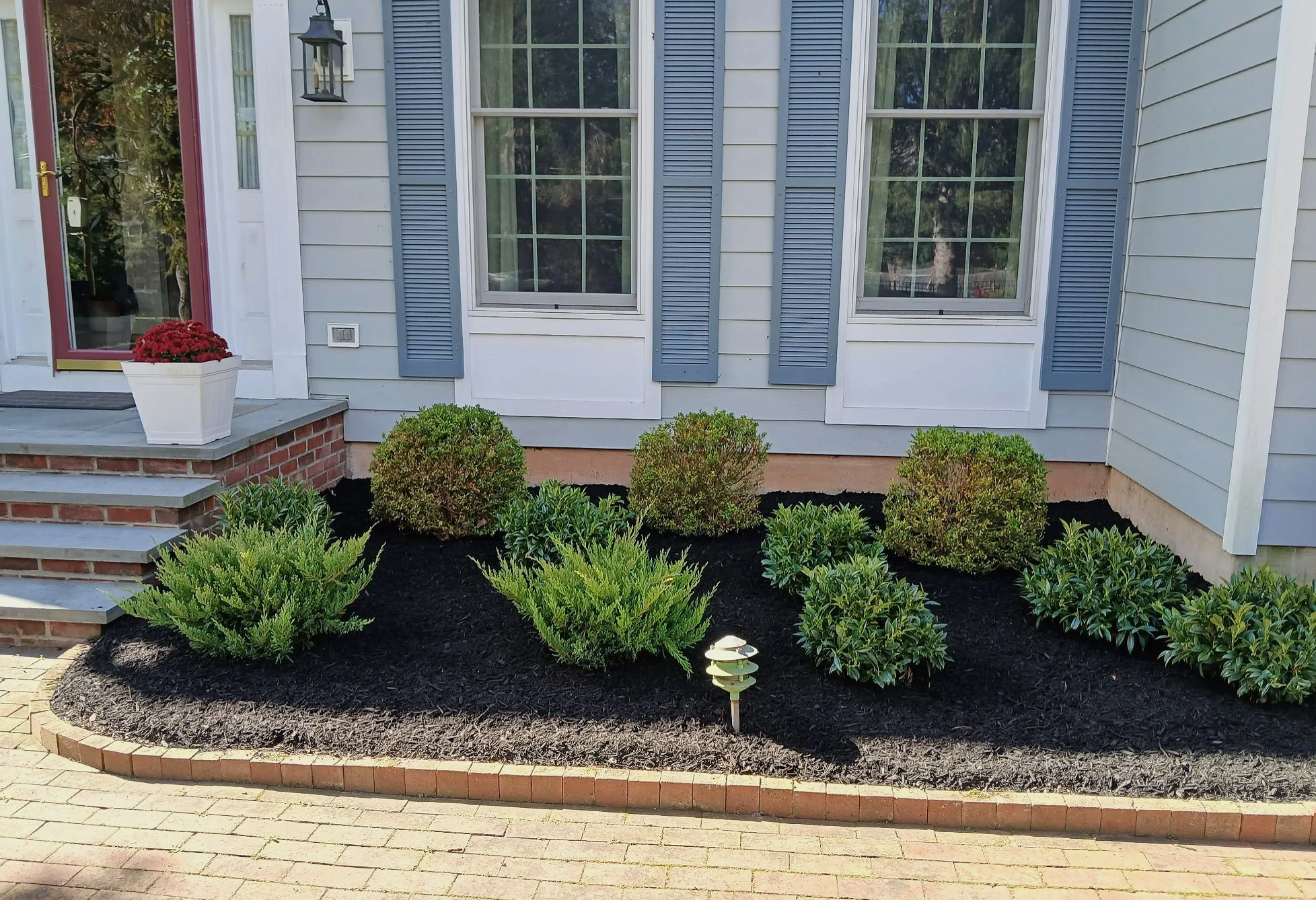
![Front view of a house with three large bushes in front, a small pathway with brick paving, and a porch with steps and a potted plant. The house has light gray siding and white-framed windows with blue shutters.]()
Existing conditions
-
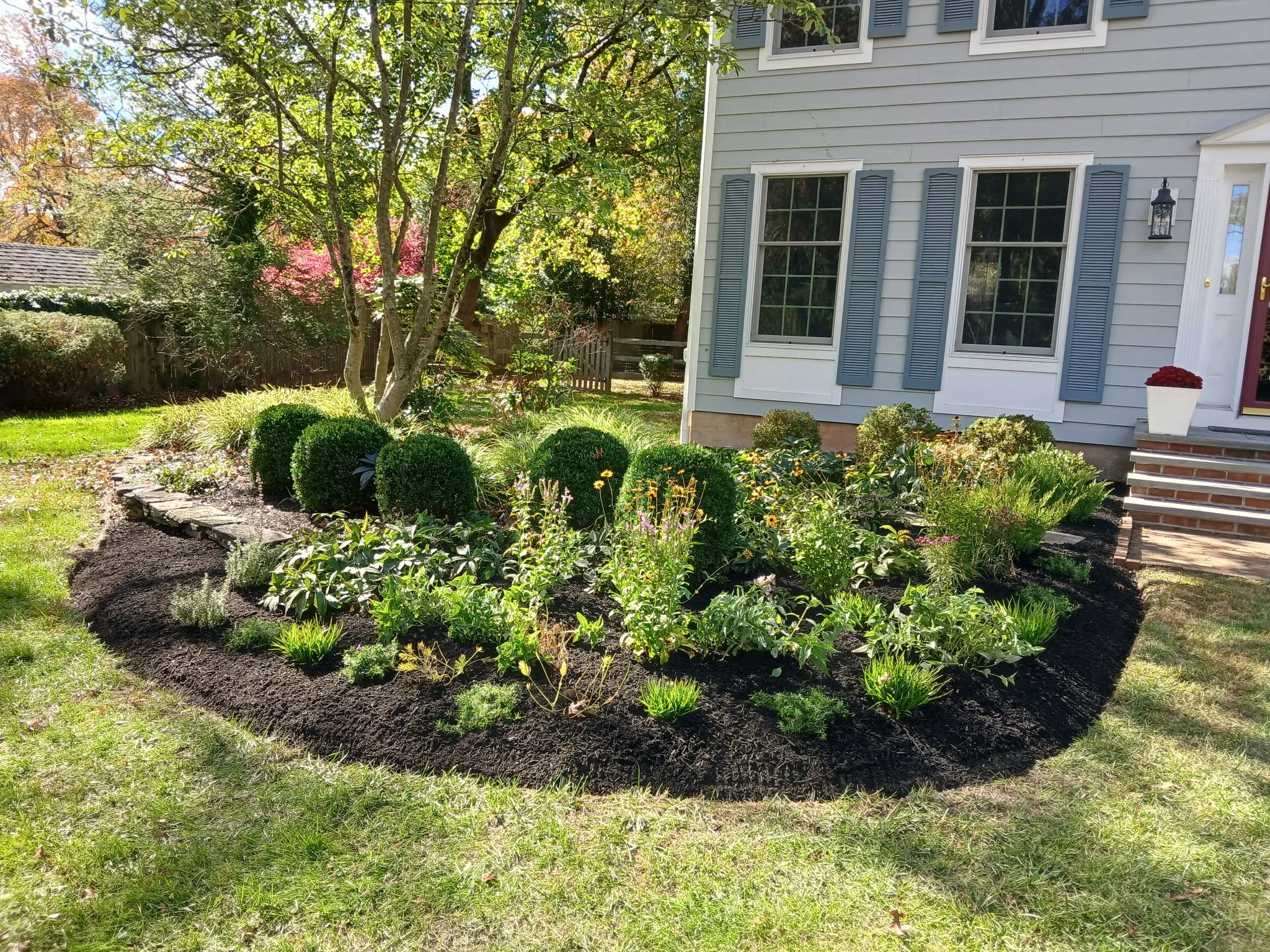
![A backyard garden bed with newly planted shrubs and flowers, surrounded by grass, with a house and wooden stairs on the right side, and trees in the background.]()
Existing conditions
-
![A landscape garden layout plan with labeled sections including a lawn, patio, sunroom, residence, walkway, driveway, and fenced walkway area. The plan shows various plant symbols and planting zones around the house and property.]()
Technical planting plan
-
![A collage of nine images showing different garden and landscaping projects around a house. The images include bushes, trees, pathway stones, and various garden beds with annotations such as red X's indicating areas for removal or adjustment, green circles highlighting specific plants, and green labels like 'Perennials' and 'Ground Cover' for landscaping notes.]()
Installation notes
Woodland Edge
Lambertville, NJ
Existing Conditions
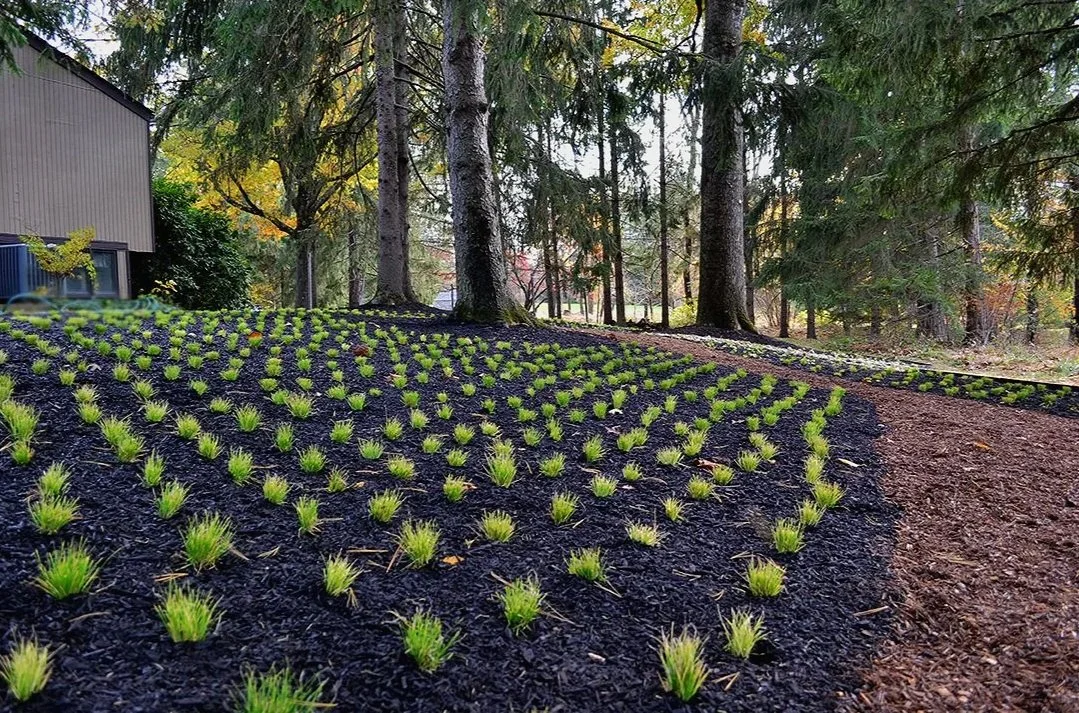
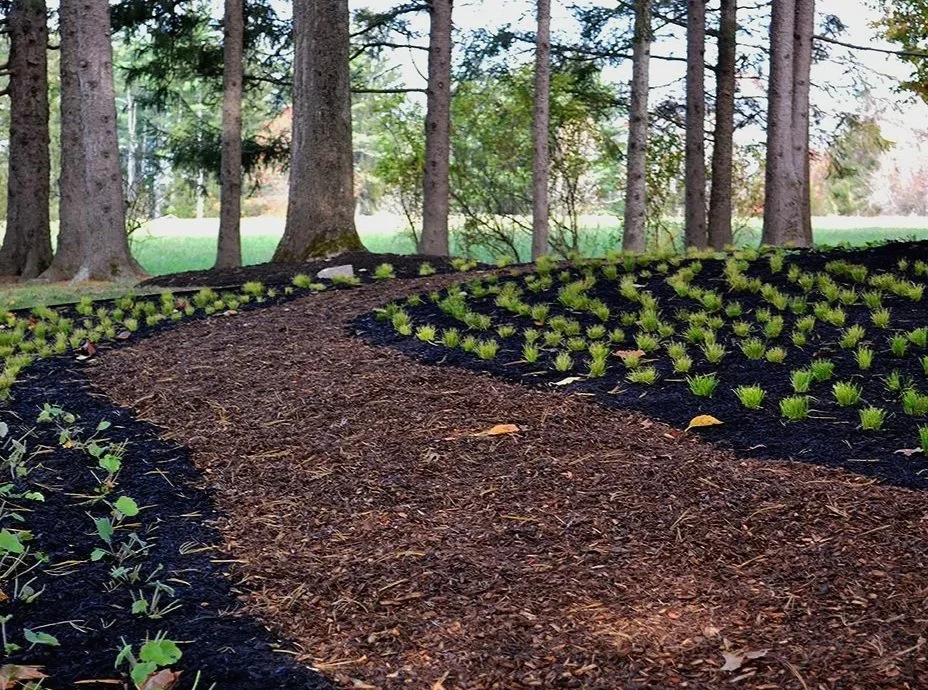
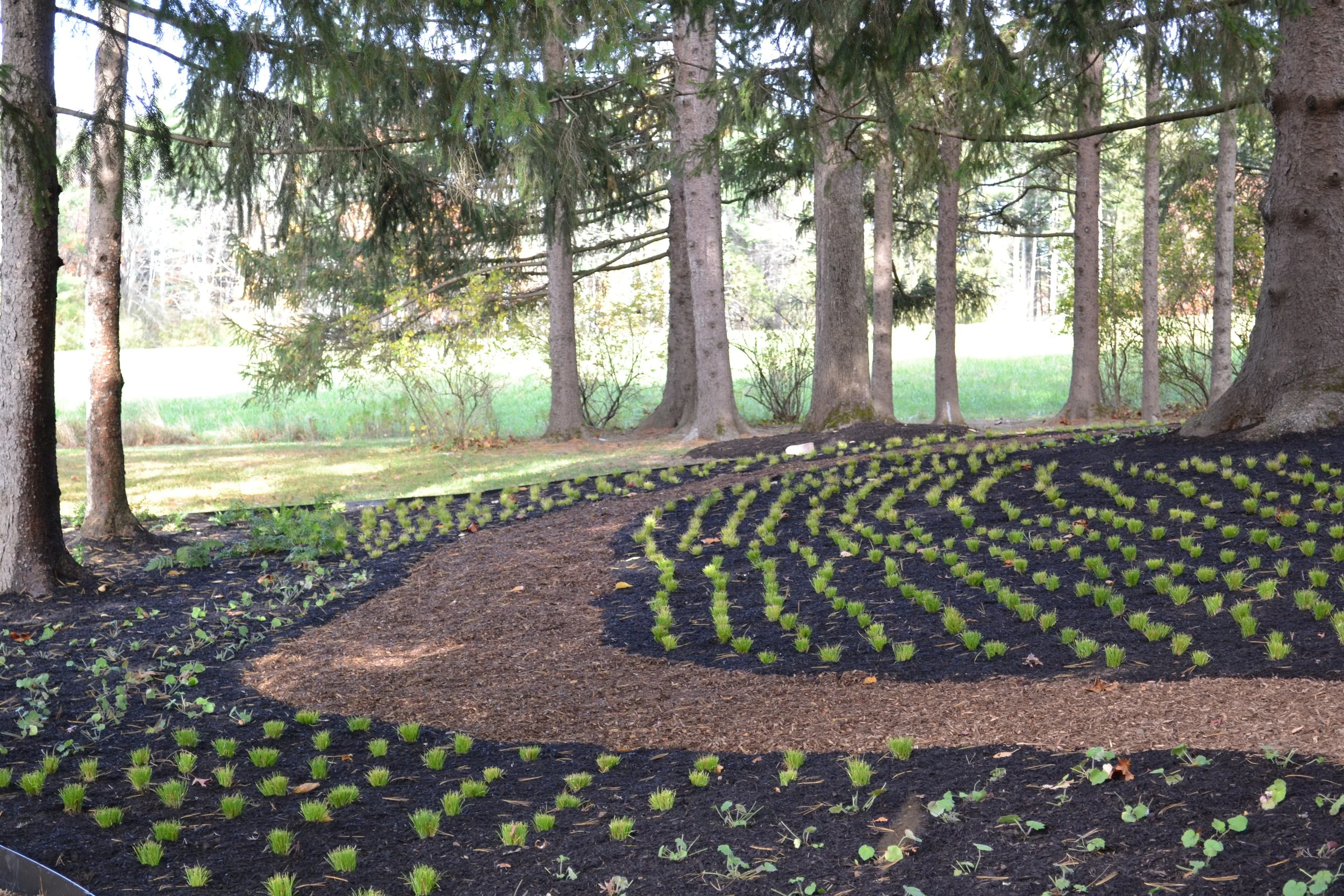
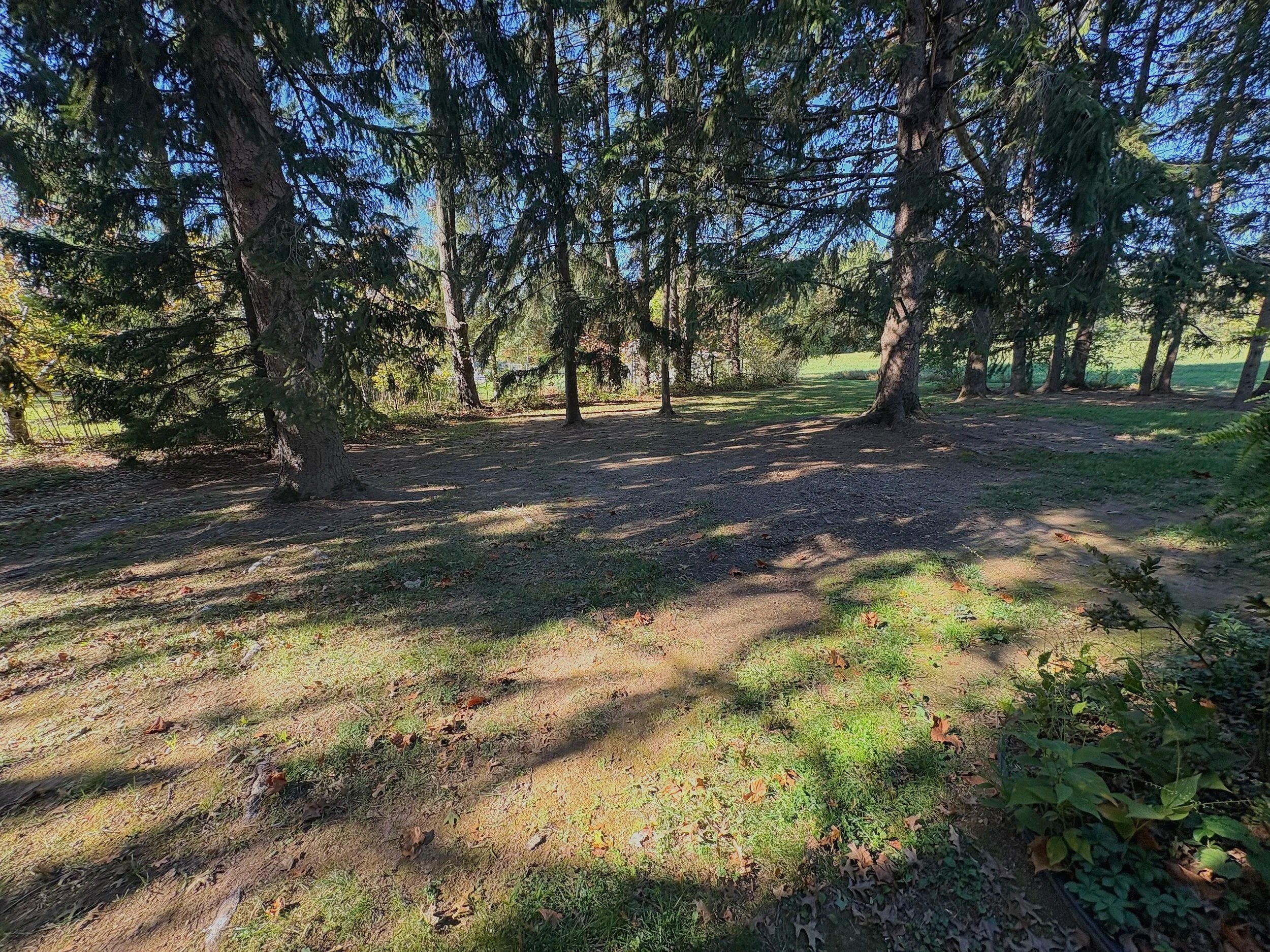
The site sits at the transition between lawn and mature woodland canopy, but the edge was thin and abrupt. Understory layering was limited, with patches of exposed soil and planting that lacked continuity. The boundary read as a hard line instead of a gradual shift.
-
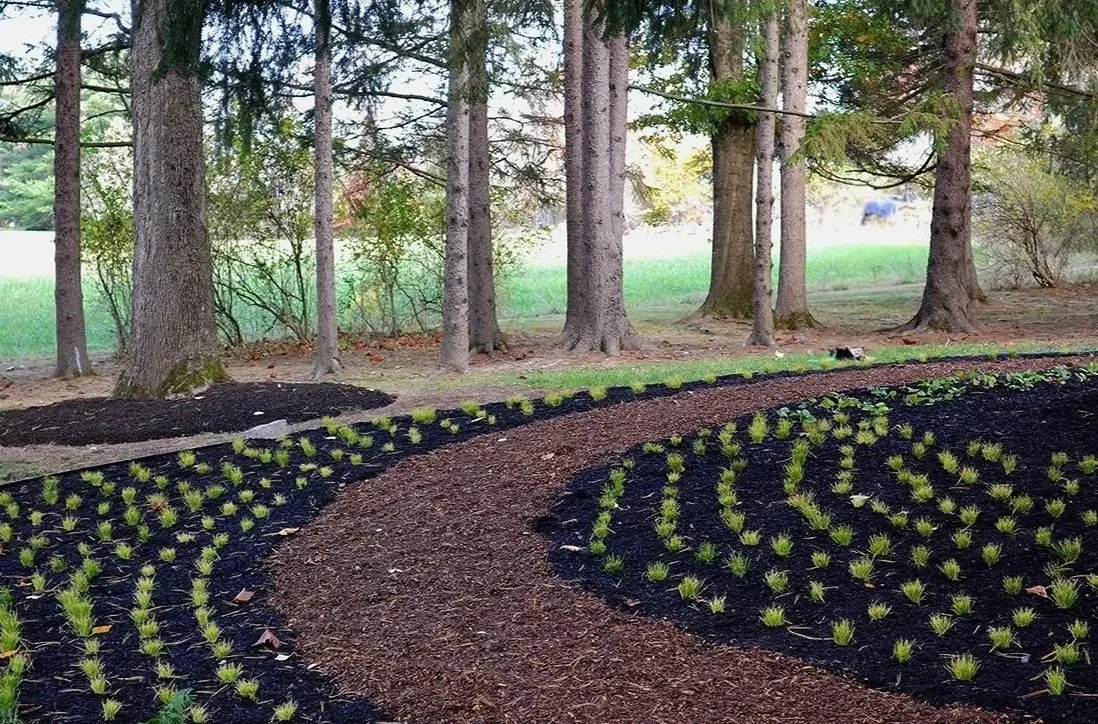
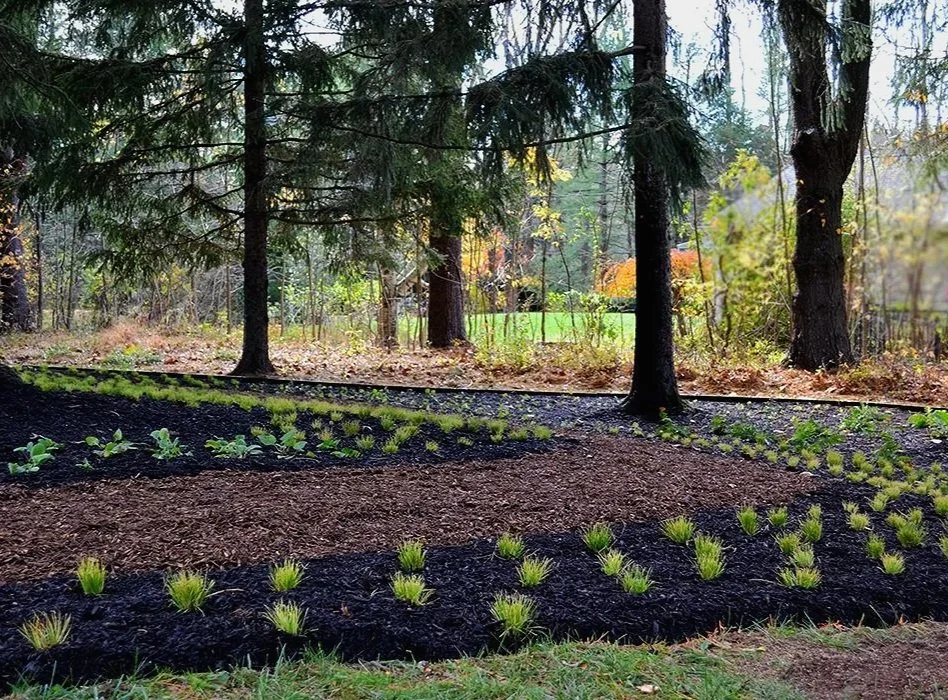
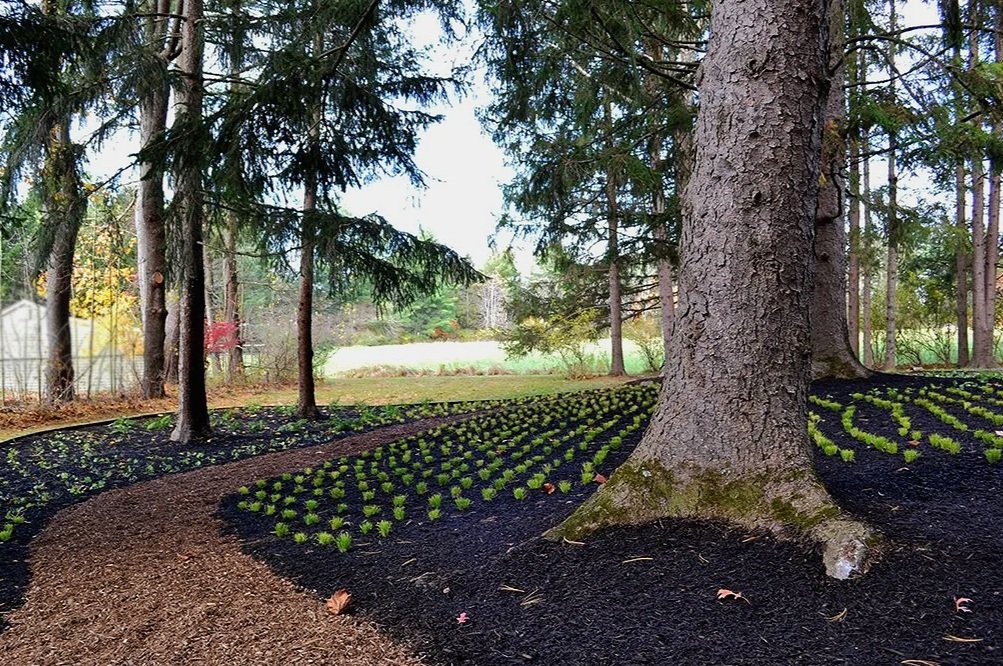
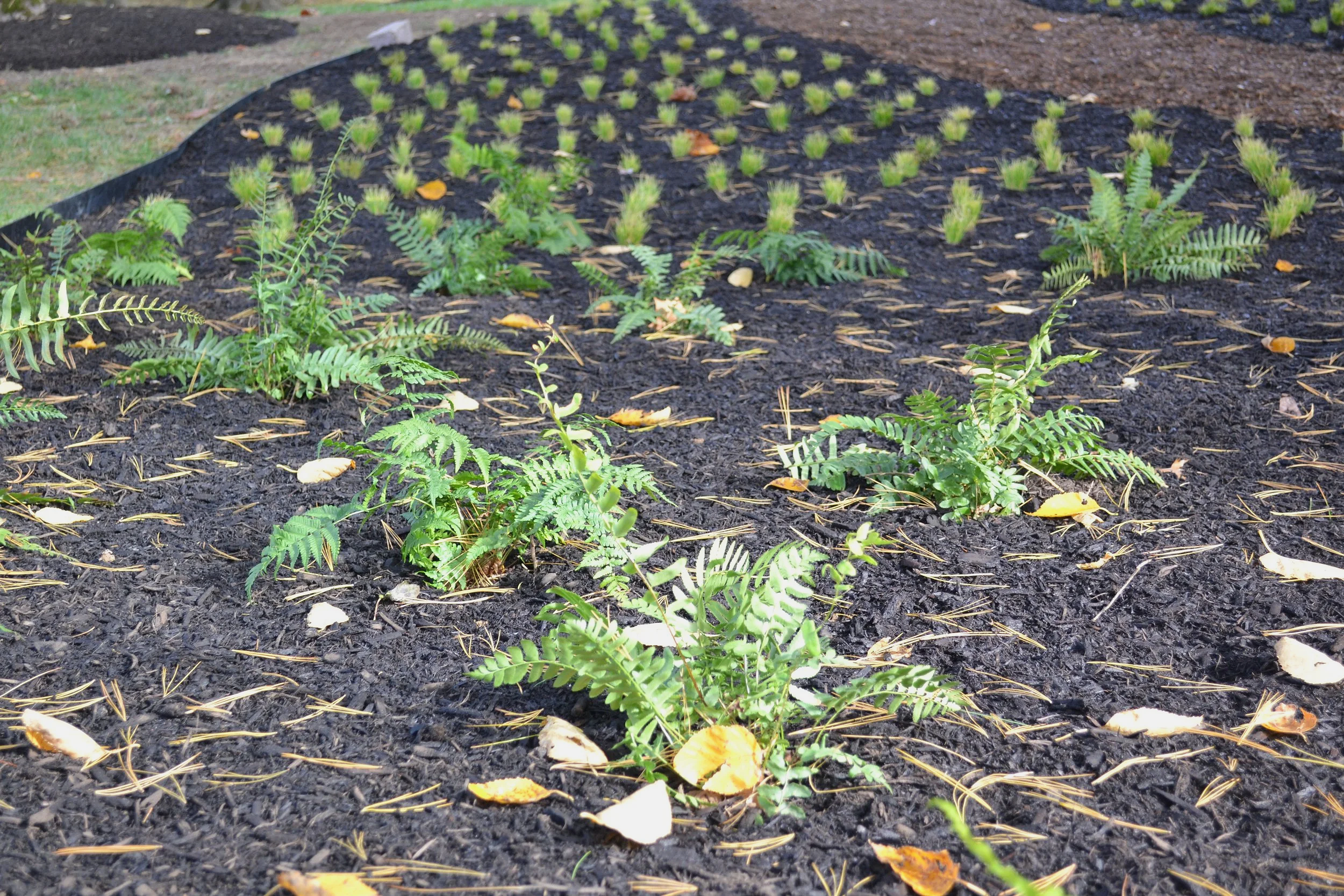
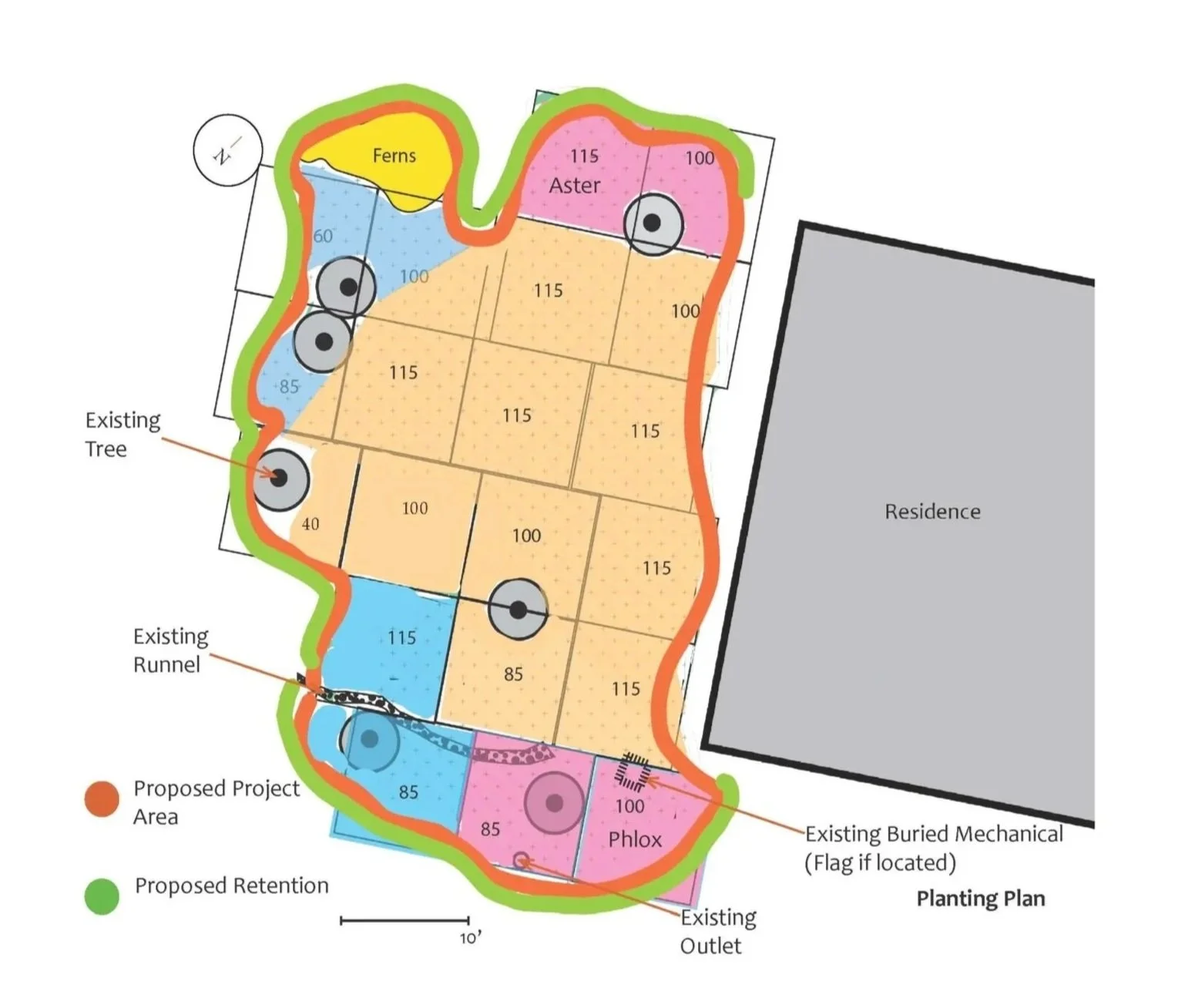
Build a true woodland edge using ground-layer planting only. The goal was rhythm and depth without shrubs, relying on repeated sweeps of perennials and ferns to form a continuous understory. The edge was treated as a gradient, with density increasing toward the canopy and thinning outward to meet the lawn more softly.
-
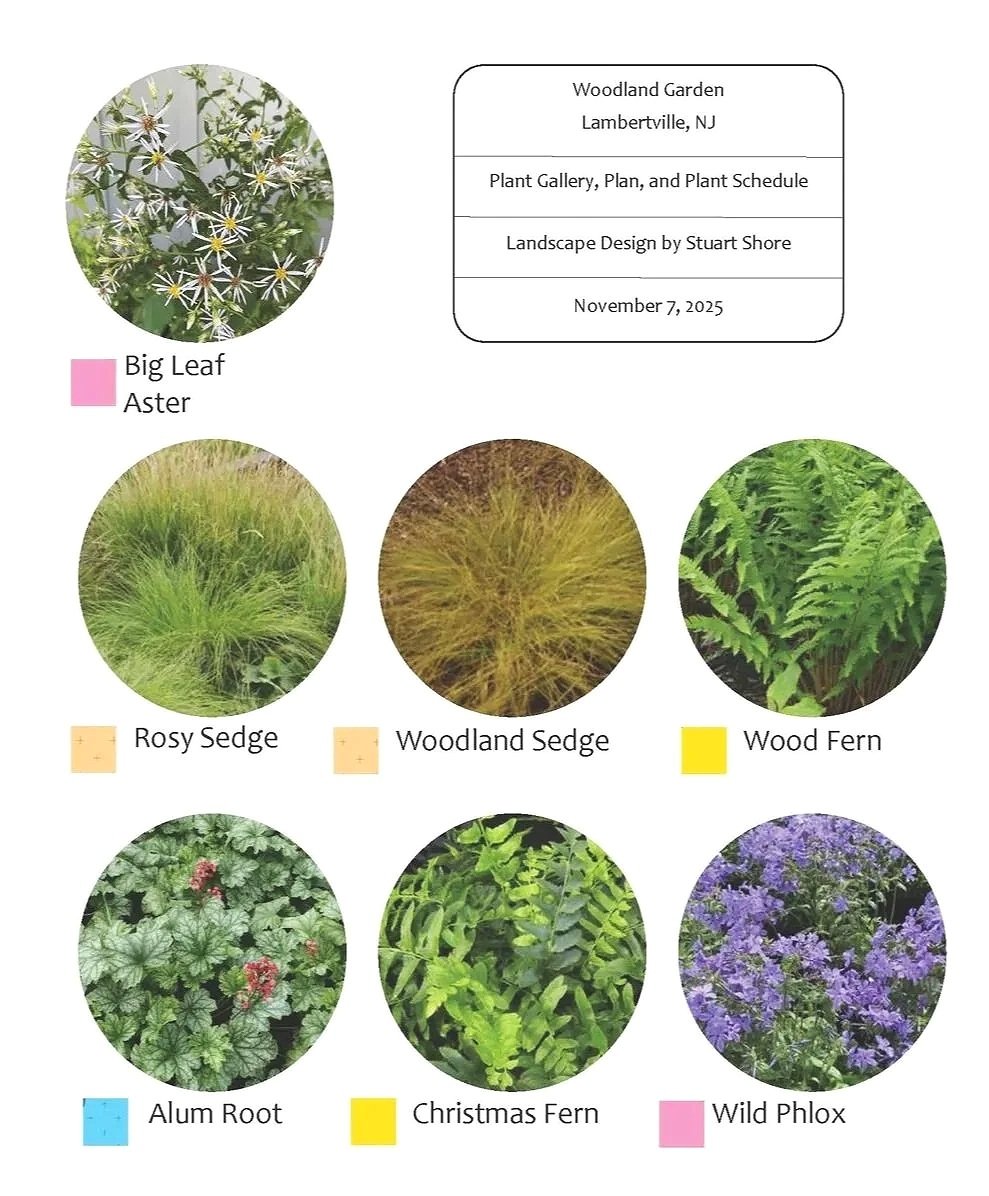
Planting is organized in broad drifts to knit the ground plane, stabilize soil, and establish consistent woodland texture. Repetition and massing replace isolated specimens to avoid a collected look and reinforce long runs of planting. Pennsylvania sedge (Carex pensylvanica) anchors the matrix, with ferns and shade-tolerant perennials layered through it for seasonal pulse and habitat value.
-
The woodland edge now reads as intentional and immersive. The planting moves in continuous sweeps rather than scattered pockets, creating a calmer transition from lawn to woodland. As the ground layer fills in, the edge will continue to strengthen while maintaining a natural, restrained character.
selected images
process
-
![Sunlight filtering through trees casting shadows on the grass and dirt ground in a wooded area.]()
Existing conditions
-
![A landscape planting plan showing proposed project areas outlined in orange and retention areas outlined in green around a residential property, with existing trees, runnels, and mechanical elements marked.]()
Planting plan
-
![Plant schedule and design plan for Woodland Garden in Lambertville, NJ, dated November 7, 2025. Features images of Big Leaf Aster, Rosy Sedge, Woodland Sedge, Wood Fern, Alum Root, Christmas Fern, and Wild Phlox, with color-coded labels.]()
Plant palette
-
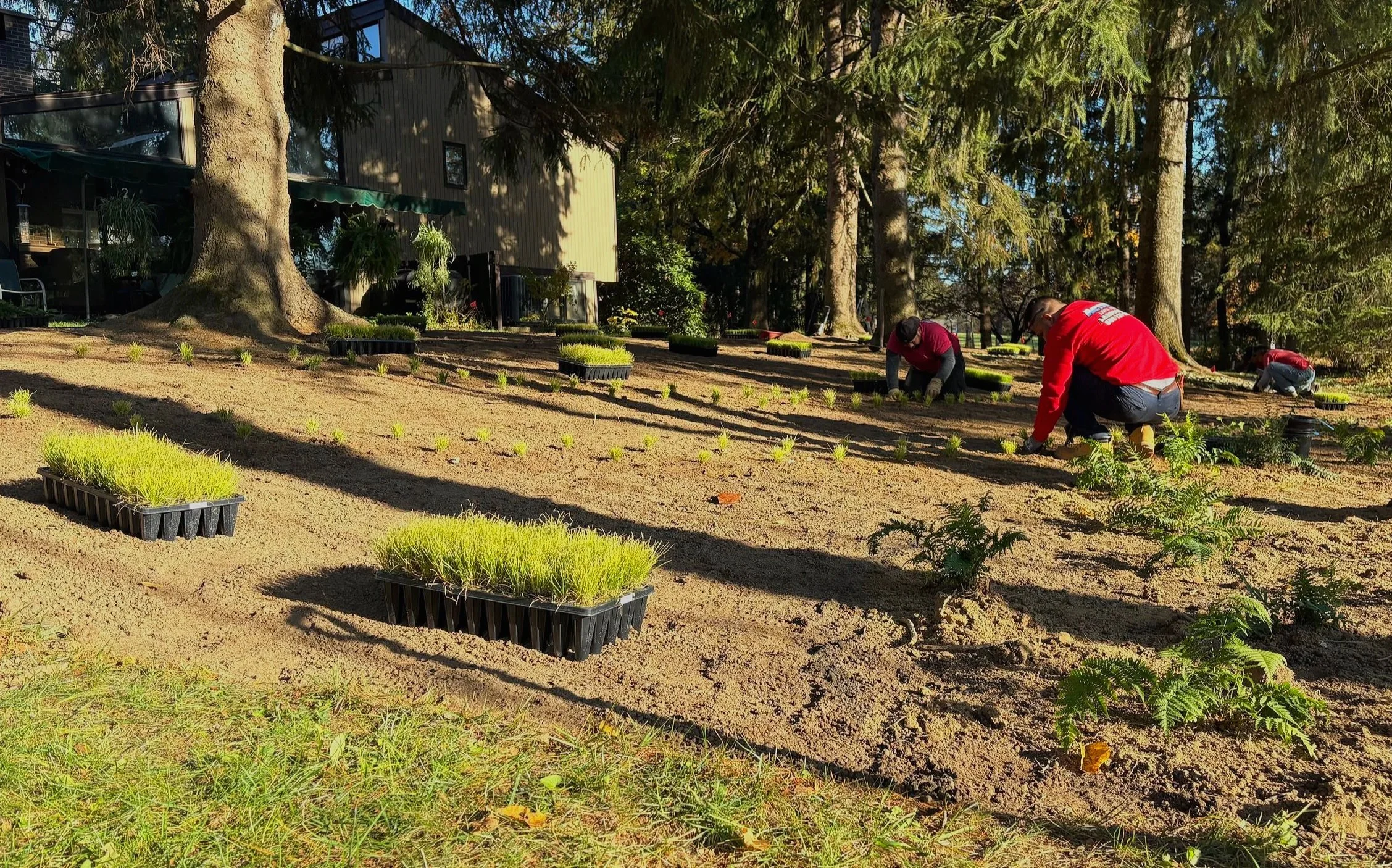
![People planting grass and small plants in a landscaped area outdoors, utilizing trays of grass and small plants amidst trees and sunlight.]()
Installation collaboration with Action Lawn & Landscape
Woodland Garden
Lawrenceville, NJ
Existing Conditions
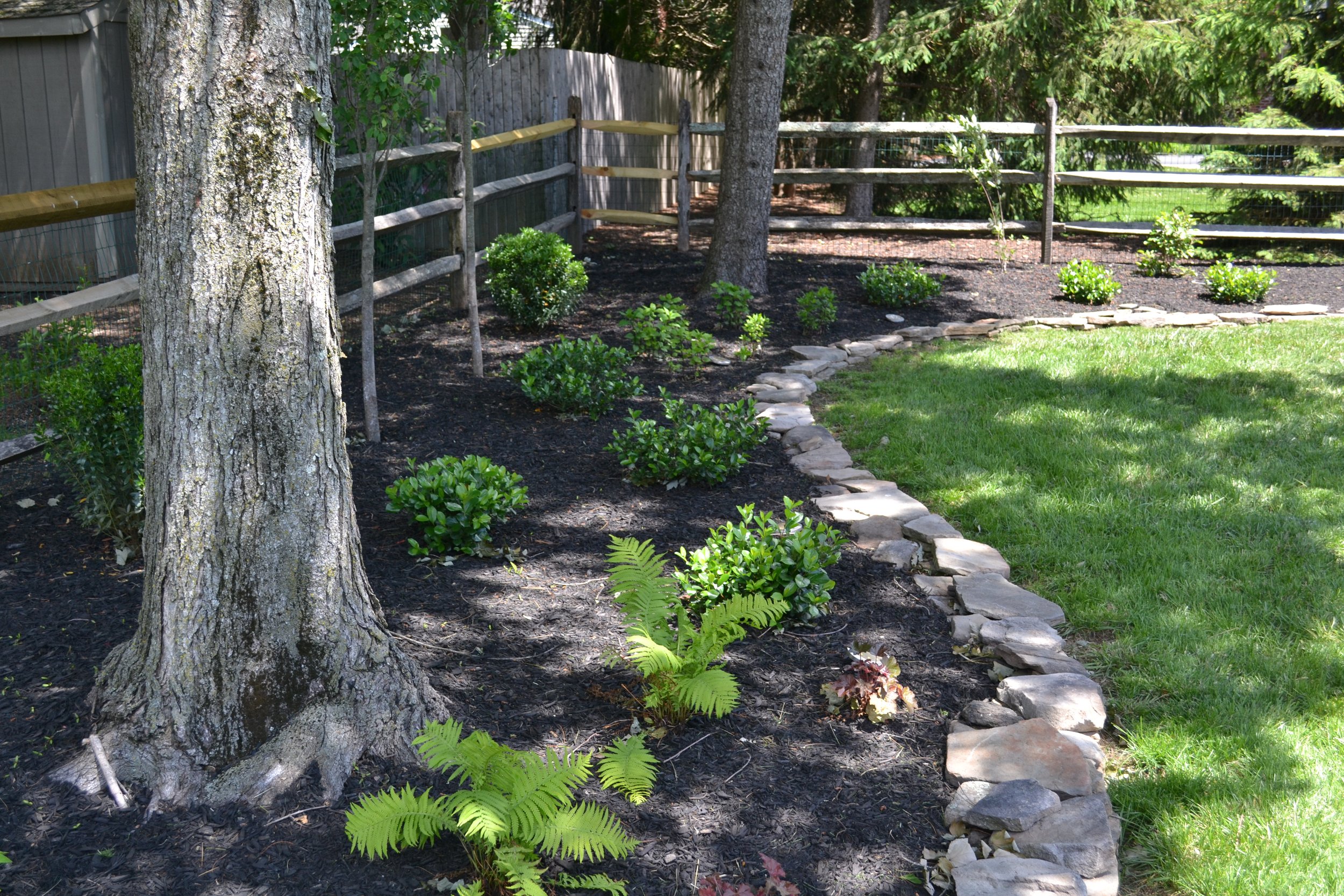
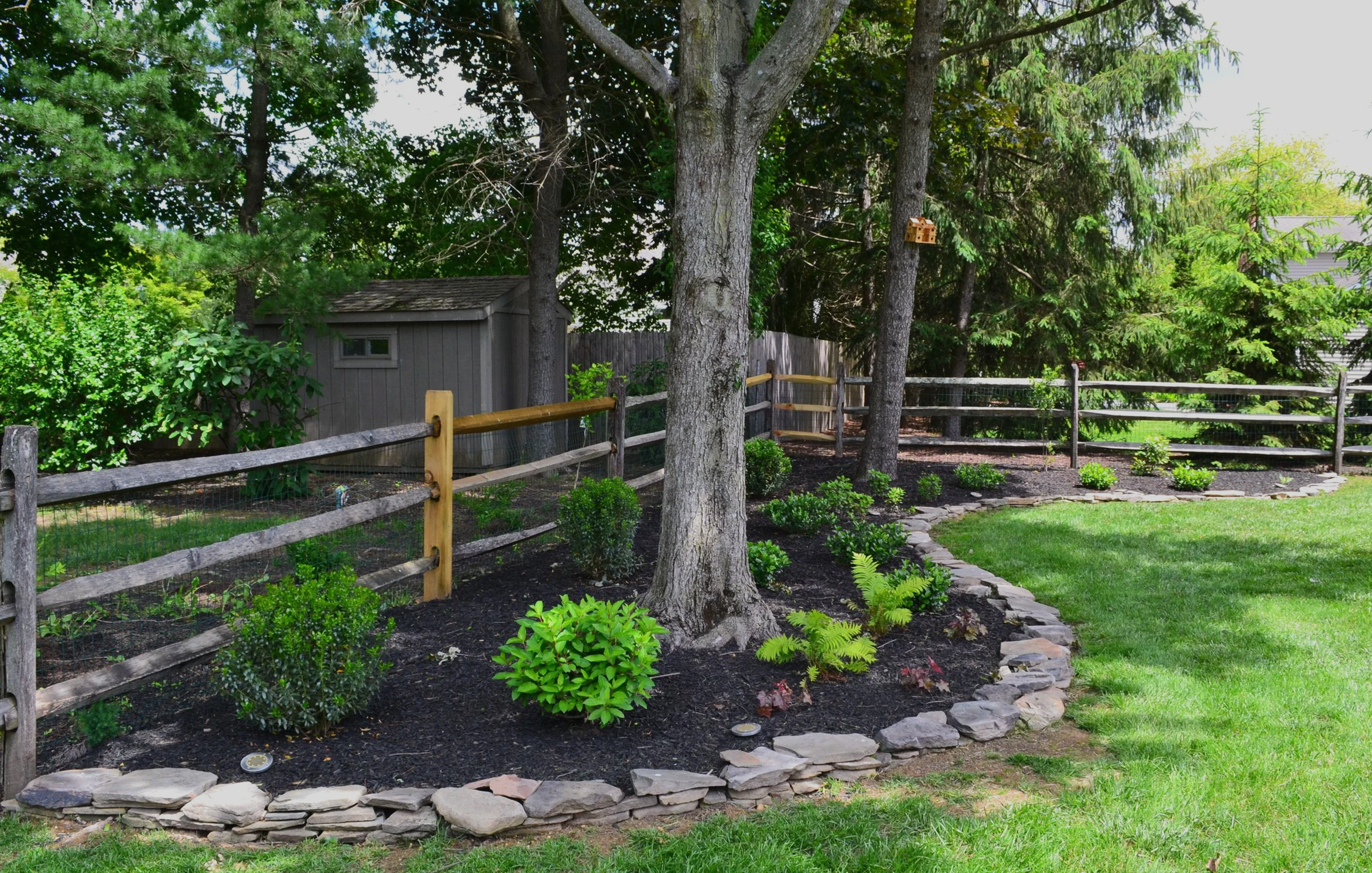
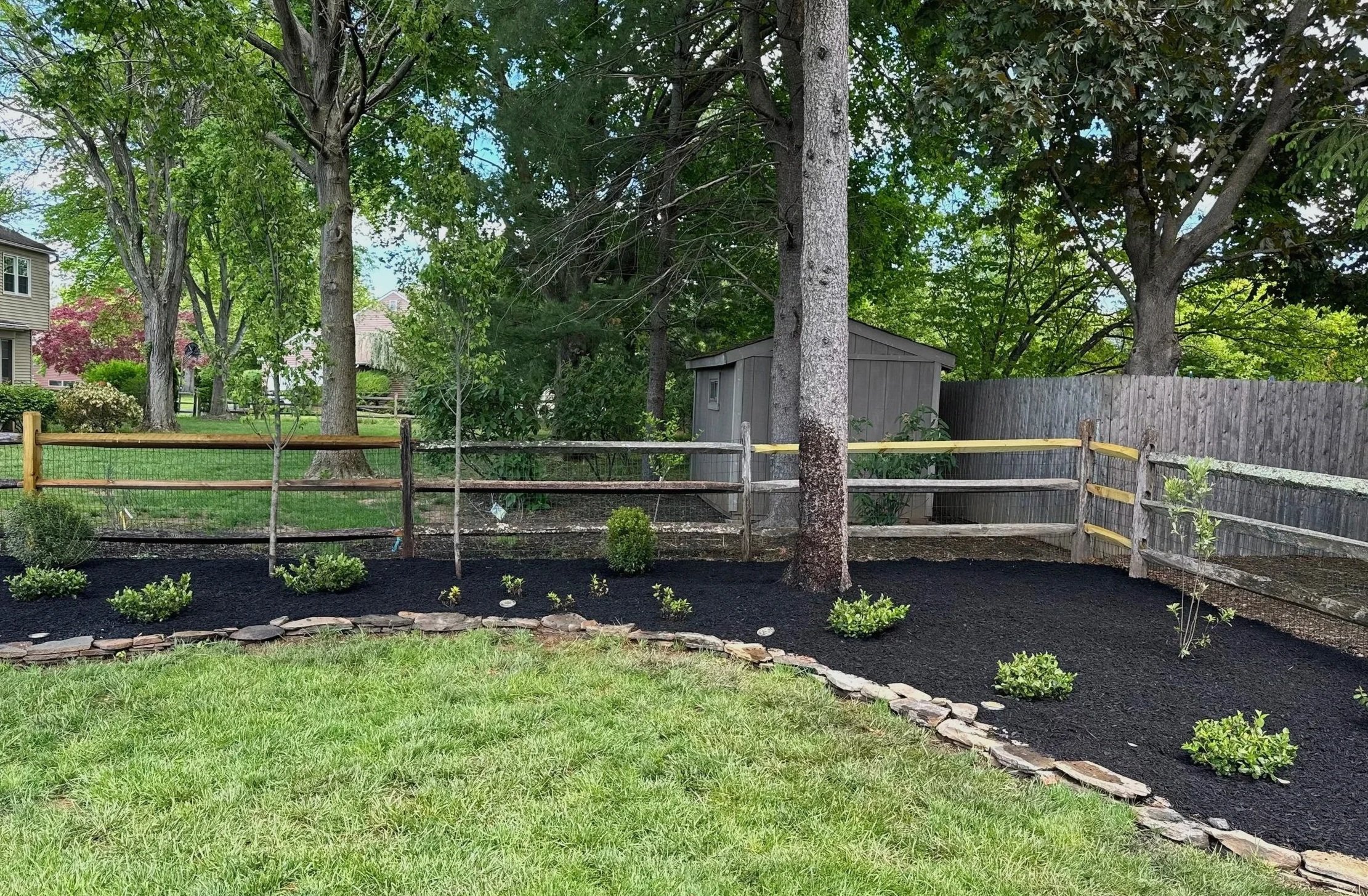
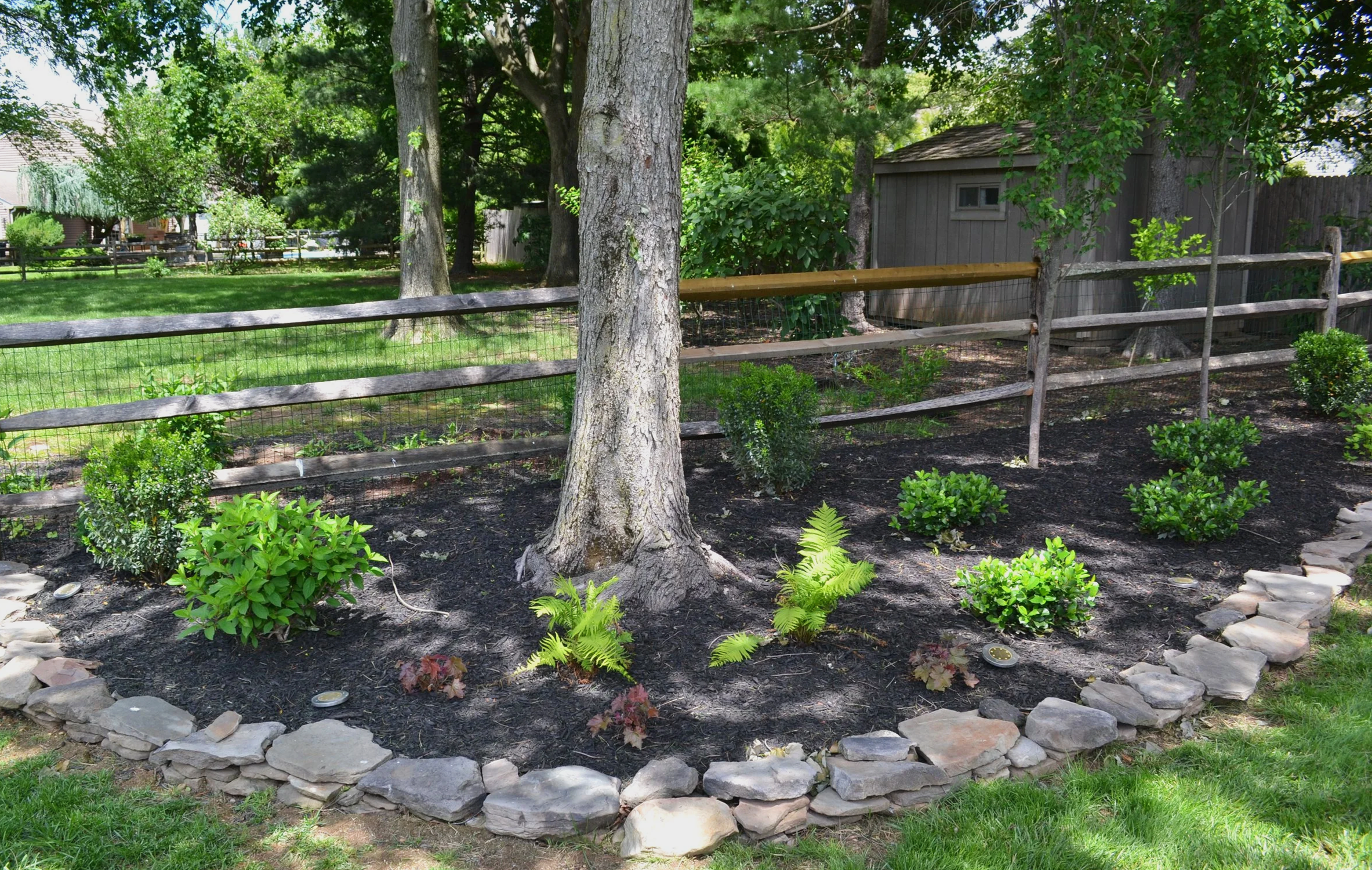
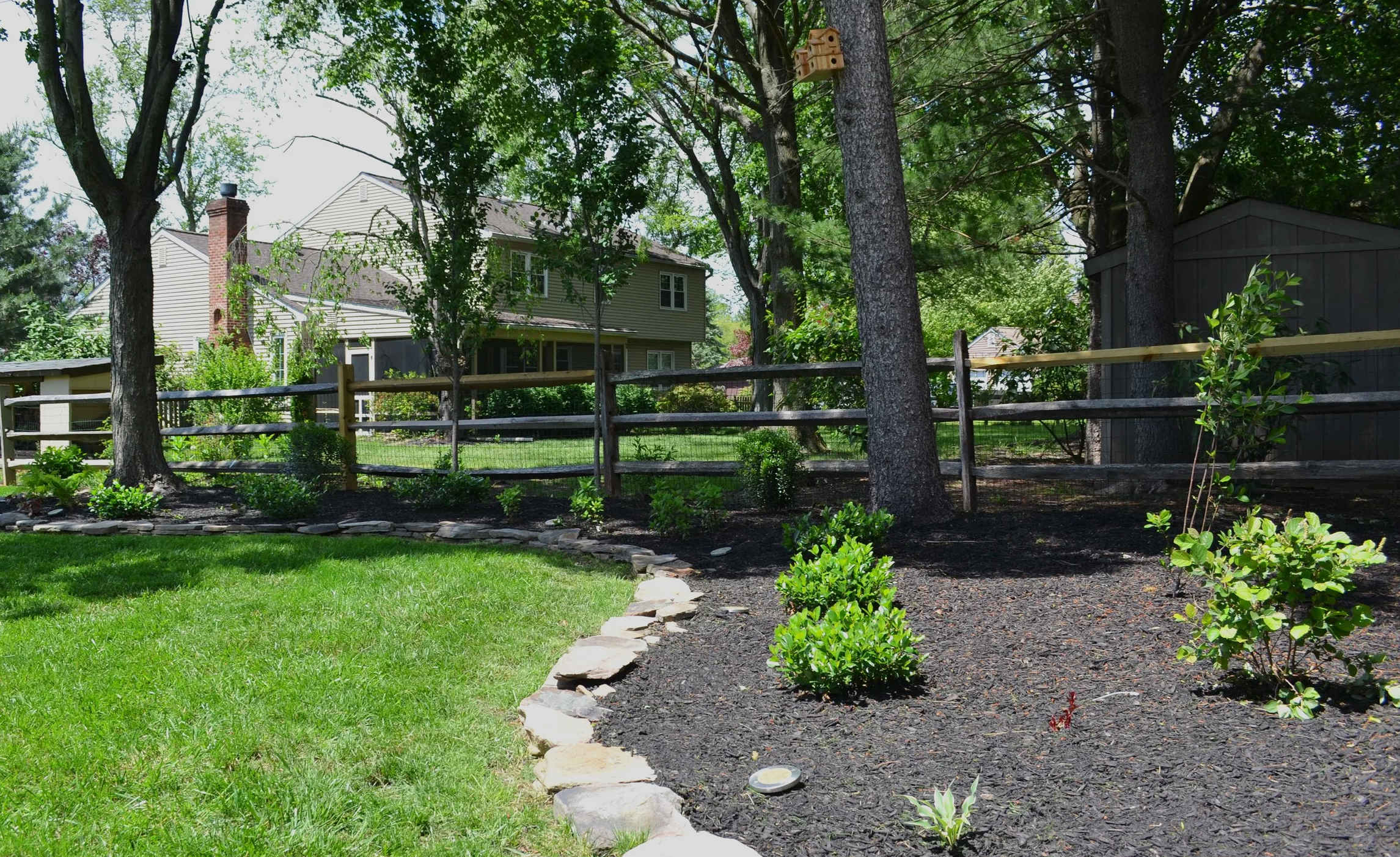
Lawn ran tight to a fence line beneath mature canopy. The perimeter bed was thin and inconsistent, with scattered ornamentals and open mulch, so the transition to woodland felt abrupt.
-
Strengthen the edge with a shade-tolerant, native-forward palette and a clearer bed line. The curve was refined to define the lawn, then planting was massed in repeats for rhythm and continuity.
-
Evergreen structure holds the fence line, ferns build a consistent understory texture, and sedges knit the ground plane to reduce exposed mulch. Pennsylvania sedge (Carex pensylvanica) anchors the matrix for long-term spread.
-
The perimeter now reads as intentional and framed. Repetition gives the edge depth, and the garden will become more immersive as the ground layer fills in.
selected images
process
-
![Landscape plan of a backyard garden with existing and proposed features, including an existing shed, patio focal point, existing lawn, proposed bed layout, proposed plantings, existing patio, existing trees, and existing mechanicals, with a scale at the bottom.]()
Concept diagram
-
![Diagram of elegant woodland edge plantings with images of various plants such as serviceberry, inkberry, ostrich fern, coral bells, thoregilla, chokeberry, dwarf chokeberry, and tiny turtlehead, with labels and plant codes.]()
Plan excerpt
-
![Landscape design plan featuring various plants and trees, including inkberry, candytuft, creeping juniper, lungwort, creeping phlox, viburnum, and others, with annotations for stone edging, planting areas, and shade structures.]()
Planting plan
-
![People planting shrubs and flowers in a landscaped garden bed with a rock border, trees, and a backyard fence on a sunny day.]()
Installation collaboration with Action Lawn & Landscape
-
![A backyard garden bed edged with rocks, with a tree in the center, surrounded by a grass lawn and wooden fence]()
Exisiting Conditions